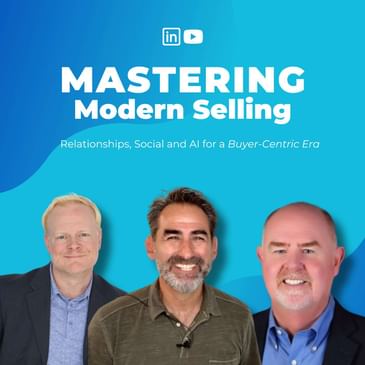
Dive into the latest episode of Mastering Modern Selling, featuring renowned sales leadership expert, Keith Rosen.
This episode unpacks the essentials of effective sales coaching and the transformation of top sales performers into exceptional leaders.
The Allure and Reality of Sales Management
Keith Rosen sheds light on the common misconceptions about sales management. Many high-performing salespeople are enticed by the perceived power and authority of managerial roles but often lack the necessary training, leading to challenges in leadership and team dynamics.
The Critical Role of Coaching
Effective sales leadership goes beyond managing numbers. Keith emphasizes the importance of having a universal coaching methodology and framework. Without proper coaching, managers often revert to being super-sellers, solving problems for their team instead of fostering independence and growth.
Creating a Culture of Accountability
Keith introduces the concept of an "accountability partnership," where managers and team members hold each other responsible for maintaining high standards and core values. This approach promotes a supportive environment and encourages continuous improvement.
The Pitfalls of Being a Super Seller
Managers who take over deals and solve all the problems for their team create dependency, hindering the development of their salespeople. Keith advocates for empowering team members to become independent critical thinkers, thereby enhancing their confidence and performance.
Aligning Personal Values with Business Objectives
Understanding what motivates each team member is crucial. By aligning personal values with business goals, leaders can create a shared vision that drives both individual and organizational success. This alignment fosters a motivated and engaged workforce.
Keith Rosen's insights emphasize that great sales leadership is built on a foundation of care, accountability, and continuous coaching.
By focusing on these principles, sales managers can transform their teams into high-performing sales forces.
Don't miss out, your next big idea could be just one episode away!
This Show is sponsored by Fist Bump
Your prospecting partner to authentically fill your pipeline with ideal customers.
Check out our Live Show Events here: Mastering Modern Selling Live Show
Subscribe to our Newsletter: Mastering Modern Selling Newsletter
[00:00:00] Welcome to Mastering Modern Selling, Relationships, Social & AI in the Biocentric Age. Join host Brandon Lee, founder of FistThumb, alongside Microsoft's number one social seller, Carson V Heady, and Tom Burton, author of the Revenue Zone and co-founder of Leedsmart.
[00:00:19] As we explore the strategies and stories behind successful executives and sales professionals, dive in to business growth, personal development, and the pursuit of excellence with industry leaders. Whether you're a seasoned executive or an aspiring leader, this podcast is your backstage
[00:00:35] past to today's business landscape. This is Mastering Modern Selling, brought to you by FistThumb. Okay, welcome to episode number 94, Mastering Modern Selling. I'm Tom Burton here with what three weeks in a row now, both Carson and Brandon. Man, I'm feeling spoiled.
[00:01:04] Tom's going to start wanting to go live without his Carson. I'll be on vacation at the end of July beginning of August. So I'm moving next week so I won't be here next week so you're going to have to
[00:01:17] handle it without me but anyway welcome and Keith Rosen, welcome. Thank you. So we're having a little problems connecting today but I think we're getting there. So hopefully you can hear us and there is a Bob. Bob's here. We know we're successful if we were to get Bob.
[00:01:38] That's right, and he's early or I don't have time so we know this is important. All right, well Keith welcome. We're going to talk a bit today about a topic that we've talked about actually quite a bit over the last few months which is sales leadership.
[00:01:55] You know, it wasn't a topic I don't think we really talked a lot about it until Mike Weinberg was on a couple of months ago and I think really raised our awareness of some of the things related
[00:02:04] to sales leadership. So Keith, I know this is your area and you know start us off by telling a little about your background or what you do and then I know we've got some great topics
[00:02:14] we're going to get into. Absolutely so always for this quickly, I had 32 years ago I opened up my practice and heavily focused on sales teams and the more I was helping develop the
[00:02:27] sales teams and having them become better coaches, the more I realized that the bigger gap was the managers that they don't know how to coach and working with organizations globally for the past 32 years. You know, the one common question I would ask is do you have a common
[00:02:48] methodology of coaching? Do you have a framework and a universal definition? And the answer inevitably is always no. So I have then shifted to focus heavily on leaders globally regardless of company culture, regardless of geographic location, revealing with people and human being.
[00:03:09] So I have found that spending most of my time now working with leaders and having the privilege of working with over, she's hundreds of thousands over 75 countries and six continents.
[00:03:21] So thanks again, have it to be here and I'm sure we'll dive into a couple of points in my books as well. You know I have a question just to start things off and then brand and
[00:03:33] car some please jump in on this but Keith, it sounds like you pretty much focused right on sales leadership and helping people transition into sales leadership sales coaching. Why would why do you find people wanting to get into this job? Especially if you've been a high performing
[00:03:51] individual contributor making lots of money, why do they want to get in this job? And where do you see the biggest, I guess, areas of downfall and challenge? Sure. I guess I get started with a
[00:04:04] very quick story. I was working with a manager who was sharing with me, he had a rep probably about six months and the rep came to him six months later and said hey listen when do I get
[00:04:18] promoted? I want to become a manager and rather than this manager get on their soapbox and try to explain why they can't be a manager yet and maybe there's not an open position or maybe there's not
[00:04:31] a fit yet. This manager said you know what? I want you to shadow me just for one day. To shadow me for one day see what I do see the meetings I go into who I'm talking to, the backends
[00:04:44] reports and stuff that I'm responsible for at the end of that day the sales person looked at their manager and said I never want your job. I think there's a certain assumption this award is
[00:04:59] a deduction of management that people make assumptions that it's a greater position of power and authority. You're going to make more money for it. We know that's not always true. You're going
[00:05:11] to have more autonomy, you know that's not true as well. So I find a lot of sales people becoming managers because a manager or someone else in the organization approaches a top producer and they say
[00:05:26] hey listen there is a management opening. Do you want to become a manager and the sales person looks around it says sure no training but you're going to become a manager and just like that they
[00:05:37] become a manager and because of the lack of training around coaching which we'll get into all they become as a super sales person doing their sales people's job for them. So is there a lot? Yeah I sound
[00:05:52] awful here. Well that's what I say I tell my managers all the time guys you have the same job as I do you have a practice I have a practice you're practice is your team my practice are my clients
[00:06:07] my responsibilities to make everyone of my clients more valuable every day your job as a leader is to make your people more valuable every day. I think I've the greatest job in the world I wake
[00:06:20] up excited about what I get to do and making impact that I tell managers if you're not feeling that then they're not coaching because there's is you can get to that point once you transform
[00:06:33] your thinking around what it means to the leader of coach and how you engage with your team. Yeah Keith I have a question and maybe I'm jumping the gun a little bit but it seems to me
[00:06:47] that there's personality profiles that are better suited for sales management than others and with the tendency to be who's selling the best and now that there's an opening let's go put them into the management role why don't more companies have a more like systematic way of
[00:07:11] discovering who the right leader should be and then getting them in place and training them I mean there's there's such a need for high quality sales people we're constantly talking about pipeline and more revenue it faster you know accelerated pipelines and all those things and yet
[00:07:26] it just seems like the manager gets thrown in as such an afterthought. And typically that afterthought is coming from a place of reactivity they're reacting to something whether someone left and they have an open position or whatever the case is then that manager's in there
[00:07:46] they become the manager they're not trained how to manage and as as you're alluding to it is now you have a manager in a position maybe they're not fit okay I look at it that to be a great leader
[00:07:59] you have to have the right mindset you need the right skill set you need the right communication because the way I define sales leadership and coaching is that it is a language and the language
[00:08:10] of leadership and sales is coaching so it's about being an effective communicator at the end of the day what I find is that the greatest managers today are truly practicing what the core principle
[00:08:26] of sales and leadership is today which is care and if you're coming from a place of care might have fallen through going to show up differently and if managers and sales people are still selling and managing they were pre-pandemic they're already set up to failure 74% of managers still
[00:08:48] have not been trained had a coach little on how to train or manage remotely so no one away ninety five percent of people are thinking about leading their job in the next six months
[00:09:01] yeah I think still often and this is such an important topic because still often I think managers are almost just thrown out to the wolves they're just expected to be able to manage
[00:09:10] day one to coach day one we have a framework that we utilize an our leadership called model coach care so modeling the behavior that you expect being able and willing to roll
[00:09:22] if you're sleeve jump in with your team but you're the hero maker not the hero when I think that's where a lot of top sellers who move into the sales realm struggle and to the leadership
[00:09:31] around struggle because they're they're not ready to like take off the superhero outfit in the cave and they want to be the one making it happen um he's what I'd love to hear especially given
[00:09:43] how much work you've done with great leaders is this an acumen that can be trained effectively and what are some of the activities that you typically see in the top of the top when it comes to sales
[00:09:56] leaders yeah sure and and I want to also don't go off with brand I was saying is in terms of personality profiles and recognizing what makes a great leader other than the mindset of really
[00:10:12] putting others first is what I've seen to avoid the problem Brendan that you were alluding to is companies that have a good handle on developing their managers will have for example a high potential
[00:10:30] program for their top sellers right and I know you guys are familiar with that so they'll take their sellers that want to be a leader of a wanted the manager and start developing them putting them
[00:10:43] in management training courses so they have that opportunity to really get their feet wet without being thrown to the walls and are immediately responsible for you know P&L and revenue numbers that works well unfortunately I would say 95% of companies don't do that and when they're thrown
[00:11:05] to the walls that sales person that sales person was top seller and now they're a manager they know how to sell so let's play this out I'm a manager now you guys are my director for it's
[00:11:18] you've a challenge or a question you come to me well I don't know how to coach I don't know how to lead a conversation with questions but I do have to sell I'm thinking in a nanosecond
[00:11:28] I've been in that person's position before so what do I say hey listen you know what when I was in your role this is how I handle it so you should do this too and now that rep goes out and
[00:11:40] executes on and the challenge is you can't scale dependency you can't scale dependency you can't have a line of people out your proverbial door waiting for you to solve their problems because now you're just being the quintessential chief problem solver and you're actually adopting and taking ownership
[00:12:02] of everyone's problems once you try to solve them which leads to two things you're robbing people of the very accountability we want to instill and we're certainly not making them independent critical
[00:12:17] thinkers the other part and this badge of honor that managers often feel they need to wear it to show that they're the best and they have all this knowledge actually backbires on them because what
[00:12:30] they don't realize in that moment when they're getting answers is that some people are thinking well gee thanks mr. Mrs. Manager for asking for my opinion first I thought you'd want to hear
[00:12:43] that I guess that's not important to you and the fact that you're giving me the solution I guess you don't trust me I guess you don't have trust in my ability what do you think that's going
[00:12:55] to do to the number one thing that every salesperson needs to sell confidence what do you think that's going to do to their confidence it's going to kill it and then that if you
[00:13:05] doesn't even realize it so hey I want to hit a couple a comment here from Bob but I want to tie it in teeth what you were just saying with a question as well so Bob Bob is saying of
[00:13:17] managers insert themselves into all the deals become the superceller right they tend to tear the team apart or they teach the team to be autonomous and become a choke point and break on sales
[00:13:29] acceleration what I've heard you say is two things one there right one one thing to don't do is don't try and go be in and just push people out of the way and be the super get involved in the
[00:13:41] deals the second days don't become the problem solver to both of those situations actually end up becoming that choke point and and slow down the whole sales organization the quintessential
[00:13:53] bottleneck boss that okay that is exactly what slows and you know we hire people to do a certain job we hope we're making a good hire why then do managers steal they need to do their people's job
[00:14:11] your mind is all fire them and just take on their quota so it's this it's this it's this unfortunately almost innate conditioning that every sales person and manager has which is their
[00:14:28] result driven ask any leader or a man sales person are your result driven absolutely I want to try to get those results every organization is result driven because we all have targets on
[00:14:40] our back we have numbers to hit we have quoted to hit here because here comes the challenge if I'm always focused on what's next as a sales person or manager I'm not focusing on what's now
[00:14:54] and if I'm not focusing on what's now I'm not focusing on the development and coaching of my people which is what they need today not when you know the fire you know is burning and that
[00:15:06] manager needs to jump in because at that point they already missed the coaching opportunity and then they get to be the super sales person to say that to you it seems it seems to me that we could
[00:15:20] probably spend our entire show today talking about all the things that most companies do and tend to do wrong how do companies if they're in the middle of something doing it wrong how did they get
[00:15:34] themselves out of it because I mean for me I do keep going back to like I hire people in my company based on personality profiles that I believe fit the role that's taking place like somebody who
[00:15:51] is can has a high empathy is other oriented tends to be more the coach the trainer personality well that should be the sales leader they may not be a great sales person themselves and that's okay
[00:16:03] because that's not their job their job is to help other equip other people to go do it but it sounds like that mindset is just not part of the process generally how how how does a company do this
[00:16:14] better what let's talk about tactically how do we make change and do this better because I do think we could probably sit here and I'll tell 20 different stories about all the things that people
[00:16:25] do wrong and I started Carson I started watching Ted Blasto again and I just did it. It didn't really love it. Oh gosh and I love it but he was he was at other learning moment you know they
[00:16:40] took Jamie who was a quintessential center forward he was the goal score he was the ball hog he was the jerk and and then in the second season one of the coaches goes you you've ruined him as a player
[00:16:52] they said why he said you made him into a team player his strength his superpower was that he was a ball hog as they said they called him an a-hole and he said they got to get him back to be in
[00:17:03] that a-hole so that he can go be a goal score and I think that's what I keep thinking of as we're talking about this is we take somebody who's a great producer we put him in the role as a manager
[00:17:15] and then they just killed the culture of the team because they wanted to manned everybody go do it the way I do it or I did it and that's not conducive to their to their personality. And that's amplified
[00:17:28] in sales organizations right where you have more of those ball hogs I guess if you will maybe in sales and you may have another part of the of the business. Well look at the great a player athletes
[00:17:39] that you try to put into the owners box or you try to put into the coach. The versus some of the greater coaches that might not have had a no lustreous career but because they're able to
[00:17:50] bring people together they understand the importance of morale they then keep a steady hand on the wheel these are the things it really set the tone for sales leadership. All right Keith
[00:18:01] I do yeah I had a question in there but it turned into a lot. It was what? What can we do tactically to start changing a culture now? When you're dealing with large organizations changing
[00:18:17] a culture feels like you're turning a battleship you know it could be very overwhelming and what I share with managers is saying wait a second rather than stressing out and feeling overwhelmed about changing the culture what if you create a sum culture? And they say well what's
[00:18:34] a sum culture I say well it's a culture that exists in a culture and the sum culture is your team and the atmosphere that you create and they're speaking to you every day and they're interacting
[00:18:47] with you every day well guess what you're the culture and that's the good news for managers because they have the power to make an impact when it comes to creating the accountability of change I have an enrollment process a strategy which I call creating an accountability part or
[00:19:12] and basically what it sounds like is walk you know going to that person or that peer or that wrap and saying hey listen you know what I want for you is to be successful and hit your goals
[00:19:22] and I know it's important that we work together in a consistent collaborative way. I also know that we are both focused on the core values in the organization and always trying to
[00:19:34] excel and do a better job so here's what I'm proposing how about every single time we see each other slipping back into maybe old habits or some toxic habits we have the permission to call each other
[00:19:49] out to let each other know in the moment when that's happening so we can make an adjustment right there immediately are you open to doing that you just created a mutual level of accountability
[00:20:02] without the fear so now I have permission and people understand intent so if I say hey you know you're not honoring that you know core value oh they're not going to set get upset they're not
[00:20:15] going to be in fear they understand intention and one of the reasons why there is so much fear and uncertainty today in organizations is because managers are really good at saying what's going on
[00:20:29] and there's so much change on a daily basis in organizations with technology and AI and trying to adapt all the stuff into new processes and you know with managers they try to look for these
[00:20:44] other pieces that are going to help complete the puzzle to help build their their team but the real piece that's missing is their own development and and having to be that coach so developing an accountability partnership sets proper intent and that challenges I was
[00:21:03] alluded to before is that when intentions are in clear people default to fear so again managers are really good at saying hey this is what we're doing but they fail at here's why we're doing it
[00:21:16] and most importantly here's what's in it for you so imagine if managers took the time to actually have a conversation with each person on their team and not assume what they're motivated by because
[00:21:30] all salespeople are not coin operated but truly uncover what their core values and motivators are well then you could hold them accountable for creating those things now and for living those things because that's what they want and when they when you can align people's values and priorities
[00:21:50] with the core business objectives and they're thinking well if I achieve my business objectives I get this personally now you have alignment now you have a share goal now you have that
[00:22:02] North star that that person knows why they're doing things and what's in it for them that's going to create a power not fear great leadership is such a critical element and Keith you touched on this
[00:22:16] earlier because a lot of us will stay or leave or invest in a company because of the people that we work for or leave because of the person that we may work for I myself actually
[00:22:28] followed a great leader for across three roles in six years because I really wanted to work for this person you know she leveled me up and I think that's why it's so critical that it's sales
[00:22:38] leaders we're always leveling people up now my question to you is this you know I've benefited by having been a top performer as an IC but going into an account leadership role and I had immediate credibility and had success at that level but I
[00:22:56] also agree with you your job is not to come in and just tell people how to do the job the way you would do it they got hired for a reason you know their their unique role is to figure out how to do
[00:23:08] with their unique skills superpowers how to be successful now can I help them see around corners better can I help guide them can I support them can I evangelize them help them on the career path
[00:23:19] absolutely yes but we talk a lot on this show about how much has changed in sales you know the more it has changed the more things they stay the same we've obviously got a lot of new technology
[00:23:30] we've got AI we've got automation we've got new ways to meet our customers but on the footsteps of the fundamentals of sales are still the same how can we as sales leaders still keep our act sharp
[00:23:42] knowing how to effectively coach our team when everything around us including the tooling the reporting and the ways we touch our customers with changing it unbelievably so many distractions I couldn't agree more and these distractions I think to your point are actually taking us away from
[00:24:02] the core essential competencies and skills of the sales person you know even if you you know even if you to look at AI right and and AI is only as good as the information that it has
[00:24:17] right it's only as good as the information that's being input there for AI cannot do something it cannot be creative correct me if I'm wrong it cannot create something from nothing creates it from the data but it can't be creative as two human beings having conversations saying
[00:24:32] wait a second if we do it this way we might get a better result my point is is that there are new conversations that sales people need to master and the new act in that they need to develop
[00:24:47] is becoming a coach as well it's not just the manager who has to be the coach for their peers or their employees it's your sales people and I see these need to be a coach for their customers
[00:24:59] because as I mentioned before the new sales methodology is canter how do you demonstrate care and a conversation you're not going to do that by automating your sales process because the one thing you can automate a relationship so what to me it's when I'm coaching
[00:25:22] managers and sales people I'm not coaching them on technology coaching them on how to foster deeper connections with people and what are the conversations that sound like for example if a manager is having a conversation with a director and right now you know here we are trying
[00:25:37] to build relationships on on a screen some people feel make the assumption it's more difficult to build a relationship on a screen I personally believe that's not the case of course is no substitute for face-to-face however it's the conversations that help you engage and
[00:25:55] fortify relationships so if what was the last time you were sitting down with your manager and your manager said you know I know we're always talking about business and hitting on numbers how are
[00:26:06] you doing you know how of you adjusted to this change in our hybrid world what's working well for you because I'd like to know maybe there are things that you're doing that I can be doing what's yourself care-region because self care is non-ingotible
[00:26:24] had me turn off work at the end of the day so you can be present with yourself and your family how do you sit boundaries if you're working at home so that you can honor your personal priorities
[00:26:36] and your business priorities no one's having this conversation why because no one's ever had a lead for it so it's one of those quadrants where we didn't even know we didn't even know it
[00:26:51] and now that I'm putting in front of a line of vision for these leaders and they're having these conversations they're increasing engagement they're retaining their best people the statistic of the Exodus of people leaving has been reduced the level of employee engagement today
[00:27:11] or disengagement I should say is I think it's horrific it's 87 to 90 percent now so these are things that can help reunite the relationships that not the sales people desperately need with their customers but the relationships that peers have and the relationships that manage yourself with their team
[00:27:35] man I love that you know it's so cool about this is that we we were going to have this conversation around sales leadership and it ended up becoming this conversation about caring about and therefore we become better leaders we become better companies and people do better in their
[00:27:53] jobs by helping them no better who they are you talked earlier about of lining their personal values with their job and the company values like that's how we get the best out of people
[00:28:05] and it it seems from I mean as a as a founder and owner of a company these are the things that I care about right I want to I want to empower my team I'm one of the things and it's and I know I
[00:28:16] get told I'm a low polyan but everybody that comes in my company the first time I meet with them on their first day or soon as I can be with them it's like hey my goal for you is that when you leave
[00:28:28] our company you are better than you are today and I want to partner with you to be better now why do I do that part of it's selfish to be honest and part of it is it's genuine genuinely who I am
[00:28:41] but I know the selfish part of me is what I actually care about people they work harder they work smarter they care more they stay longer and then they recruit their best friends and relatives
[00:28:54] to come in and fill positions as well and it doesn't matter if that's in the sales role or any other role of a company so then just you know big on massive fist bump to bringing care about people
[00:29:07] into a sales conversation yeah that a few biggest themes are really jumped out of me during this conversation that I love were care and then you can't scale dependency and Keith what I'd
[00:29:23] love to get your thoughts on is you know I can tell you having been a manager at a very young age I probably may just about every mistake you can make as a manager because I didn't have a lot
[00:29:34] of training I think sometimes we throw our managers out to the wolves from a top seller I was that guy I tried to be friends my team I tried to be there you know they're feel good go to person and I jumped
[00:29:47] in that they're job with them and for them and you know it just wasn't always the right move and what sometimes that sets up is that you don't have that ability that can do so
[00:29:58] of environment to have that cool accountability and I think back in my career what has been the best interactions that I've had with managers that I really respect and sometimes it's that almost constructive feedback painful you know in the moment back there on my way
[00:30:20] Brooklyn that are right this is that needs and sales leaders have a challenge often in giving that constructive feedback having tough conversations for the betterment of their personnel and of their team how should sales leaders how they can you know better job
[00:30:46] feedback not putting off something right in for the betterment of their employees yeah thanks I actually would go back to grandma's point uh I love when you're hiring people and what you do initially what you say I use different word I just call it enrollment
[00:31:04] you set positive intent you said listen what I want for you is for you when you're ready to leave this company more valuable than when you started here versus you gotta hit your quote you got
[00:31:15] to hit your numbers here's your scorecard here are your commitments if I had a leader say what you share I would be fully engaged immediately the byproduct as I'm gonna hit my number okay people
[00:31:30] aren't motivated you number do you hear number do you hear number you hitting your goals how many meetings do you have what's going to close this quarter what about the other conversations that
[00:31:40] are having what about the process hey walk me through these conversations how is it going when you were having that conversation with a client and you said it was difficult how did you turn it around
[00:31:50] what questions did you ask them managers are missing the opportunity to coach the process and the challenges because we're so result driven no coach the result you coach the process and to your point about um because I'm hitting that to your point about uh in rolling and
[00:32:10] and difficult conversations if if you're starting by setting positive intent and living people know what you're doing it removes the fear it's sort of like if I was a manager and I sent any
[00:32:23] now to one of my I seeds and in the email on the subject line it said when all caps please call me ASAP what are you thinking okay definitely nothing positive not hey my manager wants to tell me how
[00:32:39] amazing I am you're thinking what did I do wrong did I just lose a deal am I going to be put on the infamous hip and then I call you and I just want to say hey listen I just wanted to take a moment
[00:32:51] and acknowledge you closing out the quarter-strong you started slow I really admired your commitment to turn it around and exceed your goal so just want to applaud your efforts really really appreciate that
[00:33:05] you did not see that coming no one does because we need to set intent even around what motivates people uncovering their motivation giving constructive feedback why are managers reluctant to give feedback and why do people hate feedback well personally for me
[00:33:26] which may as is man and I won't go on a ramp on this why companies want to create a feedback culture why would you want to create a feedback culture people don't even understand what that
[00:33:39] needs so you're just going to create a feedback culture what what I'm saying hey this is what you're doing this right if you're doing wrong this is what you're doing wrong hey I'm just giving feedback nobody wants feedback you know people want they're like ideas they like collaboration
[00:33:54] they're like hey let's talk about bringing something better okay hey here's what I noticed that if we can work on together would make you even more successful those are the conversations that they're open to having that will reduces the fear because you're setting the positive intent
[00:34:10] if I could it's sort of like what I was sharing before to me if I get permission from a rep for anyone to give feedback on the spot they know my intent okay so it's not like hey can
[00:34:26] I'd give you some feedback people no no I don't want any feedback or my favorite constructive criticism which is an oxymoron they already know your intent so think about how much easier a manager's job is when you can go to your people and virtually share anything because behind
[00:34:46] that they know you are there unconditionally committed to that okay and what you do that and when you set that parameter and and and and foundation you can build on that and you'll never ever
[00:35:01] worry about having cracks in that or we retort or losing trust or or not understanding your managers intent and going to you know Keith I want to I think I'm hearing you saying even
[00:35:14] something more than coaching the process right I think I'm hearing you say coach the development of the individual which is goes beyond the process right the process is a piece of that and actually stay away from or maybe certainly not emphasize coaching the outcome right what
[00:35:34] you said there and if you coach the development of the person and their development over time as a contributor and whatever they're doing the outcome will come and again the process is a piece
[00:35:45] of that but I want to keep it melodies question here related to that is and she's asking you know what happens if they make a drop right don't have they screw up what's the best way to
[00:35:55] assist them and is there a point and where and maybe this is kind of a second part of the question is if you're finding that somebody's just probably not a good fit right when do you know that
[00:36:07] and what do you do so I think there's two parts there like what if someone just made some of the stake they need some help but then I think you know they're always going to get people that are
[00:36:14] maybe are just not coachable into the York to develop them in the organization we're looking for okay no that was a lot there. No I actually got three questions in there so let's let's think them
[00:36:24] number one fire is burning manager hasn't jumped in that means one thing they weren't honoring the ABCs of leadership always be coaching because if they were coaching all the time that's when they recognize challenges when they're at this big before they become this big which no one
[00:36:43] kidnists if you're coaching all the time you'll have that opportunity that's number one it's at the point the fire is burning forget about it coaching gets thrown out the window you're
[00:36:55] even missed the moment. At that point you would do a post-mortem so that point you could sit down and say hey listen we got through this issue we got to be other side let's sit down and talk
[00:37:05] about what you and I need to do to put together a strategy or a process so we can avoid this from happening again post-mortem okay the other thing about dealing with an underperformer or not a fit
[00:37:22] there's a strategy I have called the 30 day success acceleration program were set a different way of 30 day turnaround strategy I write about this in my book and basically in 30 days a manager can assess but more importantly that individual can assess whether or not that position is
[00:37:40] a fit for that and I will just very quickly give a you know a thousand foot overview of how this works is if a manager can sit down with quote unquote and it'll perform or someone who doesn't
[00:37:54] know if they belong there and they sit and they say hey listen let's let's work on a plan to get you where you want to be in turnaround your performance and in 30 days you know what you'll
[00:38:03] assess whether or not you feel this is a fit for you and every week that manager provides on conditional support not conditional support unconditional support for that person and for four weeks
[00:38:16] that person every meeting you have with that under performer or person who may not be a fit they are making commitments that they will honor for the following meeting if they're not honoring their commitments at the end of four weeks you'd infire them they fired themselves they self
[00:38:40] selected out and that's the point I've never met a manager who likes to fire people because at the end of the day managers truly do have a good place are coming from a good place it doesn't mean they
[00:38:53] know how to express that but if we look at a situation like this rather than be the manager that throws people under the bus puts it under performer throws into HR and put them on a compliance plan
[00:39:04] which by the way is your legacy how do you want to be known do you want to be known as that kind of manager or the manager I'm referring to that provides unconditional support where at the end of four
[00:39:16] weeks that person every week had an opportunity to honor their commitments or not they chose this is why managers never have to fire anyone again people will either opt in or opt out and you get to look
[00:39:32] like the hero because your team still talks so now go back to the legacy question how do you want to know if you want to be known as a person that throws the people under the bus or you want to be known
[00:39:43] as a leader that demonstrates unconditional support and that's the legacy you're leaving so I always like to ask you know if you ran into one of people you managed you know 10 years from now what
[00:39:57] would you want them to say about you or if you ran into yourself 10 years from now what would you want to see you know what type of brand in legacy would you have wanted to create so that's the
[00:40:10] 30 day the other point I want to make in terms of mistakes I want to give the audience a tactical strategy that they can use right now to start coaching immediately I call I use the call of the 60 second
[00:40:23] coaching strategy actually timed it it's 30 seconds and I'm from New York and I talk fast so I will share this with you guys here is the strategy that every single person here coaches sales people can use
[00:40:39] to to coach in 30 seconds someone comes see let's say manager we have the IC the IC goes to their manager looking for help the manager at that point is at a cost work they can either go one
[00:40:52] way and take that path to be the chief problem solver do their people's job for them or they could take this path and lead the conversation with a question rather than an answer that's what a great
[00:41:07] leaders do so my response would be hey you know I love to help with that and I'm happy to share my opinion with you however you're a lot closer to this situation and I trust you and I trust your
[00:41:22] judgment so what's your opinion on how to resolve this or achieve the results you want under 30 seconds one question let's break it down you're acknowledging that you will be giving them your opinion just not immediately please if there's one thing leaders walk away with today's
[00:41:41] this seek to understand people's point of view before you share yours okay you know what you know you don't know what they know seek to understand their opinion in point of view you will always have an
[00:41:56] opportunity to be shared yours later so I acknowledge the fact that I'm going to share my opinion then I say hey you're a lot closer to this and I am and I trust you when I trust your judgment
[00:42:07] what's that going to do first of all they are a lot closer to the situation and by sharing that we trust them it builds the builds connection and it helps their confidence and then by saying
[00:42:18] what's your opinion on how to achieve this I'm not saying give me a solution I'm not saying give me a strategy I'm not saying give me an answer because those can be right along an opinion is never right
[00:42:30] along it just it is now let's say this person shares with you this opinion now a lot of managers saying well keep if they give me their ideas and it works well that's great but what happens
[00:42:43] if it doesn't well at that point there are three buckets number one they share their opinion with you it sounds great maybe even better than the ideas you were going to share mister and this is
[00:42:55] manager I know that's hard to believe you tell him to run with it second scenario have some good ideas not fully baked out third scenario you're no for a fact that what they're thinking in
[00:43:08] terms of how they're going to engage with that customer will not work well you can either take the road or saying how long have you been in this job that's certainly going to create trust
[00:43:20] in a warm environment or you could respond with this thanks for sharing your ideas I appreciate that let's walk through them together so that we can create a process and solution that's going to
[00:43:34] help you get to the results you want now it becomes a collaboration not in the congregation now it becomes a conversation not you being the direct advantage or telling them what to do and every leader can start doing that today there's so many great principles that are coming
[00:43:55] out of us today Keith and I think you know for our sales leaders in the audience today I think one of the key takeaways you don't often we put the pressure on ourselves to feel like we've got to be
[00:44:06] the smartest people in the room and that's far from the truth often what we're trying to do is orchestrate these ideas bring them together if I can replicate best practice someone over here on
[00:44:16] my team is doing with someone over here not going to take food off the table for the other person having that collaborative spirit is ultimately going to elevate everyone I always love the
[00:44:29] quote rising high raises all shifts and you know what you were certain earlier to about the unconditional support that we can provide our team you know reminds me of this team that I was leading
[00:44:41] almost 20 years ago and I was competing against this guy that was promoted at the exact same time as me and they could never catch us and the reason why is because his philosophy was I'm just going
[00:44:53] to fire all my bottom performers all the time and we've focused on coaching everybody to at least their optimum or maximum performance and to your point sometimes you figure out like this is a fit
[00:45:05] this isn't a fit people made their own decisions yes there were people that moved out of the but having that feeling that foundation of unconditional support and communication that transparency that made all the difference in the world and I wanted to ask you know given our audience
[00:45:20] today of sellers and sales leaders you're often not invited isn't a complete overhaul of our process that is required to increase results to improve performance often it's small tweaks they really make all the difference in the world you know at a great leader who taught me the
[00:45:36] importance of instead of just an 11 one jumping right into the business part with some personal dialogue you know get to know these people on a personal level those types of things can go a long
[00:45:46] way what's the advice that you would give some sales leaders today about maybe small tweaks the big and make in their process today that would have immediate and significant impact in terms of how they're leading their team yes oh got it well the first thing is
[00:46:06] enrolling your people in coaching so they understand that this is a journey you're both going on together so they know that when their managers struggling a little bit with coaching questions you know they're gonna be a little more friggin because there's that alignment the the other thing
[00:46:22] is creating at level of accountability which I think is something that all we're struggling with because they don't they think to themselves well you know I don't want to you know
[00:46:33] that's a feel like a micro managing them but I don't want to give them too much rope to you know hang them self either so how can you hold people accountable this is another great strategy coaching
[00:46:48] to uncover people's accountability stop banging your head mister and Mrs. Manitor try to come up with all the answers had a motivate people how to inspire them how to hold them accountable how to create an incentive if you're asking yourself those questions you're asking the wrong person
[00:47:06] ask them because you're just gonna make assumptions and those assumptions are always going to be wrong so you know looking at the accountability piece two questions two questions uncover people's accountability and how they want to be held accountable number one
[00:47:24] mister Mrs. I see how do you like to be held accountable or you want to say it's author how do you like me to be your accountability partner in a way that would feel supportive and not
[00:47:37] like a micro managing you let them set the rules up for the game now it's their rules you're just reinforcing them second question mister Mrs. I see how would you like me to follow up with you if
[00:47:50] you don't out in the commitments you made how would you like me to bring it up again they're setting the rules because some people say if like me and many people are very direct I know some
[00:48:02] of you guys are very direct if you were my manager and I messed up I want you to say keep this is where you messed up fix it and go you have to tomorrow to do I'm like I'm on it you do that to some
[00:48:14] people you will literally make them cry I've heard managers say that say but I don't understand that's how I like to be managed well there's another trap managers and sales people don't manage and sell in your own image because now you're making a costly assumption that what
[00:48:36] motivates you and how you like to be held accountable and manage is going to be the same as others and that's never the case and building the car's also up you're another point that's showing
[00:48:48] up in my showing up in my mind here is you know as leaders we want our people to succeed but there's also a trap there and we can be seduced by the potential we see in people
[00:49:01] and the one thing that managers even and this is that that you know our strengths are all weaknesses we care so much we will and which is a strength but you can't care more about the other
[00:49:15] persons life than job than they do you can't want more for someone than they want for themselves and you can think in your mind and have the internal narrative but if they only work
[00:49:27] harder if they only you know got more organized they can make more money or achieve more what if they don't want what if there are really solid be player of good corporate citizen
[00:49:40] empowering collaborative you want to make them an a player oh you just got to work you know on the weekends and 12 hour days but I value my family time in my weekends you can put
[00:49:52] a solid performer right out the door you all want a players and there's no room at the winter stable for sea players but be players we need we need them and we can continue to your
[00:50:07] point that I've heard from all of you you can always still coach them up to achieve what they want not with you wow and I think of course it's a beautiful I think it was great and I think it goes back to uh retinputting Peter Druckers quote on
[00:50:29] here of culture eats strategy for breakfast we were talking about is making sure that we have a culture that cares about people to know like you know I was in a conversation and my
[00:50:42] with our kids actually in my wife says you know our our culture has gotten so focused on excellence and the best and all the stuff because you know it's okay to be average and happy
[00:50:54] like if that's what you want it's okay to be average and be happy we don't talk enough about the happiness side about the joy side it's you know in our our 11 year old was was talking to
[00:51:07] our older daughter about you know well why didn't you why didn't you look into going to Harvard for college my daughter my older daughter goes I had no interest in going to a school like Harvard
[00:51:18] and you know for our 11 year old to understand that and that's what it's like okay it was okay to be average and happy and it's not for everybody but in a lot of cultures we don't even make
[00:51:28] that an option for people and what what I'm here you say is having a culture where we're so focused on other people and their values and their goals and yeah maybe the seed-minus player should go
[00:51:39] to a different company but it's okay to have some B players in there and know that you're going to get consistency out of them and what about let's go beyond that what about their great advocates or their great motivators or their great coaches what if they're actually coaching
[00:51:56] the rest of their team and they have great relationships and they're able to bring people together well that's certainly someone I want on their team who's sitting in the number right
[00:52:07] Keith I have a question as we as we kind of wrap up here so I'm a co-founder and a software company we're growing pretty fast and we're getting a lot of pressure from our board to hire a CRO chief
[00:52:23] revenue officer and as a replacement are alternative to even a sales leader right and you don't need sales leader you need a CRO I've been pushing back because I think it's I see the role of the
[00:52:37] CRO but I don't see it as a replacement for a for a sales leader what do you what is your take on this and you run into this where there's confusion between what a CRO does and a sales leader
[00:52:49] and and their responsibility I think this is a very common thing that especially in tech companies that people run into it you know to me it's when I hear this there are a lot of assumptions going on
[00:53:06] so you know for example does the board assume that a CRO knows how to sell and can build a sales organization what assumptions are they making about their role compared to a you know a chief
[00:53:22] sales officer or VP of sales do you know what a VP of sales does do they know what their role is now so to me I always look at this again as a great coaching moment for you is to seek the
[00:53:36] understand where are they really coming from it's important this is actually another great tool to share with your audience here is to leverage what I call springboard questions probably one of the most
[00:53:50] powerful coaching question that you can use and a springboard question might sound like this you know we we don't feel we need a VP of sales because the CRO is going to be handled there
[00:54:05] their responsibilities now we can go to paths we can get defensive and get our so-pots and we're gonna lose or we could say wait a second when you say we don't need a VP of sales can you help me
[00:54:18] understand more about that and what you say is CRO is going to handle it how do you mean or if they say you know what it's just going to be more stressful or more difficult when you say stressful
[00:54:29] and difficult can you say more about that or or customer says let's say I expect the exemplary I expect exemplary service well sales person because I of course we get great service but they
[00:54:43] have no idea what exemplary service means through that person's eyes just like we don't know happy stress overwhelmed successful good sales person looks like through other people's eyes we have
[00:54:55] our opinion in point of view but so to others so we cannot assume that the words people use hold the same definition that we have and that's why two of the most important words in sales and in coaching
[00:55:12] are be curious I'm just gonna say that you have to really be curious because and I can take it to the level of be insatiably curious try to say that 10 times fast if you're insatiably curious by default
[00:55:26] you're going to ask more and better questions so it's really and again we it really does tie into the mindset here of being present because if you're not present you can't listen active listening happens in the moment if you're not present you can create new possibilities creation
[00:55:50] of new possibilities happens in the moment so it might sound paradoxical but when we have something that we want or we're looking support people the greatest leaders sales people coaches actually detached from the outcome they actually let go of their agenda what having a conversation
[00:56:11] so you know for your example to me I would just be really really curious to understand really their point of view forget about my point of view forget about my agenda I'm gonna part that
[00:56:22] okay I'm not pushing my agenda I want to know what there is is so then I can align their agenda with what I can see and create that possibility we're now you know what I didn't realize
[00:56:36] that's what a sales leader does now I get well what I hear you say is it creates conversation it takes the opinion that just somebody may have an opinion whether it's based on
[00:56:49] reality or fact or even best practices just could be an opinion because they heard it on a podcast right that you need to chief revenue officer so I think what you do is you create conversation and
[00:56:59] you dig through it and you end up in a better place regardless of the whole thing but just but I just want to go ahead sorry great yeah I was just this is a great we could probably
[00:57:11] talk about this all day you know I think it would be interesting to see what that job description looks like well that's what I was going to say in their mind right a chief revenue officer generally
[00:57:22] is dealing with analytics technology they're looking at the numbers they're doing a lot of things which is very very different than what we've talked about today very different role very different mindset very different type of person so it's you know anyway you're not managing
[00:57:38] you're not managing revenue if you're not developing your salespeople because you can have no revenue coming in that's right that's right you may have the best spreadsheets in the world but beautiful spreadsheets that's right beautiful
[00:57:52] and now it sounds like the private equity group that bought my company and turned me into a spreadsheet jocky I wouldn't have asked Keith before we wrap what's your favorite song to play on guitar
[00:58:05] oh my gosh you any well luckily we're ending it because otherwise this would have been a whole conversation I'm using her food chain what am I actually so Dave Matthews last night so fantastic show
[00:58:16] outside and favorite song to play on guitar I would play I would say I could say what bands music I like I would play a lot of rolling songs fish, scrapled bed, Dave Matthews, Eric Clapton
[00:58:31] lot of you know the night these grunge but pretty much the whole spectrum to Jim Crowge and James Taylor so you know you know next time we'll do a whole session on just you know what I
[00:58:43] take requests I'll play whatever you want I love that idea hey and this kind of ties into Jason's question here as we wrap up he says he would like to think more about all of this and and what
[00:58:58] do you guys reading now that speaking to you on ideas cares coaching and curiosity I know you mentioned you had a book or two Keith is this a type of thing you're covering in the book and and going
[00:59:09] yeah so my first book coaching sales people to sales champions has you know people tell me it's there Bible for sales leadership and coaching my last book was sales leadership literally titled sales
[00:59:23] leadership and and that actually has more of an international approach to coaching because that I was coming from a place of having been to 75 countries and sharing stories uh and my experiences working with people in different countries and cultures to really share with people that coaching is
[00:59:44] a US thing or UK thing this is a it's a global thing if you end the day it's about connecting with people at a deeper level the only way you can do that is by coaching you know Brandon I know we're
[01:00:00] at a time but I'd love your take on this quickly you know with what you're doing with fist bump and and really helping people build relationships and rise above the noise I'm wondering if
[01:00:13] a lot of what you're doing is really helping people coach each other and and become coachable coach and use that to build the relationships that you go through yeah we've been we've actually
[01:00:25] been talking a lot about that and Carl Leaba and I have had several conversations since he was a guest on our show a few weeks ago about and it was part of the prompting for me to start
[01:00:35] watching Ted Lasso again about being curious remember Carl it's his whole thing is about curiosity we talked a lot about curiosity today you know helping helping people become curious about themselves
[01:00:49] you know the book my book that I wrote it was an awful title it didn't build in tree but it was 99 powerful questions and the whole concept was about be asking the right questions being curious
[01:01:01] and and the first chapter is asking questions of yourself and a big part of personal branding is getting to know yourself and no crew you are and who you want to be and two off in just like in
[01:01:14] sales just like with sales leaders when seesweter business owners are attempting to do anything around content and personal branding they haven't done the work to really be curious who am I how do I
[01:01:27] want to show up what are my three main topics that I want to talk about what part of my humanity do I want to bring into this we we show up at networking events and we have conversations all the
[01:01:39] time but do you ever stop and think in which part of my person my humanity my personal life do I really want to show in these environments we would just kind of intuitively go in conversations
[01:01:50] that are fine we back out of conversations we don't want to get to you know we don't want to go full open commote or and tell everything but then when it comes to your personal brand we got a
[01:01:59] think about it we got to be curious we got to create a strategy as it says this is really who I am and too often what leaders come up with and what they start writing about or they create videos about
[01:02:12] they haven't thought about it it's not as authentic it's not disingenuous but it's not totally authentic and it doesn't sit well it doesn't get engagement it doesn't get viewership and then they end up quitting and they go oh LinkedIn doesn't work it's like if you don't do that
[01:02:31] inner work like everything else in life it always it always comes back to therapy right if you don't do that inner work co-chiner therapy or something and you don't have that clarity it lacks power and it lacks effectiveness unfortunately avalanches rolled downhill it starts from the top
[01:02:53] and that's where the culture starts it's interesting I lost count how many leaders have shared of me how do you coach the person who's not self aware well they struggle with
[01:03:08] that because it's not a good do it's a go be it's a mindset so how do you coach mindset that's probably the error is where we just struggle the most because it's not tangible so to me that's an
[01:03:23] opportunity for that person and even to myself like you know how am I showing up every day you know what would people say about me you know even coaching someone you know if
[01:03:34] you said that you know out to you how would you respond to that or the way you just engage with that person if they engage with you that way how would you react or you know what do you think people
[01:03:43] say about you what do you think your brand is today you're very quickly uncover their level of self awareness keep you've had some amazing insights today a lot to think about this is one
[01:03:58] we're gonna I'm gonna go back and listen to a couple times again yeah pretty sure out of few of those where can people find more about you if they want to enter in your coaching what what should they go
[01:04:08] check out or appreciate that and have tons of resources on my website keythrosen.com we just launched it I have a couple new e-books out there on coaching that you can download for free actually at this point we're just launched another division if you will where we're
[01:04:32] we're trying to do a lot more philanthropic work in my organization and one of the I guess tiny steps we're taking right now is we're offering companies that that might be strong going an opportunity
[01:04:45] for me to do an event for them just like this no charge so that at least they could get some infusion to help support their sales leaders and managers because maybe they're struggling and
[01:04:57] maybe it's it's not something universally shared where you know we all we all know we need this coaching maybe half the company doesn't feel they needed so it provides managers or leaders
[01:05:08] and opportunity for me to get front of them and provide some quick tips and strategies to support their teams and that's you know to me that's my core value which is to make an impact I'm
[01:05:20] conditionally so I hope I'm doing that today if anyone's interested they could always reach out to me my email is Keith R at keythrosen.com so I hope to hear from you then you know Brandon we've
[01:05:31] had Christie Jones right on a couple times in the last month or so and she talks a lot about superpower I think it's pretty clear to see what Keith's superpower is here yeah absolutely I think
[01:05:41] it comes through Carson anything before we wrap up here yeah no just the you know Jason's question you know actually what I'm reading right now ironically or not is first break all the rules by
[01:05:53] Marcus Buckingham and her company it really it's all about just what we've talked about today rather than conformity and falling into the way that we think we need to act as managers or everybody else is doing you know really doubling down on our strengths and superpowers these
[01:06:08] leaders and capturing the essence of our team so phenomenal session. I really appreciate that and it really speaks to vulnerability based leadership you know I actually believe in opening up the commuter I believe in showing up fully transparent because you show me a leader who embraces
[01:06:29] their vulnerabilities who embraces their fears I will show you a leader who is absolutely unstoppable because when you embrace that wow they're going to about getting the double fist club from
[01:06:42] Brandon now he's ready to like breathe through with both this so so to me and it gives permission to people to be vulnerable but it starts with the leader how you show up is how you want your
[01:06:57] people to show up you know if you're coming to me and saying oh my god I'm so on my team is so toxic down on losing people my first question is well what role are you playing all of this
[01:07:07] because at the end of the day good news and bad news every single challenge managers have in their organization is therefore okay that's the bad news good news every single challenge managers have in their organization is therefore because if it's in their power to do something
[01:07:27] about it it's their choice and it will always be in their power to make those positive changes that we talked about today all right I think that's a good place to wrap up we may have hit our longest episode yet
[01:07:41] yeah now we're still a few minutes short our crew may have to keep close with a little clapton and that'll put us over the top right that's right you go ahead we're ready all right
[01:07:53] well thanks again Keith yeah next time we will have a little bit of some music I think and both definitely we're already in the woods we're blessed from the right yeah people like to
[01:08:04] jam out you know yeah let's hear who please be talking we're doing this here in the chat right it out there right as we approach episode 100 we're trying to broaden out our scope of what we do
[01:08:16] and what we talk about musical deck we would be great well yeah we bring for your four of our past guests it were musically inclined and we'll do a oh Carl was really music right
[01:08:27] well actually we could take it a sub-brother guys I have a separate studio from my house so full studio old musicians I have a jam session every week totally non-geogmental place and everyone
[01:08:42] is invited so that's all anyone if you if you want to come by just pin me and feel free to come by for a jam session that's awesome and by the way let me let me let me end on this note guys and
[01:08:57] I'm sure we could probably say that several times is to me music is is the universal language of the soul I think coaching is the same it's the universal language of the soul because you don't
[01:09:11] coach from your head the best coaches coach from our heart we can go another hour on that we better wrap it up all right Carson wrap us up thank you everyone for joining all the great Q&A
[01:09:26] key amazing session and until next week happy modern selling thanks everyone have a good week thank you for joining us today on mastering modern selling if you enjoyed this episode don't
[01:09:44] forget to subscribe for more insights connect with us on social media and leave a review to help us improve stay tuned for our next episode where we will continue to uncover modern strategies shaping today's business landscape learn more about fist bump in our comcier service at getfissbumps.com
[01:10:01] mastering modern revenue creation with fist bump where relationships social and AI meet in the fire center page