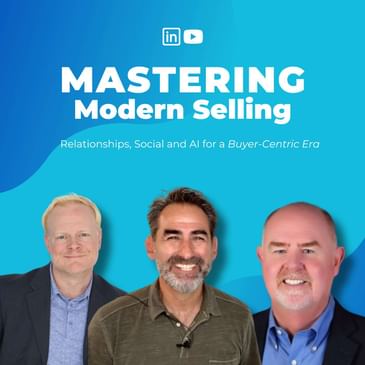
In this episode of Mastering Modern Selling, Brandon Lee and Carson Heady host Chris Dunn, VP of Sales and Business Development at Blue Hive Exhibits.
Chris shares his transformation from a passive LinkedIn user to a recognized expert in his field, illustrating the power of authenticity, consistency, and relationship-building in the modern sales landscape.
This journey reveals key strategies for leveraging platforms like LinkedIn, adapting to market shifts, and fostering meaningful connections in a buyer-centric world.
- The Power of LinkedIn as a Relationship-Building Tool
Chris started leveraging LinkedIn during the pandemic when his traditional sales methods were disrupted.
He transitioned from casual posting to sharing industry insights, personal stories, and authentic content.
This approach helped him establish credibility and visibility in his network.
- Dark Social and Trust Building
Chris discussed the concept of “dark social,” referring to how interactions on social platforms often lead to offline conversions.
Prospects often feel like they "know" you through your online presence before initiating conversations, reducing barriers to trust.
- Balancing Authenticity and Professionalism
Chris emphasized the importance of being authentic while maintaining professionalism on platforms like LinkedIn.
Sharing personal stories, such as his morning walks with his dog, Barton, allowed him to humanize his brand and create relatable touchpoints with his audience.
- The Long Game in Modern Selling
Success in modern sales requires a commitment to the long game.
Instead of aggressive cold outreach, Chris focuses on nurturing relationships, offering value, and waiting for organic opportunities to emerge.
- Live Shows as a Trust-Building Tool
Chris emphasized the value of hosting live shows to establish authority and deepen connections.
By sharing expertise in a conversational format and engaging with audiences in real-time, live shows humanize the sales process, build trust, and position sales professionals as approachable thought leaders.
- Results Through Reputation and Consistency
Chris highlighted that 20% of his sales quota has been directly influenced by his LinkedIn activity.
Sharing visually engaging content from the trade show world and consistently engaging with his audience has led to meaningful business opportunities.
Chris Dunn’s story is a testament to the evolving nature of sales. His journey from “lurker” to LinkedIn influencer underscores the importance of authenticity, persistence, and a willingness to adapt.
As Chris pointed out, modern selling is about playing the long game, building relationships, and creating a trusted presence in the digital sphere.
Don't miss out, your next big idea could be just one episode away!
This Show is sponsored by Fist Bump
Your prospecting partner to authentically fill your pipeline with ideal customers.
Check out our Live Show Events here: Mastering Modern Selling Live Show
Subscribe to our Newsletter: Mastering Modern Selling Newsletter
[00:00:01] Welcome to Mastering Modern Selling, relationships, social and AI in the buyer-centric age. Join host Brandon Lee, founder of Fistbump, alongside Microsoft's number one social seller Carson V Heady, and Tom Burton, author of The Revenue Zone and co-founder of LeadSmart, as we explore the strategies and stories behind successful executives and sales professionals.
[00:00:24] Dive into business growth, personal development, and the pursuit of excellence with industry leaders. Whether you're a seasoned executive or an aspiring leader, this podcast is your backstage pass to today's business landscape. This is Mastering Modern Selling, brought to you by Fistbump.
[00:00:49] Hello, hello, everybody. Welcome to Episode 121 of Mastering Modern Selling. I am one of the three hosts. Yes, there are three of us, but it's only me today. I'm Brandon Lee. I am the founder of Fistbump, and Fistbump is the sponsor of our show, too. So if you ever, you know, you need help with, hey, there's Carson. Carson, welcome to the show. Hey, Brandon.
[00:01:16] So we'll get into that in a second. Hey, it's one of those days everybody's freezing their butts off. So hopefully you've got people sitting like I'm upstairs at home. I decided to work from home today. Our daughter didn't go to school the last three days. But my office is in the basement, and it's just too cold. Even running the heater 24 hours, it's too cold. Yeah, I'm way over it. So let's warm it up with some, blowing some hot air and heating up our sails.
[00:01:45] Let's do it. Let's do it. Well, hey, everybody, I'm excited about today's episode because Chris has been walking with us. We've been walking with him for the past year plus. And I want to explain this about the power of social media, the power of shows. And this term that we use, it's called dark social. I don't want anyone to freak out because it's not the dark web. Sounds evil.
[00:02:08] It does sound evil. It's a horrible word, but a great definition. And what dark social is, is that there's all these social activities that take place that help create demand or create interest, create introductions.
[00:02:26] And it leads, it can lead to real revenue. The question a lot of times is with attribution. A lot of times marketing teams aren't looking for this type of attribution. And it's real easy to say, oh, we got this from Google because you can document it. But sometimes somebody is on a show, you hear them, you learn about them. And then a few weeks later, you go, oh, what was that company name? And you go do a Google search and then you find the company.
[00:02:55] But it didn't start from the Google search. It started from something else. Chris, that's the way we met because we had Larry Levine as a guest on our show. And you were following Larry or a part of his, one of his cohorts, their coaching community. And so when we promoted that Larry was going to be on our show, you discovered it. You came to our show. You watched Larry's episode. You started following us. You and I've connected.
[00:03:24] We're now doing shows together. You have your own live show and podcast. And you, as the title said, you went from lurker to expert. We're going to talk a little bit about that today. Indeed. Indeed, I have. Yeah, this is awesome to be on the show. I have indeed been listening pretty much every week. I love the podcast. I turn it on during my commute or during my dog hikes in the morning and take it in.
[00:03:51] And yeah, I think I've caught everything from like episode 45 on. I think I even went back and did a couple of deep dives into the early stuff when it was. Yeah. Yeah. Yeah. There's a lot of learning. The learning curve is really accelerated considerably since then. So yeah. Like focus on the new stuff. Yeah. Cool. Cool. Well, welcome everybody. Sarah's over here and Brendan. And Bob, of course. Aloha, Bob. Welcome everybody.
[00:04:21] My man, Brendan, calling in from Asheville, North Carolina. Also cold. Also cold. Yes. Well, I mean, we should probably just throw all of our temperatures in there. You know, with our team in Cairo, I was telling them, was it yesterday? No, I think it was Monday morning. I got up and our wind chill had us at negative 14 and a half Celsius. It was six degrees with our wind chill in Atlanta. And Carson, I think. You guys are not built for that. No. But I think you guys are both way worse than we are. No.
[00:04:51] You know, today it's actually creeping into the 30s. It's been in the single digits and negative with wind chill. But like this week, we're really rooting to get up to 40. So. Wow. There you go. Yeah. I'm over it. I'm trying to convince my wife to move to Florida. Pick it time. Well, they did have snow in Florida coast yesterday and last night. I heard it in the panhandle. I'm sitting at, I got 17 right now this morning on the dog walk. It was four, feels like negative six, but the wind was minimal.
[00:05:20] So Barton is well furified and I have a lot of layers to put on. So 35 minute walk and only like 30 minutes to get ready. Nice. Well, Chris, I want, yeah, 30 minutes, put on all the layers. And I want you to, we're going to talk a little bit about Barton the dog. And, and that is being part of your humanity today, but you are the vice president of sales and business development at Blue Hive exhibits. Tell us a little bit about what exactly that means. What do you do on a day-to-day basis?
[00:05:50] Tell us a little bit about Blue Hive and then let's just jump right into your, your LinkedIn journey and from lurker to the, the expert that you are now, or at least the, the budding expert. I know you would call yourself an expert, but you're doing great stuff. We're all, all right. I learned from you guys. Say hey to Bill. Yeah. We got a good crew. Oh gosh. Bill. Mira. Butch. We got a great crew today. Chris, you're really bringing folks out. Yeah. Yeah. I have a huge following. Yeah.
[00:06:19] Thanks. Thanks so much. Oh, sorry. I think Mira gets the, the welcome from the longest distance coming in from Lebanon. Welcome Mira. Yeah. Yeah. Thanks for having me. First of all, it's a, it's a treat. I've been listening to you guys as mentioned for, you know, for a solid year. Sorry, Tom's not here. Cause it would be nice to say hello, but Carson, nice to finally meet you almost in person. Um, I've been, uh, with blue hive exhibits for almost 20 years, which is a weird thing these days.
[00:06:47] People kind of tend to hop around a lot, but, um, I like where I'm at. So I've been doing the thing for a while, 10 years prior to that in the same industry, almost 20 here at blue hive in this, uh, trade show exhibit world. Um, I started out as an individual contributor. So for, you know, my first 25 years of my career, I was kind of doing my thing and only really worried about me, uh, and going out and, uh, you know, finding opportunities and so forth.
[00:07:14] Um, I've grown a pretty good organic business over the years, built a good Rolodex, um, and had, you know, a lot of, a lot of good success with the help of the, you know, a lot of good companies behind me and so forth. Uh, coming back from the pandemic, I don't know if you guys may recall, there was this shit show called COVID and it shut down the event world, like a hundred percent. It shuttered the entire event world. So, uh, you know, there was a lot of, uh, there was a lot of un unknowns.
[00:07:44] Um, my wife being the, uh, being the pragmatic one in the, in the family, she's like, your industry's gone. You need to go find a different job because who knows when it's coming back. Um, you know, long story short, it came back pretty quick. Once the, once the goal line stopped moving, uh, and we could finally, you know, put some, um, put some things on the calendar. Uh, I came off a furlough in, in March of 2021. And we had our first event, I think in April or May.
[00:08:11] Um, but when I came back, I came back with a slightly different role, kind of a wearing two hats, player coach model leading the sales team. Uh, but also still carrying a book of business as an individual contributor. That's not what you want anyway. Absolutely. Mike Weinberg would absolutely tell you that that's a no, no, and it doesn't work. And I actually, I don't disagree. It's really difficult because the jobs are very vastly different from each other. Um, but we're a small company. We're kind of doing what it takes to, to make it happen.
[00:08:41] Um, and I have a pretty good book of business and me turning it over to other people at this point just doesn't make sense currently. So big picture, we'll figure it out. Um, but Hey, it's a, it's all, everything's a work in progress. Um, I started kind of doing a bit more of a deep dive into LinkedIn during COVID because there was kind of nothing else to do, um, that could move the needle or at least make me feel like I was doing something productive. Play on LinkedIn and watch the last dance. I mean, those were the only things I did during COVID.
[00:09:10] There's a lot of, a lot of Netflix streaming and stuff. Yeah. Yeah. So Chris talk, talk a little bit, cause I know there's still a lot of people. I mean, we, we just did, um, we did an episode, gosh, on it, was that last week? We did level up LinkedIn two weeks ago, last week. Gosh, I can't even remember, but we did, we did it on level up link, level up LinkedIn in 2025 quickly because we have been inundated with lots of conversations.
[00:09:36] Um, it used to be sales producers, um, that were like, Hey, I need to figure out LinkedIn. And now it's like sales leaders and CEOs that are like, we've got to figure this out fast. Like they're, they're finally like, Hey, all this, all the cold outreach that we kept saying, just do more, do more, do more. It's not producing more. We need to do this. So I'd love for you to take us back. Like when you first jumped in, thanks Randall last week. My gosh, it must be the cold.
[00:10:06] Um, take us back to when you started, um, what were you thinking that you were going to accomplish or what you were, what were you trying to accomplish and what did you do when you first got started? So I, I was on since fairly early, I don't know, 15, 14, whatever it was, but I didn't really do much with it. And then we hit, um, you know, the kind of the COVID shutdown and I was like, okay, so
[00:10:32] how can I at least be productive and I was like, let me, let me use LinkedIn to kind of continue to build my network. Um, and it was a bit of a, uh, you know, sharing of the misery. Like I was started out, so I'm in the Boston area. I started reaching out to people in, in Boston mass, you know, mass area, then new England, New York reached down to New York. Like, Hey, I'm in the events industry too. What are you doing? Right. And it was, it, it was funny, not funny, uh, because there was a lot of, you know, a lot, a lot of concern of what we were doing. Misery loves company. Yeah. Misery loves company.
[00:11:01] Um, so I started building, you know, more so my network through that connected with a lot of, um, you know, folks in the event industry, uh, and then just kind of start, you know, kept growing. I was kind of leaning into the whole like throwback Thursday. I could take pictures of projects that we had done. Hey, we're not having shows right now, but here's some cool stuff that we did back in 18 or 19 or whatever it was. You know, I had a pretty good array of, of pictures and I started kind of building up a followership because I was sharing a combination of, you know,
[00:11:31] work stuff like that. Um, and, and on our end, like a lot of times people say, well, you know, are you related to a particular show or do you only focus on a particular industry? The reality is that we work for the exhibitors themselves. We help, you know, design, build, manage programs and so forth. We are industry agnostic, although we certainly are strong in certain areas that just make sense based on location and whatnot. Um, but we work with, you know, all sorts of different types of exhibitors.
[00:11:59] So Chris, in those early, early days for you and during COVID and you're starting to post, you said throwback Thursday. Um, what were you experiencing? Like what were some of the challenge you faced or what were some of the successes you had? What was the thinking that was what you had while you're trying to figure this out? People were, were hungry for that connection, right? At that point, we were all kind of locked down in our houses and, uh, you know, as much
[00:12:25] of a disruption as, as we remember it to be, it was, it was weird and scary times. You know, we were in the early days, you're like, I literally can't talk to people or I'll die. Uh, and then it became that clear that that wasn't necessarily the case, although a lot of people did, you know, pay the price in a big way, of course. Um, but you know, just connecting and, uh, you know, we kind of laughed about the whole shared misery thing, but it was real, especially for folks who were kind of, um, you know, up a Creek without a paddle in our, in our event industry.
[00:12:53] So we were connecting with people just on, uh, you know, commonalities and then started doing a little bit more, just, you know, tinkering around with it. Um, you guys did a show a bunch of years, uh, not years, a bunch of months ago with Donald C. Kelly. And he mentioned something that really has stuck with me. And he said the, one of the biggest misnomers on LinkedIn is that it's professional network. And it made us think about using LinkedIn in a professional way. And, oh, I can't put an only, and only a professional. Yeah, exactly.
[00:13:22] So, you know, I think going up and into that time, LinkedIn was for professional activities only, like, I can't make a joke. I can't, uh, put a picture of a piece of pizza or, or, uh, my dog or whatever. Right. And, and then things started to change a little bit. Um, and one of my earliest memories of somebody that I, I followed that really kind of moved the needle for me, um, was an agency, like an, uh, uh, advertising or marketing agency guy.
[00:13:52] He lived out in Utah and, uh, he would, uh, you know, post, Hey, I worked this morning and now we're skiing in the afternoon. And now being a skier, I was like, that's fricking cool. Like I, I, I dig it. And it really kind of, it made me think about LinkedIn differently. Um, so to see people's, you know, to the words that we're using now, you know, to, to see their humanity and see a different side of them and understand that like, yes, it's a professional network.
[00:14:20] However, we don't have to be stick in the mud, you know, fuddy duddy only talk about business all the time because that's not the way that we work, uh, you know, in, in the real world. I love this transformation, Chris, because I, like you, I had a similar experience coming into the platform originally. It was all business all the time. It was kind of a glorified resume. It was like a, you know, a, a must have, I suppose, because people would at least check you out before you may go to work for them. Right.
[00:14:47] Uh, but it wasn't where we were, you know, we weren't sharing our, our authentic selves or giving that glimpse or that window into our lives. And, um, the pandemic really changed it, uh, for a lot of reasons. Um, many of it positive in the way of what you just said, seeking connection. Um, and I think people, uh, you have this ability now to share that glimpse and that window into your life and ideally start and spark conversations as a result.
[00:15:15] Um, it became kind of a catalyst for a new type of connection. What I love most about how we all got connected is that it was, it very much speaks to everything that we talk about when it comes to modern selling. It's, you've been doing this for a long time. You've been an individual contributor, you've been a player coach, you've been a business leader and seeing how we can create relationships in this modern era with technology.
[00:15:42] What are some of the themes that have really jumped out at you? I mean, what I love too, I mean, you've seen some of our shows over the last year, year plus, what do you think are some of the most prominent themes that modern sellers should be really paying attention, attention to that maybe you've gravitated toward over the last year, year plus? Yeah, no, good, good questions. And, and, uh, yeah, it certainly is an interesting, um, you know, process.
[00:16:08] I think just to kind of take a step back before I answer that question is, um, I was following Darren McKee as well and he kind of showed up on your show as well. So there was just all of these things kind of like the universe is pointing me in this direction. Like I, I can't not pay attention to it. Right. So absolutely. Um, I think, you know, one of the themes is like in the beginning, it's, it's scary to,
[00:16:33] you know, to put yourself out there and you can overthink it and you can, you know, write stuff out and then take it down and dissect it and take five hours to put a post up. And over, over a period of time, you, you start to, you know, or at least I kind of started looking at it like, you know, um, ready, fire, aim, right. Let's just get it out there, you know, better to, you know, don't let a good be the enemy of perfect, you know, type of thing. And let's, let's start putting stuff out there. Some stuff resonates, some stuff doesn't. Right.
[00:17:03] So I think one of the themes is just like, be willing to, to be open and share, um, and, and, and kind of learn as you go. Um, you know, so that's been something I've kind of leaned into and I've, I've invested, uh, in myself in coaching, you know, whether it be through Brandon and also I did the program with Darren and, you know, and also I got my start with, uh, with Bill McCormick, uh, had him come in and, uh, and train our team. Um, you know, so right there. Oh, absolutely.
[00:17:30] Listen, you know, and, and, um, well, you know, it's, you can fumble around on your own and try to figure it out, or you can lean into people who know what they're doing. Right. So I get it. You know, it's funny. I love that because I fumbled for a long time and frankly, I used it solely as a tool early on to get connected with executives. So it was helping the sales component, but I wasn't bringing my persona.
[00:17:59] And, you know, I think when you do that, like you can use LinkedIn in a variety of different ways. You can use social, you can use tech, you can use AI in a variety of different ways. But if you're only using it to sell or to get a conversation, I feel like you're almost, you're, you're cutting off some of the potential around actually like being your authentic self and earning those meetings, earning that relationship.
[00:18:26] You know, we've talked on this show a lot too, about relationships that were formed. They don't immediately lead to some, you know, monumental deal. It can take time. It takes investment. It takes getting to know these folks. And that's what I think what you've really encapsulated, Chris, is that holistic package. Yeah. It's, it's a long game play. You know, I'm fortunate that, you know, having been in the business for as long as I have, I've got a pretty good book of business and that has grown.
[00:18:52] It's grown even more using LinkedIn and, and this kind of, let's call it a new way within the last few years. But I don't, I definitely go into it with a long game approach. I don't link in with somebody and then immediately, you know, jump on them and, and, and, and pitch slap them. Pitch slap. Yeah, absolutely. It's, it's really just a long-term relationship, you know, building.
[00:19:17] I think one other thing that I think is really cool is, and, and this has been a theme that's been reinforced by several people on, that you guys have had on the show is make connections for the connection sake. Like, I don't, don't only accept invitations from people who are your ICP, like, cause you just never know what's going to happen. I've gotten, you know, some really good opportunities because people that I've spoken to who know that I'm the trade show guy now, they're kind of my eyes and ears out there and they come
[00:19:46] across an opportunity or they get involved in a conversation that I'm not present with and they drop my name in. And all of a sudden it's like, Hey, you got to talk to Chris Don, you know, so you kind of, you build this army of, uh, of people who are kind of, uh, you know, advocates on your behalf. So you're expanding, you know, my own, you know, I'm, I'm ability, my ability to be in many places at once. Um, you know, it's, it's really kind of cool how that's, how that's happened. And the flip, the same on the flip side is I've talked to people. I've, I've been like, okay, so this is great. We're now friends.
[00:20:16] I may or may not ever have business to do with this person, but then all of a sudden I hear, Oh, a friend of mine needs a website built or whatever the case is. And I got a guy, I know somebody. So it's really cool how that's grown. And I'd love to hear too. And Brandon, I want to hit this comment from, from Anthony and the questions. Cause I think that's key. Chris, you seem like you're willing to try and grapple with, you know, different elements of social. I'd love to hear like, what's, what's worked maybe what's been a misfire.
[00:20:46] What would have been some of your big learnings, like going out into the LinkedIn foray? I think it's really important that you mentioned as well, the element around like, I've got a guy. Cause you know, I know Brandon, you talk about that a lot as far as development of brand people feeling like they know you, you're a must meet kind of guy. You've created this platform on LinkedIn. And I'd love to hear like, what do you get the most traction from? What traction equals success?
[00:21:13] Maybe some of the things that you tried that didn't work out exactly the way you wanted, but maybe you tweaked. And then I'd love to kind of segue that into Anthony's question around just challenges that you faced all up. So I'm very curious about your story. There's a lot of questions in there, Carl. No, there's a lot of questions. I don't know if my little brain can handle all those things. This is like bread and butter. Like these are the practical application shows. And that's why I like really soak up all these learnings.
[00:21:41] So yeah, I would love to hear like what you've tried, what's worked, what hasn't, and what you've learned? It definitely has been an evolution, right? Because as the platform changes, then we change with it. You know, one of the things that I started, I feel like I got a little bit of traction with in the early days. And Brandon mentioned this. And I mentioned when we first started my dog, his name is Barton. And I hashtagged him Barton the dog. And I would, you know, go on and walk with the dog and take a picture of him and I out,
[00:22:10] or maybe just to him because he's a lot more handsome than I am. And I'd be like, hey, you know, I'm on my dog hike, but I'm thinking about this conversation that I had with a client. And the thought initially was like, everybody likes dogs or a lot of people like dogs. I'm going to just pull in this piece of my life that I'm a big dog guy. And I do, you know, my daily workout routine includes him. I call him my four-legged accountability partner.
[00:22:37] So, you know, that was something that I was doing a few years back that I think just made me friendly and easy to talk to and, you know, not seeming like I'm just here to, you know, sell stuff. So I think that that was a win over time. You know, that kind of plays out and you got to adapt and you got to kind of, you know, move on. And I listened to a lot of podcasts and read books and stuff like I think we all do. And, and you're, you know, you try to take all of these things that are out there and
[00:23:07] bring them into your head and mush them around and say, all right, so I've got all these, all these ideas that I'm, I'm merging together. Like how do I now make them mine and, you know, put them, put them out there. You know, so the evolution of the process has been continuing to show my humanity, but also bring a little bit more business acumen to the table. I will also admit, and this maybe answers a little bit of what Anthony was saying, because
[00:23:34] he was kind of looking for some insights into the event world. So I'm fortunate that I work in a line of work that is very visually focused, right? Where we build, we design and build these really cool exhibits that go out to shows. I have the benefit of having, you know, be able to be on site, be in a different place, be in an interesting spot, whether it's traveling different cities or in, you know, different
[00:24:03] convention centers. But then there's all this eye candy as well, right? Really cool exhibits with awesome giant LED walls and all sorts of, you know, bells and whistles and shiny things in the, in the exhibit hall that I can talk to. I can talk about whether we built it or if it's just like, Hey, we didn't build this, but this is really cool. These guys have done a great job. So I've been able to kind of lean into the visual aspect of it and use photographs and videos, you know, really to, to my benefit, I think to, to help educate and inform, but
[00:24:33] also to, you know, build my personal brand on the back of, of that, you know, particular piece as well. You know, in your, your industry and what you do, I mean, you get so much opportunity with the travel. Like I always find that Carson about you, but when I take a trip, I do a picture in the airport, plane in the back or airport, and it always gets a lot of engagement and you got to go, okay, well, why what's going on here? People are interested. Where are you going? What's, what's going on in the background?
[00:25:01] You know, it's that type of movement, that type of energy brings interest. And I think, you know, with your dog walk, it brings consistency and it gives a little glimpse into who you are as a human. And, and I don't think it was just in a post COVID world. We're social animals. Like we, you know, that's why reality TV became so popular. It's, they're like train wrecks and we can't take our eyes away from it. Like we're interested in seeing what goes on in people's lives.
[00:25:31] And, and it's why I like by my rationalization or the realization of why humanity and social was so important is when I just paused and looked and said like, well, what is the majority of what we do? And I, and I thought of like, when I had, uh, when I owned my printing company and I bought a bunch of HP presses and I had this like army of HP people that came into town and what they want to do. They wanted to take me golfing. They wanted to go to dinner.
[00:26:00] They wanted to get to know me. And we spent this entire day golfing, eating, drinking, talking, you know how much business we talked about? Like 5% of that maybe it was business. It was all about building relationship. And it dawned on me when I thought about that, like we're missing out when we lead with business only. We're not giving the other humans an opportunity to find a way to connect with us.
[00:26:27] And we've always said it's no like and trust, but if you're leading with business only, there's not a whole lot there to connect with, to know, to like, or to trust. It's just business, which is not human. Yeah. Agreed. And that's, you know, we've had several conversations obviously. And that's never how I built my, the back on, sorry, I built my business on the back of taking people out to lunch and getting together.
[00:26:56] Being in the Boston area, we had a lot of clients that were fairly close by. And for 10 years, you know, almost every month, if not a couple of times a month, I'm going into Boston or I'm going to New York or wherever I'm going and I'm setting appointments and I'm hitting three, four or five different accounts that are all in that area. Let's go to lunch. Let's get drinks after. And there was a social component. And that's kind of the way that I, I guess, grew up selling and the way that I liked to build relationships. And you're absolutely correct.
[00:27:26] Like those events built a deeper relationship, but they weren't by any means all business. They were a tiny bit of business, but they were being in the trenches with that person and building that trust. And then they are not leaving you unless you royally screw up. Like they are, they're locked and loaded once you spend that time and build that relationship with them. Something I'm going to say as well briefly is, you know, Chris, I'm sure you're probably
[00:27:52] privy to some folks that you've worked with in the industry that perhaps didn't make the pivots that you've made over the last five years out of necessity. You know, you, you were a chameleon in the business and you adapted and pivoted. You saw the landscape, you saw the new parameters, the new playing field, and you found a way to break through, transcend to be very successful. Do you see others in the industry that maybe haven't made those pivots and, you know, are, are suffering as a result?
[00:28:20] And if so, like, I'd love to hear more about, you know, why do you think that is? Why do you think they struggle to latch onto this new way? I think there's a, there's a lot there. There certainly are, you know, some folks who are more comfortable with putting themselves out there. I don't know if it's an introvert versus an extrovert kind of thing. I'm not a hundred percent sure about that. I'm an introvert, believe it or not. So I think even introverts can have their day on LinkedIn. Yeah, absolutely.
[00:28:48] Listen, there's a lot of different ways to do sales and do certainly sales in my, in my industry. I work with a very successful, you know, woman here and she, she plays the game very differently than I do. But yeah, she's very successful. Um, so there's no, there's no one way to do it. But then I also see other folks, you know, in the industry who are less willing to kind of, to, to kind of go there.
[00:29:15] And, and I, and I'll quite all, quite honestly, I do see them, you know, struggling a little bit. Um, so gotta kind of get on, you know, get comfortable with being a little uncomfortable, you know, I guess. Hey, Chris, can you talk about some of the successes you've had? I know we've talked about, you've got a couple of different stories. Um, one of them I really liked is somebody that you sent, I think you sent an email to him, um, kind of a cold email.
[00:29:42] And this response was something along the lines of, oh yeah, I feel like I already know you because of LinkedIn and, and scheduled a call with you. Yeah, that's happened a number of times. It's really kind of interesting because I think the, you know, when I started listening to you guys, the whole idea of the know, like, and trust was very much front and center. And I've been very shortly thereafter. Um, it was actually a, an inbound, it was outreach to me coming back to me, uh, from a
[00:30:10] guy who I knew we were first level connected, but in all honesty, we probably hadn't talked to 10 years or something like that. Right. So it was just a guy that I knew kind of related to the industry, but not so much. And, uh, we hop on the phone. He's like, I know you just had an anniversary. I know your kid's graduating from college. I know that you do this. I know about your dog. And it was like, he rattled off. He had done a little bit of homework on me or, or he'd just been paying attention in that dark, you know, in that dark social way, because I'm like, I had no idea you were there.
[00:30:40] You were listening, you were engaging. Um, but yet he knew all these things and he, he came to the table and he had an opportunity. It wasn't with his company, but it was with a friend, um, that he had worked with and, uh, was happy to pass our name along because he's like, I see you out there doing the things, you know, I, I, I trust that you're, I can see what you're doing. I trust you doing guys are doing a great job. Um, and, and that one, uh, in particular hasn't resulted in revenue, but there's several
[00:31:08] other that have, and they're, they're very similar. Um, it's, uh, it, it's amazing how, uh, you know, people are, are out there and again, maybe not actively engaging, but all of a sudden there's an opportunity. And, uh, I'm working with a woman right, right now. Um, we did a project for them last year. It was over a hundred thousand bucks and they're coming back and they're going to spend more than that this year, but it was exactly the same thing.
[00:31:36] We hadn't spoken in, I don't know, six years. And she's like, Hey, I've been watching what you're doing. And, um, I'm in a bit of a pickle. I know you guys can help. So no RFP, you know, no RFP, no, like, it was like, I'm in a pickle. I need help. And I, I I've seen what you're doing. I trust you. Let's go. You know what I love about this, Chris is like, you're out there living it, doing it, learning it, putting it in play. Are there any things that like, you know, in the new year with the new tech, with AI,
[00:32:06] things that you're thinking about incorporating into your strategy or like, what do you see as kind of your go to market strategy for 2025? Yeah. You know, that's a great question. And, you know, having, having kind of, you know, been listening and learning and so forth, I'm leaning into, uh, you know, AI from a research standpoint, very much a student of what you preach there, uh, Carson, with regards to like, how can I level up? I can learn about these clients really quick.
[00:32:36] How can I, uh, you know, up-level my conversations, uh, with, you know, five minutes worth of research instead of an hour's worth of research to be able to use that, uh, to, to have those intelligent conversations. Um, there was a woman who just reached out the other day, somebody I'd worked with several years ago. She's like, Hey, I know we're going to be at the same show together. Uh, I went real quick to, uh, to chat GBT, put her, her name and company in there and was all of a sudden like, Oh, I was making assumptions that she was over here, but she's
[00:33:05] over here doing something very different. And I went back and I specifically, my reply to her was much different because of that couple of seconds spent doing the research. It was, yeah, it was, it was, I, I almost made a mistake and said, I, I know you're still in the aesthetics market, but she had, she moved over. She was a med device, but she was doing something different. So now all of a sudden she's calling on, you know, she's, she's selling into the cardiology marketplace. So I can come to the table and be like, Hey, we know that market. We have several clients. We speak that language.
[00:33:35] Um, so just using it from that standpoint, I will admit that I'm, I haven't really leaned into the automation stuff as much. I'm a little apprehensive. I want to make sure that the conversations that I'm having are very authentic and real. So I'm trying to find the happy medium between, you know, reaching enough people and scaling as well as staying true to myself and, and the authenticity aspect. I love that.
[00:34:03] Chris, you had shared, um, before in our, in our coaching group, you had talked about some numbers, um, of opportunities and what percentage of your, of, of the, you know, your quota that was, do you mind, do you, do you want to share any of that? You don't have to share exact numbers if you don't want, but it was, I mean, it was substantial. I thought that's why it was important is it was substantial amount of new opportunities, uh, towards your quota came directly through LinkedIn.
[00:34:32] Yeah, no, a hundred percent. I'm, I'm, I'm happy to do that because I, I do, I, I do think it's important about 20% of my, uh, of my quota. Um, I actually, you know, received or realized in the way of opportunities. And again, not everything has closed. Um, but, uh, you know, that's substantial. And, uh, and listen, we all know that outreach and cold email and, and calls and like, it's,
[00:34:59] it's, it's a, it's a very difficult track these days. So I've, again, you know, this is where we're here to kind of talk about, but I've totally leaned into the idea of, um, and I'll steal Brandon's words of, you know, growing revenue through reputation and just putting enough information out there. Um, I like to look at it like it's, I'm building a portfolio of content. Um, and granted, you know, not every post resonates and, and people don't necessarily go back and see what I did a year ago.
[00:35:29] Uh, but you put the work in, you know, you you're there, you're present, you're commenting on a regular basis, whether it be daily or several times a week. But I think people come to expect or, or look forward to, um, you know, seeing what you're putting up there and commenting on it. And, uh, and hopefully, you know, there's information. I tend to try to share a lot of industry tips behind the scenes stuff of how we build things and how we think about the design process. And that, that kind of stuff seems to resonate really well with folks.
[00:35:59] They kind of like to see behind the curtain in this weird little industry of ours. A lot of people have been to trade shows, but not many people know kind of the, the, the dirty, you know, back, back room version of it. You know, they just walk into a trade show. Everything looks great. It's like beautiful. Yeah. You should make that into a show or reality show there. I'd watch that. There was a reality show that was in our industry at one point, but I don't know. We'd have to look that up. I'm always thinking about like sharpening the ax. Like what, what are you doing out there?
[00:36:27] You mentioned earlier, like reading and podcasts and things like that. What else are you kind of absorbing? Who are you following? What are you reading? What podcasts are you listening to to sharpen the ax? Well, I did my, uh, my Spotify, uh, wrapped and you guys came out on top. So, uh, you know, heavy listeners, uh, as mentioned, Larry Levine's, uh, selling from the heart, a big fan of, of, of, of his, um, guys, a guy named Dave Gerhart.
[00:36:53] And he is, uh, he's, uh, actually grew up in Worcester, but he lives up in Vermont. He was a big Boston tech guy. He runs a community called exit five. Um, he's on the B2B marketer side. So what I'm doing is I'm listening in to his weekly podcasts because I want to know what my customers are thinking. I want to know. So I, I, I sell into the B2B marketplace, um, to marketers, to event managers and so forth. So my goal is to, to understand their world better.
[00:37:21] Um, so, you know, it's a, it's a combination of trying to take a lot of different things, you know, in, uh, doing deep dives, not just on, uh, sales in general, but, you know, my industry and then figuring out where are my customers? What are they trying to learn? Uh, I mean, having conversations with my customers and understanding their struggles and, uh, you know, the reality of the, of the situation in today's market is, is a lot about, you know,
[00:37:48] budget budget's flat or, or, or it's, or it's even smaller than it has been yet. The costs are spiraling upward and the two things are a struggle to kind of get everybody on the same page with that. Brilliant. So Chris, um, you have recently launched a new live show and podcast. Yes. And, um, and you know, the, the little pitch, I I've got to get better about doing the fist
[00:38:17] bump commercial and mastery modern selling since fist bump sponsors it. And I've done horrible with it, but, um, you partnered with us and, uh, our team is, uh, managing producing and, and helping promote your show. Um, tell us a little bit about why you transitioned. Other than the fact that I'm always like, Hey, our show is like 60% of my, my new business comes directly from my show. Yeah.
[00:38:44] But, uh, other, other than that, um, tell us about the, the why and what are you doing and tell us a little bit about your show. Yeah, no, happy to, happy to talk through that. Um, I I've, I've wanted to do it for a while. Uh, in the beginning, I definitely had kind of imposter syndrome a couple of years ago. A couple of people were like, you should do a podcast. You'd be good at that. And I'm like, Oh, I can't do that. I won't do that. Uh, but I kept listening and, and, uh, learning.
[00:39:12] And, um, last year, six, eight months ago, I'm like, I'm, I think I'm ready. So, you know, quite honestly reached out to Brandon and I was like, Hey, you know, I hire you as a consultant. I think I can maybe pull this together myself. And, and, um, and we talked and you, you coached me up a little bit and, and I could never get it off the ground. I couldn't do it on my own. Um, we had some honest conversations about, uh, you know, Hey, Chris, you're a fifties,
[00:39:40] upper fifties gentlemen of a certain Caucasian blend and you need a little variety. Uh, so I partnered with a woman, um, named Caitlin, uh, Carrie, and, uh, we are doing the show together. She's 20 years, my junior, same industry. She's awesome. Um, we've done a lot of work together, uh, in the field and it's been a great combination. So, but even with the two of us, like we were unable to hold each other accountable enough to get it, to get everything off the ground.
[00:40:09] And finally, you know, the stars aligned, you rolled out a great offer. Um, you know, having, uh, the ability to use fist bump as our production company and to help promote the show and everything. So went to my leadership and kind of made the pitch. And I was like, listen, this is, you know, I think this can work for us. This is a, again, it's not going to yield, you know, POs aren't going to fall from the, uh, from the sky immediately. Um, however, this is a long game play. We can educate, we can entertain, we can empower people.
[00:40:38] Um, we can, uh, you know, build, uh, not a brand for myself specifically, but for blue hive as a whole. Uh, and, and that was always kind of the underlying goals for having the show. And then, you know, finally pulled the trigger on it back in the fall, got our ducks in a row. It took a little while, but we launched our first show, uh, right around the first of the year. I think it was right before, uh, new year's and, uh, we've already done four. We got four in the can.
[00:41:07] Um, we're, uh, my, my partner, Caitlin has just been, uh, out straight with, uh, international events. So we're looking to move to a true, uh, live show scenario in February, but in, in all honesty, we've, we've, uh, we've been recording and then playing them, rolling them out and a consistent timeframe, 12 o'clock, uh, on Thursdays in a noontime. And that's the same time slot that we're going to jump into. Um, so it's been a, it's been a great learning experience.
[00:41:37] Um, I know that, you know, show number five is better than show number one, and it's not as good as show number 15 or 20. Uh, so there's a lot of learning. Um, we're a little, we're maybe a little bit clunky, but I, I feel like they're very authentic conversations that we were kind of having anyways. Uh, we always, we've been bringing guests and, uh, we do somebody from the industry. Um, and really it's just kind of this open book conversation of like, where are the, where are the pain points in the event world right now?
[00:42:07] What are people struggling with? What are you working on? What's working? What's not working? And, and we just kind of have these, uh, you know, 30, 40 minute, uh, chit chats and, and hopefully we're adding some value. You know what? I'm going to, I'm going to ask you, Alec to put, go ahead and put Bob's question up there because that, that's a great question, especially in all honesty for everybody. This, this feeds into fist bump as well and what we do and how easy we make it. But, uh, Chris, how do you ask that question? How do you, how do you balance the show with work?
[00:42:36] Does the show lock you into a minimum of 60 hour work week? How much time do you spend per week on your show? A couple hours. Yeah. A couple. I, yeah, I spend about an hour a week on mine and maybe an hour and 15. Well, it's a lot. So that's the, one of the benefits of doing it live is you're doing it once. What, what is adding, what is adding to, I mean, granted we're, we're brand new at this. So we're kind of, you know, we're green and we're trying to figure it out.
[00:43:02] And we're, um, you know, we spend Caitlin and I spend some time, um, you know, doing a bit of a pre-call with our guests. And we, we talk about, you know, different talk tracks. Hey, what would be interesting? What do you want to talk about? So then we're mapping out, but with fist bumps help, uh, kind of that, you know, what is that, that, that question and answer period might make, what might that look like? Um, and then they help us tee it up and they totally help us promote it.
[00:43:27] So, um, you know, and that, so when I say a couple of hours, there's a little work on the front end, there's the, there's the show itself. Um, and then I'm also, you know, I get everything really kind of teed up and served to me in the way of clips or audio pieces, uh, or transcripts. Uh, everything is delivered from fist bump, you know, directly to myself and Caitlin. And then we're able to, you know, put that out. And that was another thing too, is like coming up with all this content all the time, it can be tricky.
[00:43:55] Like, how do I take my LinkedIn game to the next level? So that's one thing I, and I, I meant to mention this earlier, but, um, you know, that's been, uh, a thought in, in my mind, you kind of reinforced that that works really well. So kind of leaning into up-leveling, um, you know, my, my, my content output and using the show as a key, you know, keystone or a key component of that, right. We're having these great conversations.
[00:44:22] We're getting these wonderful little snippets about really important things that are happening in our, our trade show or event industry. And now I can serve those up really easily as, uh, as little, you know, one minute long clips. Um, I, uh, I get also, uh, potential suggestions for how to handle the text. I oftentimes kind of go off script a little bit and do my own. Uh, but yeah, a couple hours in. And so that's a great question, Bob.
[00:44:48] It certainly looks like it can take a lot of time, but when you have, um, you know, help behind the scenes with a group like fist bump, it really makes it very, uh, very palatable. And my boss was concerned. She's like, I can't have you doing this thing, you know, 10, 15 hours a week. And I was like, yeah, I get it. Like, I don't have that kind of time. So, um, it looks like we're spending more time than we really are because we have so much help. That's a great little soundbite right there, Brandon. I do like that one.
[00:45:16] In fact, uh, well, Chris, you know, um, have you done a, what we call a hero episode yet? You haven't done one yet. You're only five into it. Yeah, we'll be five next week. So we have not done that yet. It's on the calendar though, or it's on the, it's on the schedule. Are you starting to plan for it? Do you know, do you know enough to do and know enough to, to talk about it a little bit? I only know enough to make me dangerous. We'll move on. Well, in another episode, I'll talk about it. I, you know, like here's the 10 second piece of me.
[00:45:46] Hero episode is, is an episode that's really geared for us last week. The level up your LinkedIn in 2025 was one of my hero episodes. Um, I was taking feedback, a bunch of questions and content that I was getting from people realizing that our ideal customer profile was asking this question. This was a topic that was important. So we turned it into an episode. Um, we do a different pre-promotion of hero episodes. We do one every eight weeks.
[00:46:14] And then we do, we use the content from a hero episode for the next eight weeks of outreach. And it includes emails that are going out. Our email campaigns, our cold email campaigns that are going out. It includes phone call scripts. It includes blog articles, LinkedIn newsletters, our regular newsletter articles. It creates eight weeks worth of content where everything is focused on a very, um, important topic that we know is important to our ICP.
[00:46:42] And, uh, I couldn't remember if you had gotten to a hero, uh, episode yet and the use of it for, you know, eight, eight weeks after and all the conversations that it creates when it's used in a strategic outreach, um, playbook. Yeah. No, looking forward to that and looking forward to, uh, uh, again, your team's been, been great. Not, not just with the production, but also with how do we market it? How do I, how do you, you know, help me with my go-to-market strategy?
[00:47:12] How do you take what we're doing and, uh, the content that we're producing and use that as a, uh, you know, as a, as a key component in my, in my outreach, in my, you know, personal brand building and the building, the brand building for, uh, for Blue Hive. Cause that's, that's the long-term goal is that this, you know, yields fruit over time. And I, I'm positive it will. Yeah. Carson, you have a lot of experience with that, bringing in the humanity piece. You've talked about your family. You talk about workouts.
[00:47:41] You talk about some of your travel and vacations supplemented, of course, with all the Microsoft and the tech. And then you also have this component of that. You give so much into the sales community. Um, how do you take a look at that blend of humanity and business and give back, uh, as part of, part of your system of creating content and showing up on LinkedIn? It's funny. I mean, you made that sound like a lot.
[00:48:08] And like, I read Bob's question and it sounds like a lot, you know, right? Like when I think about Chris's response, it's an investment that you're making of time into creating the type of relationships that you want, which is a meaningful, mutually beneficial relationship. When I think about the holistic nature and kind of the totality of everything that you just mentioned, there's multiple dimensions that I think we all have, right? I mean, if you go out and you think about, Hey, I need to make a LinkedIn post today.
[00:48:37] Um, you know, what I love about what Darren McKee talks about as an example is how he spaces out the different types of topics almost by day. He's got a system around that. Um, a big takeaway that I had today, I have a very beautiful, uh, Cavalier King Charles, uh, Spaniel named Indiana. I need to post pictures of her more often, but, um, in all seriousness, you know, it's
[00:49:03] trying to show the different dimensions of who you are might spark ideas of the value that you can add for people in different ways. Um, I talked on this show about where I've had target customers that didn't respond when I was trying to, you know, bring a, you know, offer up a meeting or, you know, bring maybe a resource to bear. But when I invited them on one of my podcasts, they wanted to come on and talk about culture and talk about leadership, we struck up a rapport and a friendship.
[00:49:34] It turned into an opportunity and a deal, but that was almost like a byproduct of the relationship, right? You know, we still talk to this day and I don't even support that customer. Um, I have numerous customers where the relationship might've started on LinkedIn. Deals happened during the time that I supported them. Like we're still close. We're still friends. We still have dinner. We still talk. And so I think the key element of the value of thinking about yourself as multidimensional is you've got a lot of passion areas.
[00:50:00] You've got a lot of unique skills and superpowers and experiences that might be relevant to different folks. And something else that Chris said that I think is super, super important is when you think about your ICP, when you think about the people that you want to attract, you know, there's a lot of folks that I might conceivably want to attract. I want to attract people that love the sales game. I want to attract sales leaders.
[00:50:26] I want to attract executives in the industry verticals that I support. And so studying them, studying what they're talking about and what matters to them might open up some of the other dimensions of you that might- That's good, Carson. And so I think that's the key is when you think about yourself as multidimensional, what are the different dimensions of yourself? The different facets of your personal life, your authentic self, you know, vulnerable moments.
[00:50:54] I've shared a lot on LinkedIn over the last several months around my biggest failures and my biggest losses. And frankly, those are the ones that open up the floodgates of conversation. Because I like to tell people at any given moment, somebody somewhere is grappling with an experience that likely you're either going through or you have gone through. And you can add value in ways that you have no idea if you just think about it. So think about yourself in those multidimensions and tap into some of that as you're representing
[00:51:22] yourself on LinkedIn and developing and creating and nurturing your brand. I got two questions for both of you on that. And maybe we could do a few quick questions as we wrap up. When you're talking about that multidimensional elements of you, you start- Chris, you've been using the term bringing your humanity to it. We like using that term humanity instead of personal because you never know where the mind goes. If you say personal, we start thinking like pictures of my food that like, oh, that belongs on Facebook.
[00:51:52] Don't put that crap on LinkedIn, whatever. But when we're talking about that, how do you determine what type of that, what content you were willing to bring into LinkedIn? And how did you get over your happy self to be able to get comfortable bringing that stuff into LinkedIn? I don't know how I got to where I am specifically, but the more you do it, the more your voice
[00:52:20] kind of just rises up and it is a feeling. It's like, this is a good share. This resonates. One story that I'll kind of walk you through, which is just really meaningful for me is I went to a New Year's party. There was, I don't know, 20 couples there or something like that. My wife's off with the ladies. They're chitchatting. And nobody brings up LinkedIn whatsoever.
[00:52:49] Following day, she says, this is really weird. I was talking to the ladies and like four of them were like, your husband's LinkedIn game is phenomenal. And specifically that article or that post that he did about how your son was this ADHD kid and you never thought he was going to go to college. And now he's, you know, he's a sophomore and he's on the Dean's list, you know, and he's killing it. That really resonated with them.
[00:53:15] And when my wife Pam told me, I was literally like on the verge of tears because I very specifically remember sharing that. And my thought behind it was like, I know that there's people, you know, younger parents of younger kids who are struggling with this right now. And I just felt right to share it and be like, I'm so freaking proud of, you know, of my son and what he's doing. Took a very non-traditional path.
[00:53:44] He's in, he's in, he's, he's going to be a diesel mechanic and, and fix heavy equipment. You know? So he identified this path and he did his, he did his thing. And now he's so freaking good at it. And I just, I love it. And to think back when we looked at him as a little kid and we were like, oh my God, this can't figure anything out. And he hates school and he can't sit still. And like, ah, so I just felt like sharing that was good for me, but to know that it resonated with some people out there.
[00:54:14] That was, that just like made my heart sing. So now knowing that I am, I'm even more willing to kind of open up. And again, like you said, you know, you know, we don't just go full open Komodo and, and talk about it and do everything, but there's, there's things that are, that are important to us. And Mrs. Wilson said, right? Like if you're thinking it, if you have this question, probably somebody else does as well. So I try, I try to, I try to think about that.
[00:54:42] So, and again, to kind of circle back, I'm not sure how I got there, but I am comfortable with my voice right now and what I share and, and, and how I bring it. And again, not everything hits or resonates, but I'm just going to keep kind of doing what feels right to me. And, and hopefully it continues to, you know, if, if one person gets value out of it, then I think that's a good thing. Carson, what about you? How do you make that decision? It's one of those things, you know, like I, I view it as kind of like a dipping your toes
[00:55:11] in the water and like gradually getting more and more comfortable. You know, very similar to what Chris said. And, you know, I think about two kind of seminal moments in my, in my path around, you know, sharing and being more open kimono on LinkedIn. And one of them, you know, 15 years ago today actually was my last day at AT&T. And when I was at AT&T, I thought I peaked in my career. You know, I was getting up every day in front of a couple of hundred salespeople. And I was, you know, giving Wolf of Wall Street speeches, PG-13, albeit.
[00:55:41] But again, great speeches and getting people all riled up to get on a day of pound the phone sales. And I thought I was at the top of my game, right? And lo and behold, I had to completely reinvent myself in tech. But what transpired right after that is I started dabbling with video and I started putting out sales tips. And, but, you know, I came up in an environment and a culture where you had to be invincible. You had to be bulletproof. You didn't share anything about your personal life because if you did, your boss was going
[00:56:10] to use it against you the very next day. I mean, I remember when my first kid was born and I was like pressured. You're not going to take time off, are you? It was a different world. And so I was already comfortable despite being introverted. And I love Anthony's dialogue today in the chat, you know, introvert and extrovert, you know, depending on the moment, you can meet the moment in a different way.
[00:56:35] And so I was already comfortable dabbling with video, but I was programmed. I was pre-programmed to be the machine, to be unemotional, apathetic, confident as all get out so that people would quote unquote believe in me. And it wasn't until years later that I really started to realize that's not what is going to attract the type of attention and relationships that you want. And it took me having to reinvent myself in enterprise sales to realize that and reinventing
[00:57:05] myself as a social seller. And it started out, as I mentioned earlier, it's just reaching out to executives, getting meetings, going in and doing my thing. But what it became in the other seminal moment was when I started to realize, and I thought about this post for a long time, and I finally posted it last year, and it was just this picture of me, like looking in the mirror, like absolutely wiped out in the morning after, you know, getting ready for work, working out, being exhausted from no sleep because of being
[00:57:31] up with kids and, you know, stressed out with all kinds of stuff personally and professionally. Like, this is me. This is the reality. And it's the basis of like my last book, The Show Must Go On. It's, you know, we've, every day we get paid to come in and do a job to the best of our ability, God willing. And it can take its toll, like having to get up and put on this show every day. And I had this feeling that other people were feeling that way based on conversations that I was having.
[00:57:59] And that was me as authentic as I can get. Like, sometimes I legit feel like that. And the number of engagements, conversations, relationships as a result of that post just blew me away. And I think that was the key. There was no flying cannonball leap into the deep end of the pool for me. It was kind of a slowly getting more and more into the deep end. But I mean, there's at this moment, there's really not a lot that I wouldn't share. We've had some family challenges over the last couple of years.
[00:58:28] And I think in those moments, you can find new people that you can gravitate toward. You know, I've linked up with folks in the last six months around, you know, personal challenges that I was having, that they've gone through and that they've helped me tremendously. And it's just, it's really enriching my life. So that has been the investment that I've been willing to make, but also the ROI around that has been exponentially strong.
[00:58:58] May not have a deal attached to some of those, but my goodness, it's made my life better. Yeah. And along, you know, Anthony, what Anthony said there is, you know, toxic positivity or rampant positivity doesn't, it doesn't move the needle. It doesn't make you seem like a real person. So when you are vulnerable to an extent, right, and you put that stuff out there, that's when you become relatable. Yeah. I think that, I like that term toxic positivity because it's positivity to a point that it's unbelievable.
[00:59:28] And people are quick to do that when, hey, if it's too good to be true, it probably is. And as Anthony said, you feel like you're being sold a bag of goods and nobody wants to be sold. It's real easy to run away from that. And I think, I think there's a lot of people that have done the whole like, hey, I tried LinkedIn and it didn't work. And it's like, let's, let's dissect a little bit about what you were publishing out there because it was either all business or all positive. And both of those get ignored really, really quickly.
[00:59:58] Or just reposting what your company puts out there and not having a thought of your own. Yeah. That's being a parrot. So, Hey, Chris, as we wrap up, what advice do you have? Um, I think there was another, sorry, I missed, I missed who it was. Somebody, Oh, it was a LinkedIn user. That's why I didn't, didn't know a name. They said, um, they're, they're going to up their LinkedIn game, improve their social selling skills and were inspired by his colleague, Carson.
[01:00:27] And so somebody from Microsoft, they're maybe being inspired. Chris, what, what advice do you have? Somebody sitting there going, Hey, I want to up my LinkedIn game. I'm nervous. Uh, what advice do you have for them? Uh, yeah, a couple of things. And I think just going to reiterate some of the things that we put out there. So as, as, as Carson said, you know, dip your toe, dip your toe in and just get started, right? Don't try to be perfect.
[01:00:52] Um, put some stuff out there, get some feedback and, and retool as you go get uncomfortable. I'm sorry, get comfortable with maybe being a little uncomfortable and know that it's going to stretch in the beginning, but it just gets easier. Uh, as you go. Um, last year I went into 2024 and I, and I made a commitment to myself. I said, I'm going to post every day. Um, not every post I put up was great, but it, it, it, it made me be on the lookout all the time for like, Oh, that's an interesting take, or that's a really funny picture. I'm going to take that.
[01:01:22] And at some point I'm going to have something to say about that. Um, so I think if you, if you just kind of lean into the idea that you want to consistently show up, give yourself a goal, three, five, all, you know, every day of the week, whatever, whatever those numbers look like to you, um, just commit to doing it. And then be on the lookout for little things that are interesting. It's, it's almost like, I think how a comic might look at a situation and just find the mundane things in life and peel them apart a little bit and be like, you know what?
[01:01:51] Everybody can relate to this because it's real. Um, you know, so just be, just be okay with, with trying it and, and, uh, and then, you know, be consistent and be, and commit to that. Yeah. Carson, let me jump in before you answer. Cause I want to play off what he said is that, that starting to think in terms of LinkedIn, it, it, it, if you say that from the outset, people like, Oh my gosh, I'm letting this consume me. It actually becomes fun, right?
[01:02:21] It becomes part of who you are in a very good way because it's very social. Um, it's very networking oriented. And if you really believe like, Hey, my, my life is better when I know good people and my business is better. The more like what, what's our favorite saying is, uh, it's not what, you know, it's who, you know, it gets fun where you start looking at things and go, Oh, you know what? That'd be really cool for LinkedIn. And the, the story that I liked telling from last year is when I took a picture, I met
[01:02:50] somebody and this was, this was a first for me, uh, meet people. It used to be like, you want to meet for coffee? I moved to the South and it was a lot of people going, you want to meet for a cigar? And I had a meeting with somebody said, Hey, you want to meet for a walk? I'm like, uh, okay. But we went for this, this little trail and we went walk and we talked and, but there was this, there was a sign that scared the crap out of me. Honestly, it said caution snake habitat. And I went, Oh my gosh. And he's like, Oh no, I've walked. I've, I've done this trail for years. You're fine.
[01:03:19] But I took a picture of it. And then like a few weeks later, I was looking through my pictures for some ideas and I saw it and I went, Oh yes. And I did a post about how, why it's so hard for cold sales for salespeople to make conversations from cold outreach. And I used the picture of caution reptile or snake habitat and brought those two together. And it becomes, it becomes fun. And Chris, I think, I think that's what you were saying there. So I just want that encouragement for people.
[01:03:49] And then you're, when you do it with others, it even becomes more fun. Uh, you're, you know, shooting pictures to Chris go in, Hey, I took a picture. Not sure what to do with it. What do you think? And having a group of people that you can have ideas with. No, but Carson, what, what about you on that? What's, what's your advice for people as they're, they're trying to level up. I think it's the sky's the limit and don't put so much pressure on yourself. You know, it's progress over perfect.
[01:04:17] I love Chris, how you, you focused in on that really well today. It's, you know, just get something out there. Tinker. I, I've changed my strategy many times. I've made a lot of mistakes with social, you know? Um, and I think sometimes you just have to call it like it is. I've missed some people's messages. I get like a thousand LinkedIn messages a day. And every once in a while, I'll have somebody call me out and say like, Hey, you haven't responded to my last message, but you just sent me this promotion for your show or whatever it is. And I'll say like, I humbly apologize.
[01:04:46] Let's, let's get on a conversation. Let's turn this negative into a positive, um, think big picture, take a balcony view of what do you want to achieve this year? You know, we're, we're, we're in January. I love the clean slate mentality of January. Look at 2025 as a whole. Who are the people that you want to connect with? Whether it's your ICP, it's your, you know, target potential customer, um, cast a wide net, be thinking about what might resonate with those folks, leverage it to go out and create intentional connections.
[01:05:15] Furthermore, think about, you know, the people that you want to learn from, um, people you want to meet or network with, uh, this could be potential future hiring managers. This could be people that are doing what you want to do or are doing at a high level. Um, I'm always trying to sharpen the ax. I want to meet the best. Um, you know, I just started this series recently on my newsletter, um, talking to the goats, talking to the greatest of all time of salespeople. And I published three so far, Gittemer, Blunt, Mike Weinberg.
[01:05:44] Thinking about like how fortunate I've been to connect with these amazing luminaries of sales, what I've learned from them. You know, think about like, you can leverage these different mediums like video and newsletters and blogs. And there's so many things, there's pieces of content that you can leverage that you can turn into so many different posts or methods of outreach. So think about what all is at your disposal. Think about the people that you want to connect with. Think about the ways that you're up leveling yourself.
[01:06:14] But there's so many things you can do, whether it's following different people, whether it's connecting, whether it's groups you can join, videos you can post, podcasts you can do, and you're not going to want to do them all. But try some of them. If you had told me five years ago that I would be a podcast host or, you know, that I would have a regular newsletter that was going out every day to 10,000 people, I would have thought you were crazy. But, you know, my point is, is that there's so many different things that you can do that you can explore.
[01:06:44] And, you know, my encouragement is just, you know, carve that out. I come up with some of my best LinkedIn post ideas when I'm at the gym in the morning and my head is clear. And Brandon, I'm like you, I'm like scrolling through like, yeah, this would be a really cool picture to make a post out of. So, yeah, I think the key is just do it. There you go. All right. Well, Chris, thank you so much for sharing your journey and your insights and your challenges and your successes.
[01:07:15] With us, be sure to give Barton a good boy scratching the ears for us. He deserves a good, a good boy there. Absolutely. And he does as well. That's right. Yeah. There was Bob, Bob. Bob asked. So, you named the dog Indy. Just so you know, she does have a little fedora. Of course she does. And a whip. But you, you can, you can name her Marty. You can name her McFly.
[01:07:44] Maybe that'll be the next one. There you go. There you go. Thank you so much as well. If you like what you hear on our show, we appreciate a review and let us know what you like. For everybody out there, LinkedIn or podcast or YouTube or wherever you're listening to us. If you have topics that you'd like us to address, please communicate that with us.
[01:08:11] You can go to MasteringModernSelling.com, which is our website for the podcast. But you can also find links to LinkedIn and YouTube and everywhere else. Yeah. I think that was it. Carson, you want to wrap us up and send us on out? I'd love to. And I think this officially just became the fourth longest Mastering Modern Selling ever. So, I really enjoyed it, Chris. Thank you for sharing your story. Thank you for the commenters in the chat. We had great, robust chat today. Thank you all.
[01:08:41] Hope everybody's having an awesome start to 2025. And until next time, happy modern selling. Bye, everybody. Thanks for joining us today on Mastering Modern Selling. If you enjoyed this episode, don't forget to subscribe for more insights. Connect with us on social media and leave a review to help us improve.
[01:09:06] Stay tuned for our next episode where we will continue to uncover modern strategies shaping today's business landscape. Learn more about Fistbump in our concierge service at GetFistbumps.com. Mastering modern revenue creation with Fistbump. Where relationships, social, and AI meet in the buyer-centric age.