In this episode of Mastering Modern Selling, Amy Franko, author of The Modern Seller and a seasoned sales strategist, joins the conversation to discuss how to adapt and excel in the evolving sales landscape.
From strategy creation to the integration of sales and marketing, Amy shares actionable insights for professionals aiming to thrive in today’s buyer-centric world.
- Modern Seller Attributes:
Sales professionals must provide exceptional value that intertwines them with the product or service they represent.
They should act as trusted advisors, helping clients gain a competitive edge and improve their businesses.
Confidence in asking tough questions and being consultative is essential to building trust and long-term relationships.
- Importance of a Defined Sales Strategy:
Many organizations lack a formalized sales strategy, leading to missed opportunities for alignment and growth.
Effective strategies focus on a "vital few" priorities rather than attempting too many initiatives at once.
Implementation is crucial—accountability structures and leadership ownership are needed to ensure success.
- Building Trust Before the First Conversation:
Visibility and credibility are key. Engage in professional networks like LinkedIn and industry events to position yourself as a thought leader.
Content creation, such as articles and videos, can help establish trust before direct interactions.
Reframe outreach as earning conversations rather than simply scheduling them.
- The Role of Sales and Marketing Alignment:
Sales and marketing integration starts at the leadership level, with the acknowledgment that both functions contribute to revenue generation.
Leveraging CRM tools and data tracking can streamline collaboration and improve lead management.
Regular communication and shared KPIs foster alignment and mutual accountability.
- Navigating Post-Pandemic Challenges:
Adjusting strategies to account for distorted data from the COVID-19 era is vital for accurate forecasting.
Forward-thinking leaders embrace uncertainty by setting adaptable goals while maintaining a clear vision for the future.
Amy Franko’s approach to modern selling emphasizes value, adaptability, and the integration of key business functions.
Whether you’re a sales leader or an individual contributor, her insights on strategy, trust-building, and collaboration offer a roadmap to success in today’s dynamic environment.
Don't miss out, your next big idea could be just one episode away!
This Show is sponsored by Fist Bump
Your prospecting partner to authentically fill your pipeline with ideal customers.
Check out our Live Show Events here: Mastering Modern Selling Live Show
Subscribe to our Newsletter: Mastering Modern Selling Newsletter
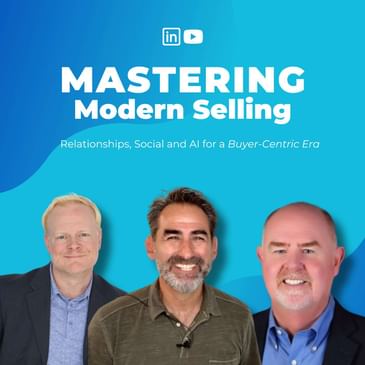
[00:00:01] Welcome to Mastering Modern Selling, relationships, social and AI in the buyer-centric age. Join host Brandon Lee, founder of Fistbump, alongside Microsoft's number one social seller Carson V Heady and Tom Burton, author of The Revenue Zone and co-founder of LeadSmart, as we explore the strategies and stories behind successful executives and sales professionals.
[00:00:24] Dive into business growth, personal development and the pursuit of excellence with industry leaders. Whether you're a seasoned executive or an aspiring leader, this podcast is your backstage pass to today's business landscape. This is Mastering Modern Selling, brought to you by Fistbump.
[00:00:50] All right, Brandon, you're up.
[00:00:52] We're off the rails and forget the agenda.
[00:00:55] Welcome to Mastering Modern Selling.
[00:00:58] That was the most brilliant thing I've ever heard you say.
[00:01:01] Did we just go live?
[00:01:03] Yeah, that was great.
[00:01:04] We did go live.
[00:01:06] Great.
[00:01:07] Yeah, so for everybody, we were talking about how long we would actually follow the agenda before we would just go off the rails and go into rant, you know, different conversations.
[00:01:17] And so I just started off the rails. That's all.
[00:01:20] So welcome to Mastering Modern Selling. Sorry we started off the rails.
[00:01:23] We're tossing the script.
[00:01:25] That's right.
[00:01:26] I think that's part of modern selling. You've got to go with it.
[00:01:30] You know, there's a chapter in this book about being entrepreneurial and being agile.
[00:01:36] So I'm pretty sure that we were just entrepreneurial and agile right there.
[00:01:40] How's that?
[00:01:40] Absolutely. Let's go with it.
[00:01:43] You think I actually read the book, huh?
[00:01:45] You are my original hype man of the book.
[00:01:48] That's right.
[00:01:49] So I appreciate it.
[00:01:51] That's right.
[00:01:52] Okay, so I'm going to put us back on the rails just for like 20 seconds and then we can go back.
[00:01:59] So welcome everybody.
[00:02:00] Episode number 113.
[00:02:03] Welcome, Amy.
[00:02:03] Great to have you.
[00:02:04] I think we're going to have a very fun discussion today on things.
[00:02:08] And I just have to face to face.
[00:02:12] Thank this bump.
[00:02:13] Easy to say, right?
[00:02:14] Thank this bump again for their sponsorship and everything that they're doing to keep the production and all the stuff going on the show.
[00:02:22] Brandon, though, you do have a webinar coming up tomorrow.
[00:02:25] We do.
[00:02:25] We actually, yeah, actually.
[00:02:27] So one of the things and this is, you know, come out of Carson and I talking over the years, Tom and I talking over the years and a little bit of Carson's salesman on fire playbook.
[00:02:35] But it's really about how do we how do we leverage these live shows and podcasts for prospecting purposes?
[00:02:43] Right. So often live shows, LinkedIn, you know, podcast gets thrown in the marketing bucket.
[00:02:50] But I think we've we've evolved because buyers have evolved.
[00:02:53] And I think Amy's going to talk a lot about this with the modern seller today that we need to adapt.
[00:02:58] And so how do we use a LinkedIn live show one foot in marketing?
[00:03:04] But how do we put that into a playbook that helps us with prospecting and outreach to create more conversations, accelerate those conversations?
[00:03:13] And that's what we're going to talk about tomorrow in the webinars.
[00:03:16] What's the playbook on using a LinkedIn live show for outreach and prospecting purposes, not just for marketing and go, oh, we created great content.
[00:03:25] Yeah. So what if we don't have pipeline?
[00:03:27] How do we use this content to fill pipeline?
[00:03:30] We'll make Carson proud.
[00:03:32] All right.
[00:03:34] What time is the webinar?
[00:03:35] You're going to drop it in the link or what time?
[00:03:38] We'll drop the link in there in the comments.
[00:03:40] I know Alex got that all set up for us.
[00:03:42] I got to sign up for that.
[00:03:44] Yeah, you've been living it for 113 episodes.
[00:03:47] That's right.
[00:03:48] So.
[00:03:49] All right.
[00:03:50] Well, good stuff tomorrow.
[00:03:51] So, Amy, welcome.
[00:03:54] First off, you know, tell us a little bit about you, your background, and then we'll completely go off the rails.
[00:03:59] So.
[00:04:00] Perfect.
[00:04:01] Well, hello, everybody.
[00:04:02] There.
[00:04:02] There's my model in the in the bottom corner there with the book.
[00:04:06] It's great to be here.
[00:04:07] And thank you for inviting me as a guest on the show today.
[00:04:10] So just a little bit about my background.
[00:04:12] I got my start in technology.
[00:04:15] My first 10 years of my career was in tech.
[00:04:18] I worked for companies like IBM and Lenovo, and I was a quota carrying salesperson for most of that time.
[00:04:24] And then I took a big pivot into entrepreneurship and started a company in the learning and development space, which has evolved over the years.
[00:04:32] And what it looks like today is I love what I do.
[00:04:36] I get to work with mid market sized organizations, mostly CEOs, sales leaders across primarily manufacturing professional services and some technology.
[00:04:46] And I work with them on everything from sales and growth strategy to skill development for sales teams and sales leaders.
[00:04:54] And then all of those supporting structures that help a sales organization to be successful, whether it's process or comp planning, territory planning, all those things that surround a sales team.
[00:05:07] And so that's what I do in my day job.
[00:05:10] And then a fun fact about me is I'm a volunteer for the Girl Scouts, Girl Scouts of Ohio's Heartland.
[00:05:16] And I just finished a four year term as a board chair for that group.
[00:05:20] So that's how I get my leadership fix.
[00:05:23] Do you have a lot of cookies?
[00:05:25] No, I could ask that question a lot.
[00:05:27] I do have a few boxes in my freezer, but I don't have like an inventory stash in my house.
[00:05:35] Tom, I got you covered.
[00:05:36] So my seven year old last year, she had 357 percent to goal.
[00:05:42] And Apple doesn't want ready for you, Tom.
[00:05:46] OK, if you're hiring, you hire a former Girl Scout.
[00:05:50] You're here.
[00:05:51] I have two going on three in this house.
[00:05:54] So, yeah, I love it.
[00:05:57] Excellent.
[00:05:59] You know, I saw and I think I saw recently this Girl Scouts are selling other things to like shampoo and other stuff like soap.
[00:06:06] Is that is that true?
[00:06:07] It's not just cookies anymore.
[00:06:09] Oh, I don't know. I don't know about that.
[00:06:10] I do know that the Girl Scouts, they do have like some licensing and things like that.
[00:06:14] So you might see some Girl Scouts, some Girl Scout branded products.
[00:06:18] But but a fun fact about the Girl Scouts, the cookie program is it's an entrepreneurship and leadership program.
[00:06:24] It only runs three or four months out of the year.
[00:06:27] It is the second largest program and second largest cookie brand only behind Oreo.
[00:06:34] Wow.
[00:06:35] Actually, I dropped a few pounds.
[00:06:37] You kidding?
[00:06:37] Come on.
[00:06:38] I'm in fighting shape.
[00:06:40] That's it.
[00:06:40] I'm ready to go out with Tyson.
[00:06:42] OK, so show show.
[00:06:45] What's the best cookie and how do you eat it?
[00:06:48] Because for me, it's frozen thin mints like there's no competition there.
[00:06:53] So now it depends on who you ask.
[00:06:55] My my my favorite cookie is the Samoa because I like chocolate and coconut.
[00:07:00] However, you might whatever somebody's favorite cookie is.
[00:07:03] It's usually paired with a really well constructed complimentary cocktail.
[00:07:09] Oh, there you go.
[00:07:11] Get a little sophisticated.
[00:07:14] They don't be a show.
[00:07:16] And it called cookies and cocktails.
[00:07:17] They don't.
[00:07:19] They don't teach pairing for Girl Scouts, do they?
[00:07:22] How to.
[00:07:22] And live shows.
[00:07:24] Brandon's next live show.
[00:07:26] That's right.
[00:07:26] That that's it.
[00:07:27] That's adults.
[00:07:29] Let me be clear.
[00:07:31] I will tell you your cookies.
[00:07:33] There you go.
[00:07:34] So and so Bob weighed in on the thin mints as well.
[00:07:37] I don't know if he likes them frozen or not, but I would tend to agree the thin mints are my my favorite.
[00:07:42] You.
[00:07:43] That is the most popular Girl Scout cookie actually.
[00:07:45] Thin Mints.
[00:07:46] So you guys are spot on.
[00:07:47] You're on trends.
[00:07:49] I won't throw the tag along.
[00:07:50] He's away.
[00:07:51] That's for sure.
[00:07:52] All right.
[00:07:53] So that wraps up another episode of cookies and cocktails.
[00:07:56] Thanks, everybody.
[00:07:57] I think we solved it.
[00:07:58] We really went off the rails, but.
[00:08:00] I'm going to see Carson making drinks from cocktail.
[00:08:03] That's true.
[00:08:04] I've got my little mini bar over here.
[00:08:05] I could do my little shaking.
[00:08:07] Yeah.
[00:08:07] There you go.
[00:08:09] All right, Tom.
[00:08:09] It's on track.
[00:08:10] I'm going to put us back on track just for a minute and then we'll go back off.
[00:08:14] But so.
[00:08:15] So, Amy, you know, you talk obviously a lot about modern selling.
[00:08:18] Obviously, the show is modern selling.
[00:08:20] What what do you think is the key ingredient, the key piece or key importance of modern selling in this day and age?
[00:08:28] Yeah.
[00:08:30] And I think sometimes we think about modern selling meaning like it's all about maybe like technology or things like that, which it obviously plays a big part.
[00:08:39] But I define someone who's a modern seller.
[00:08:42] There's like three attributes that I would say that they have.
[00:08:45] The first is, is that well, in no particular order, they bring so much value to the equation that they really can't like the product or service that they bring to market can't be disconnected from them.
[00:08:58] That that's how valuable they are to their clients and prospects.
[00:09:01] Also, someone who's a client or even a prospect really can see how they are someone who helps them to improve their business like a competitive advantage to improve their business.
[00:09:14] And then I would say, lastly, and this is probably one of those terms that we use a lot.
[00:09:19] But they really are someone who is trusted to give excellent advice, to ask tough questions, to be consultative.
[00:09:28] They aren't fearful to do that.
[00:09:30] And they really embrace that.
[00:09:31] So I would say those are some common threads that I see in modern selling across any industry.
[00:09:37] Amy, when you work with senior leaders, what would you say are the biggest disconnects that you see or maybe the things that they could or should do relatively quickly to get themselves closer to where they need to be?
[00:09:50] Yeah, you know, it's depending on the size of the organization.
[00:09:54] Interestingly enough, I see several organizations and industries that actually don't have sales strategy created and implemented.
[00:10:07] And that's one thing that I am seeing a lot lately that's a real opportunity to help organizations to do that.
[00:10:16] So when you are lacking that sales strategy, whether it's in a segment or across the organization, it's really hard to have a North Star to work toward and to bring your teams along with you.
[00:10:30] So let's unpack strategy a bit.
[00:10:32] Like when you come in and you see the missing strategy, what are you where are you seeing those missing or those holes, if you will?
[00:10:40] And then what do you think are the key elements to fill in the gaps for that strategy?
[00:10:46] Yeah.
[00:10:47] And, you know, organizations, the organizations I'm working with are already successful.
[00:10:53] So they've created success.
[00:10:55] And many of them are realizing that in order to get to that next level of success, having that formalized strategy that they're implementing, that accountability, that's what they want it.
[00:11:07] That and they're looking for that.
[00:11:09] I don't need to convince them that they need it.
[00:11:11] They realize that they need it to get to that next level of success.
[00:11:14] So that's probably one thing that I see.
[00:11:17] The second thing that I see is the need to focus on the vital few and not to have too many things.
[00:11:24] There's no shortage of potential strategies that we could put into place, which are the ones that are going to make the most difference.
[00:11:31] And then I would say lastly, where I see a disconnect is simply with the implementation piece and the accountability piece.
[00:11:40] It's fun to create strategy.
[00:11:41] It's not always as fun to implement it.
[00:11:44] And that's where you can lose accountability.
[00:11:47] Things can lose priority.
[00:11:48] The strategy gathers dust.
[00:11:50] I love that you called that out.
[00:11:52] I'd love to get some practical advice tips on how the implementation can be done better.
[00:11:58] I find that we come up with a lot of great ideas when we're trying to build and nurture sales culture.
[00:12:05] But sometimes the problem is there's no guardrails in place.
[00:12:08] We don't by default put in the, hey, we need to circle back on this.
[00:12:13] We have a great call.
[00:12:14] We come out of the gate strong.
[00:12:16] But then there's no checks and balances along the way and mutual accountability.
[00:12:20] What are some of the things that you recommend to these organizations to improve implementation and execution over time?
[00:12:28] Yeah.
[00:12:30] This might sound a little self-serving, but outside help is really important.
[00:12:35] I used to have a speaking coach who would tell me she had this phrase that I loved.
[00:12:40] And it's, you can't see the label from the inside of the jar.
[00:12:44] And when we're in it, it can be really hard to get above it or outside it to just be creative and to understand what our options are.
[00:12:55] So I find that blend of outside help, but also inside leadership.
[00:13:00] So for every, so I call them work streams.
[00:13:02] So for every work stream that we put into a sales strategy.
[00:13:05] So let's say, for example, one of them is lead generation, which is pretty common with most sales strategies that I help to design.
[00:13:12] Who, who's going to be the one leader that owns it?
[00:13:16] Who owns it above all else?
[00:13:18] Because that's the individual that's going to need to drive that accountability through the organization when something gets off track.
[00:13:23] So that, that true ownership is, is also a piece.
[00:13:27] When you get that right, you improve your odds of implementing it.
[00:13:32] Well said.
[00:13:34] Hey, I wanted to touch on Bob's comment here.
[00:13:36] And, and I thought it was an interesting one.
[00:13:38] He says he asked clients, right?
[00:13:40] If there's successful on purpose or by accident, is that a question that you can ask?
[00:13:47] And, and what kind of answers do you get?
[00:13:50] Or maybe you don't answer it that same way, but a lot of times people, as you said, they're successful already.
[00:13:54] How did they get to that point?
[00:13:56] Yeah, I like that question, Bob.
[00:13:58] If they're successful on purpose or accident,
[00:14:00] that's probably one of those questions where they say, Ooh, I hadn't really thought about it that way.
[00:14:04] Right.
[00:14:05] That's how you know you got a good question.
[00:14:07] You know, I've had several clients who've offered that up to say, you know, we, we have been successful in spite of ourselves or prospective clients might say we've been, we've been successful in spite of not having a formal strategy.
[00:14:20] Or we've created success over here, but the, but this over here, we put a lot of time, energy, money into it and we weren't, weren't successful there.
[00:14:29] So some might say we've been successful in spite of, and that to me is a good indicator that they have some awareness going on and they're going to be open to more open to the conversation about how do you get to next?
[00:14:45] Amy, I have a question.
[00:14:46] Can we, we shift to that strategy side?
[00:14:49] How are you approaching that?
[00:14:51] And, and I, with this modern selling, buyers have changed so much technology.
[00:14:59] There's challenges with cold calling, with leaving voicemails.
[00:15:02] There's challenges with spam folders and cold outreach.
[00:15:05] How, how are you even, you know, addressing the strategy?
[00:15:09] Like, where do you start nowadays with looking at a go-to-market strategy?
[00:15:16] Right.
[00:15:17] It's kind of, there's a little bit of like that spaghetti on the wall going on.
[00:15:21] Because when you ask somebody like, what does success look like to you?
[00:15:25] Or what, what are, what are your goals and initiatives for the next year?
[00:15:29] You, you, you get a lot of inputs.
[00:15:33] So if I were to kind of categorize that, I would say the first is being able to take a lot of inputs and organize them into easy, easy, easy categories.
[00:15:44] So that you can kind of see it and make, make determinations about what your priorities are.
[00:15:50] I'm pretty methodical about it.
[00:15:52] And I think that that's, that can be appreciated.
[00:15:55] It's not, oh, we're just going to have this blank slate.
[00:15:58] I do have a process that I follow, a framework.
[00:16:02] I actually like to use the phrase framework because I think it gives those guardrails, but also gives individual organizations flexibility to think about what's important to them.
[00:16:10] But I come with a framework and I come with an approach that I think instills confidence.
[00:16:18] And like, we'll get from point A to point B.
[00:16:21] But the, the ultimate outcome is I like for a client to have three or four work streams that they will prioritize for the upcoming year.
[00:16:29] And I think that's a little bit of the, the approach as well.
[00:16:33] It's maybe an 18 to 24 month strategy, not a five or 10 year vision.
[00:16:40] In the time, Amy, that you've been serving organizations in this capacity, what would you say have been some of the biggest shifts in strategy?
[00:16:50] And, you know, when I say that I'm kind of meaning, you know, how they are leveraging data to hold their sales teams accountable, how they are leveraging technology for demand generation, social media, et cetera.
[00:17:03] What do you see the best organizations doing as well?
[00:17:05] I'd love to hear about changes and then what are the best of the best doing?
[00:17:09] Yeah.
[00:17:09] One of the things that I've actually implemented into the sales strategy that I do, that I work with, with my clients on is implementing a voice of the customer approach.
[00:17:21] This, this is something that I have a, I have a partner in my network that actually does this work who it's a little bit of a side project, if you will.
[00:17:30] But it's the actual process, it's having a process to listen to your customers and really understand what's going on, not just what you think is going on and what is what your assumptions might be that you run on.
[00:17:44] And it can be really surprising what you learn, what's good, what's not so good that you can use to inform your strategy.
[00:17:51] So I would say that that's one thing that's a differentiator, something that's different in, you know, at least that I've seen in my clients is really embracing that voice of the customer.
[00:18:03] Love that.
[00:18:06] Brandon, did you have something?
[00:18:07] I didn't want to.
[00:18:09] No, I was thinking through that a bit more.
[00:18:11] I was chewing on it a little bit.
[00:18:12] Go right ahead.
[00:18:13] Okay.
[00:18:16] I wanted to go back again to the strategy of, you know, I think it's real easy, right, when there's a lot of macroeconomic momentum, if you want to call it that, for companies to be successful.
[00:18:30] I think where things run into challenges, and this is when the old way don't work, doesn't work anymore, right, is when you actually don't have that tailwind that you're looking for there.
[00:18:41] Are you seeing, you know, I know you're working with a variety of industries, Amy Tech and manufacturing and so forth, but are you seeing that the companies that are becoming more willing and more investing in strategy are ones that are kind of running into those headwinds a little bit?
[00:19:01] Or is there any sort of rhyme or reason on where you're seeing that happening?
[00:19:05] Yeah.
[00:19:06] Yeah.
[00:19:07] So what I would say with strategy and also with skill development, sometimes it's that combination of headwinds and tailwinds.
[00:19:14] If I start with maybe the tailwinds first and then I could go to the headwinds.
[00:19:20] I find that CEOs, sales leaders who are generally forward thinking and very decisive, those are the ones that are going to make the decisions to do this type of work regardless of what's happening around them.
[00:19:37] So that's one observation that I've had over the last several years, that there could be so many reasons for them to not do it, but they still choose to do it because they know it's strategic for their success and for their growth.
[00:19:51] I would say in terms of headwinds, the things that I see I've experienced as challenges just in the industries I work in, there are a lot of companies that are still, there's a little bit of a COVID hangover, if you will.
[00:20:05] And what I mean by that is when I've worked with clients on forecasting, so really probably 2024 is the first, let's call it kind of normal year if there's a such thing anymore.
[00:20:18] But looking at old data, like from 2019, 20, 21, 22, that data is so skewed that it's really difficult to pin down what realistic growth is, realistic growth and stretch growth.
[00:20:35] So one of the things I've worked on with clients is to use their data to take a look at where were you like 2019, 2020?
[00:20:45] Because some of that data is just going to be honestly garbage data.
[00:20:49] What's a realistic growth number?
[00:20:51] And then what's a stretch number that we could get to sales teams to go after?
[00:20:55] Because some of them had awesome years with COVID and some of them were just dragging bottom through COVID.
[00:21:01] Whatever the extreme was, the data is just really skewed.
[00:21:04] So that's almost like an internal headwind that companies have had to get past.
[00:21:09] So are they using the data from the COVID era to make decisions in today's world?
[00:21:16] Is that kind of where they're, whether it was good or bad, or is it, what is it they're running into?
[00:21:22] No, I would say they're not using that anymore.
[00:21:24] What they realized was when they set sales goals using, you know, a couple of years ago, using COVID data, the sales goals weren't, they just weren't accurate because the data that they were working with wasn't accurate.
[00:21:39] I think we've probably gotten through, hopefully, some of that and kind of on the other side of it.
[00:21:45] But that's something that I noticed in the last couple of years.
[00:21:48] And then with a lot of my clients, whether it's professional services, manufacturing tech, cost of money, inventory, especially in manufacturing and distribution, you know, companies still working their way through that.
[00:22:00] Wow.
[00:22:01] That's a long hangover.
[00:22:03] Right?
[00:22:04] It's like a five-year hangover.
[00:22:06] I mean, it's, it's, it's legit.
[00:22:08] It's, it's affecting, I like the way you called that out, or at least brought it to attention is that it's, there's still so many effects.
[00:22:15] Like we can't forecast accurately because we don't really know what was realistic around our data.
[00:22:22] Like, did we hit the numbers we should have, or were we lucky that we got the numbers that we did because they had all these different changes that were taking place?
[00:22:30] And then how do we move forward?
[00:22:32] Right.
[00:22:34] But I also find that CEOs and leaders that they, they realize that's happening, but it's like, all right, this is happening, but we have to, we have to move past it because we, we need to start looking into the future.
[00:22:48] I had one, one client say to me, he's like, I'm really excited.
[00:22:51] I'm looking forward to looking forward is, is what he shared.
[00:22:54] And I'm like, that was just a brilliant way to phrase it.
[00:22:57] I'm looking forward to looking forward.
[00:22:58] And I think there's still opportunity, like we create, say it's maybe it's, it's revenue goals.
[00:23:05] We can create those and hold them loosely still knowing that, okay, we use 22 and 23 data that may not have been that great.
[00:23:13] We do the best we can off 24 data as we project into 25, but you can always still create it, but hold it a little bit loosely.
[00:23:21] I think is probably a wise, a wise thing for another year or two maybe, and then get back to whatever normal is.
[00:23:30] I was going to bring up Anthony's comment here.
[00:23:32] This is, I think a strategy that came out of Amazon, if I'm not mistaken, where you, you know, basically voice of customer, you have a meeting and you have a chair in your meeting room that is empty and designated quote unquote for your customer.
[00:23:47] So that you're getting the feedback from, I think the starter, or one of the things that Jeff Bezos did a lot with Amazon is always having the quote unquote customer in the room.
[00:23:57] And I think that that Amy ties into what you were just saying is constantly looking at, okay, well, what value am I providing to the customer in my strategy?
[00:24:06] Not just the value I'm providing to my sales team.
[00:24:10] Yeah.
[00:24:12] And that's a really interesting idea.
[00:24:14] And I suppose, depending on the different types of customers that you serve, you can have a lot of empty chairs in that room.
[00:24:19] That's true.
[00:24:20] Yeah.
[00:24:21] That's true.
[00:24:22] Can I shift us into one of the things that we had talked about in our agenda, and I actually want to get back to it, was building trust before the first conversation.
[00:24:34] Amy, I'd love to hear you talk about it.
[00:24:35] Because I think I've asked, I ask a lot of times with customers, you know, what's important to you.
[00:24:41] And somewhere it usually comes out like being a trusted advisor.
[00:24:46] And I usually ask the question and go, okay, well, how are you actually giving?
[00:24:51] If you want to be seen as a trusted advisor, you need to give trusted advice.
[00:24:56] And a lot of times, oh yeah, we do that all the time.
[00:24:59] Like, no, when do you do that?
[00:25:01] And how do you do that?
[00:25:03] Because the big challenge I find, Carson, tell me if you think I'm wrong, the big challenge right now is those first conversations.
[00:25:09] Just getting started with them.
[00:25:11] And if you're not seen using Larry Levine's, if you're seen as having commission breath, not being a trusted advisor, it's really hard to get those initial, those first conversations.
[00:25:23] So, Amy, how do you lead and work with your teams on developing or building that trust before the first conversation?
[00:25:32] Yeah.
[00:25:32] I love that phrase, commission breath, Larry.
[00:25:35] I love you, Larry.
[00:25:40] Right?
[00:25:40] Yes, absolutely.
[00:25:42] Love his work.
[00:25:43] And he and Daryl.
[00:25:45] Excuse me.
[00:25:47] Yes.
[00:25:48] So there's probably maybe two lanes here.
[00:25:51] There's the lane that's, I'm going to call it the outbound lane.
[00:25:56] There's the lane where we are making the proactive outreach.
[00:26:00] And then there's the lane where you get inbound opportunities.
[00:26:06] Now, for me in my world, a lot of that is, some comes through technology avenues, but a lot comes through introductions from people that trust me.
[00:26:16] And they trust, they trust me enough that they're willing to introduce me to people that they know, because they know that I'm going to take care of that conversation in the right way.
[00:26:25] So, let me start with, I'm going to start with the outbound part and maybe work my way inbound and you can have some banter about some different ideas here.
[00:26:37] But for me, it's needing to be out in the marketplace.
[00:26:43] And the marketplace can mean a lot of things.
[00:26:46] The marketplace could be the LinkedIn marketplace.
[00:26:48] Like what we're doing right now is a great example of that.
[00:26:52] It could be a physical geography.
[00:26:54] So I live in Columbus, Ohio.
[00:26:57] There are no shortage of organizations here that I would love to work with and will be a great fit for me to work with.
[00:27:05] But where are those leaders?
[00:27:07] And am I in the same places that they are so that I improve my odds of actually getting to meet them and have a conversation with them?
[00:27:14] So I would say broadly having to be visible and out in the marketplace.
[00:27:18] But when you are visible and out in the marketplace, what are you out there talking about and sharing?
[00:27:25] Now, for me, I'm a prolific writer.
[00:27:28] I do video.
[00:27:29] I do a lot of those things that help me to be proactively out in the marketplace.
[00:27:35] That savvy sellers who work in an organization, they might rely on their organization for some of that.
[00:27:41] But they can also be out in the marketplace, too, because that's part of building your visibility and being somebody who's trusted before you ever before you ever earn the right to a conversation.
[00:27:52] And I always think about it as earning a conversation, not just getting a conversation.
[00:27:59] That's good.
[00:28:00] So, Brandon, doesn't that tie beautifully into having a live show or?
[00:28:04] So it does.
[00:28:06] And that's I mean, I ask those questions because I think, you know, what what I've discovered over the last couple of years, especially doing the show, we talked about personal brands.
[00:28:15] And the bottom line is getting a lot of people to do, especially CEOs, to do videos, to use a LinkedIn post, go comment on other people.
[00:28:24] So it's hard, right?
[00:28:25] Their big default is I don't have time.
[00:28:27] But normally what they mean is I don't know what to do and it scares the shit out of me to do it wrong and ruin my reputation.
[00:28:35] So what what we've just discovered is the LinkedIn live show is the easiest and best way to do that.
[00:28:43] They don't really have to prepare that much.
[00:28:46] You know, you have a great guest like Amy and have a conversation.
[00:28:49] And most of your research is already in your head because you're just having a chat.
[00:28:54] We're having a conversation.
[00:28:56] And then that becomes the bit of that source of earning trust.
[00:29:00] You could reuse, repurpose the content in lots of different ways.
[00:29:03] So, yeah, I mean, it fits right into the LinkedIn live show.
[00:29:06] And it wasn't that we started going, hey, let's go promote and do LinkedIn live shows.
[00:29:11] It was from this show over 114 episodes when I finally started Don on me all these, you know, call it an inbound, but it was a connection request from a sales leader saying, hey, I've watched your show for the last month.
[00:29:26] Can we talk?
[00:29:28] Like, oh, yeah, sure.
[00:29:29] And then when I actually started tracking the data going like 70 percent of our new opportunities have come through some way, shape or form from the show.
[00:29:39] This just makes a lot of sense.
[00:29:42] Yeah, honestly, you don't even have to prep at all to jump on a LinkedIn live show.
[00:29:45] I was legitimately negotiating the biggest deal of my year right up until the second this show started.
[00:29:51] But you guys make it easy, especially the fact that we don't really stick to a script.
[00:29:55] Amy, something else that just jumped out at me was, you know, you're working with these successful organizations.
[00:30:01] What's the relationship with sales and marketing?
[00:30:04] Because I just I feel like sometimes there's such a disconnect in, you know, hey, we've got these, you know, M.A.Q.L.s coming in.
[00:30:11] We've got, you know, sales saying this isn't working.
[00:30:14] You know, we need more of this.
[00:30:16] We need more of that.
[00:30:17] We've talked about this on this show before.
[00:30:19] I've always had a really great relationship with marketing because I'm able to take what they're leveraging and then infuse it into the demand generation engine that I've created, whether I've been an individual contributor or a sales leader.
[00:30:30] And just your observation of what are some of the things that you see?
[00:30:35] Maybe there's commonalities in great organizations about sales and marketing are gelling.
[00:30:39] And then maybe some of those landmines where they're not working well together.
[00:30:43] Yeah. If I were to offer up maybe two commonalities that I think could either make or break, it'd be either really good or really bad, depending on which side you land on.
[00:30:54] A CEO or sales leader that believes marketing and sales should be integrated and they lead the organization that way.
[00:31:01] That's a recipe for success.
[00:31:03] They can have a chief marketing officer.
[00:31:05] They can have a chief sales officer.
[00:31:07] But from leadership down, those two functions will be integrated and work together because I was just writing an outline on this before we jumped on this.
[00:31:17] And one of my outline points was marketing and sales both sell.
[00:31:22] And so if the CEO embraces that, then that's going you're going to improve your odds.
[00:31:27] The other commonality is if you have in leverage technology, your CRM, like all the marketing integration with the CRM to help make that easier.
[00:31:41] And you're tracking opportunities and you have that discipline in your organization through technology.
[00:31:46] That's actually going to help you with that.
[00:31:50] Without the technology, we could talk a lot about integration, but it can be really difficult to make it happen.
[00:31:55] I love that.
[00:31:56] I mean, I feel like somebody has to be that conduit between sales and marketing because by default, I mean, I vividly remember being in a situation years ago where we had marketing training sales on the value and the quality of these particular leads.
[00:32:13] And I was an individual contributor at the time.
[00:32:16] We're dialing down these lists.
[00:32:17] I'm striking out left and right.
[00:32:19] And I like to think I'm a pretty good salesperson.
[00:32:22] But what I ended up doing was I ended up taking all these leads and I'm a law of averages guy, too.
[00:32:27] I ended up taking all these leads.
[00:32:28] I funneled them into a grid and I would, in essence, save them for newsletters, webinars, things of that stature.
[00:32:34] And I started getting results like gangbusters.
[00:32:37] You know, it was the when I reach out to one or two or five or 10 people, I may completely strike out.
[00:32:42] But if I've got a newsletter list, I've got a webinar list and I'm messaging thousands upon thousands of people at the same time with these things, you start to get hits.
[00:32:50] You start to be able to get the telemetry.
[00:32:52] And that's marketing has been infinitely helpful in that because they'll help me get the telemetry of like, who's opening this?
[00:32:58] You know, how long are they looking?
[00:33:00] What are they looking at?
[00:33:01] What are they downloading?
[00:33:02] And now I've got this actionable intelligence.
[00:33:04] So the leads become warmer.
[00:33:06] And I think the other element that I've seen is really being a champion for marketing, helping them figure out, OK, this by default, the way we were doing this isn't helping salespeople.
[00:33:18] But if we work together, you know, I can really champion what you're doing.
[00:33:23] And it's just it's been a very great relationship.
[00:33:26] I think that is the key is just having that conduit, figuring out the way to get them in the same room, marching to the same drum.
[00:33:32] And then, frankly, going after each other's KPIs.
[00:33:37] That's a trust building activity, too.
[00:33:39] We talk like trusted advisor and trust are like these big concepts like, oh, you just do it.
[00:33:44] Everybody, you know, we know we should be doing it.
[00:33:46] How do you actually do it?
[00:33:47] That's a great example of how you have people, people in the room that are willing to be in the room to sort this out and help everybody to be successful.
[00:33:56] Yeah. And Carson, I appreciate everything about you when you talk about this.
[00:34:01] I do want to call out this one thing.
[00:34:02] And when I joke around, I say you're a machine.
[00:34:05] You took that on and made it happen.
[00:34:11] Too often in companies, what I see is sales over here saying F you to marketing and marketing's over here saying F you to sales.
[00:34:18] And there's nothing in between.
[00:34:20] There's no one in between that's bridging that gap.
[00:34:23] What you just said is I went to marketing and I said, hey, if you did this, it would help us.
[00:34:27] And this is what I'm doing.
[00:34:28] You made it very proactive.
[00:34:29] And that's what makes you a top seller as well.
[00:34:33] But I think to Amy's point said when there's that integration, there's a CEO that says sales and marketing need to be aligned.
[00:34:41] They need, you know, let's blow up the silos.
[00:34:44] I think, Amy, that's when you and I met when I when I talked in it was like 2016 about blowing up the silos of sales and marketing.
[00:34:51] And then I got laughed at.
[00:34:54] I think if you have that leader that is willing to say we've got to bring these together, then it doesn't fall on the shoulders of a salesperson who 99, 999 times out of a thousand.
[00:35:06] You don't have a salesperson like you that's going to say, hey, guys, we need to do this and bring it together.
[00:35:13] Yeah, I think I think I've known you.
[00:35:15] I think your youngest was a toddler when when when you were when you talk talking that message.
[00:35:22] You're not really drinking age at that point.
[00:35:25] Right.
[00:35:26] I think, Carson, your comment is so spot on because that's an example of a really like interested and proactive salesperson.
[00:35:34] And what CEO or sales leader wouldn't love to have a team of people that take it's it's they take responsibility for their own sales success.
[00:35:46] And they're interested in learning about this and figuring it out.
[00:35:50] And you're not waiting for somebody to open the door for you.
[00:35:53] You're looking for the door and opening it and just making it happen.
[00:35:56] Yeah. I mean, look, there's an area of empowerment here.
[00:35:59] There's an element of empowerment.
[00:36:00] I think, you know, we're talking to sea levels on this show right now, but we're also talking to individual contributors.
[00:36:05] You can be the change.
[00:36:06] You can go out and create this.
[00:36:08] And we talk about so many things, you know, being the brand, building your brand, being a problem eliminator.
[00:36:13] That was a challenge that I saw in my organization years ago.
[00:36:17] So I just decided to lean into it, be the change.
[00:36:20] And you're all empowered to do that.
[00:36:22] Now, it's not going to necessarily always be an easy road, but it will certainly enhance and improve your results if you are the torchbearer of those types of efforts.
[00:36:31] Yeah.
[00:36:32] I want to hit a couple of the questions, comments here that are quite good.
[00:36:36] Bob, I think, was reading my mind because I was going to ask you, Amy, it just wouldn't be as well articulated as Bob's question here.
[00:36:43] But he was talking about is marketing measures demand sales generated.
[00:36:48] The other thought is that marketing can drive demand.
[00:36:51] My question was going to be related to that as well is, as you try and bring those two organizations together strategy-wise, a lot of times they're compensated.
[00:37:02] They have different objectives.
[00:37:04] They have different outcomes.
[00:37:05] They're compensated based on different outcomes.
[00:37:08] How do you practically get that alignment?
[00:37:11] And then going back again to what Bob was saying is that it's really sales and marketing together that are creating demand and ultimately turning that demand into revenue.
[00:37:24] And a couple of things maybe to unpack in there.
[00:37:27] And the first is coming back to the question itself.
[00:37:29] My philosophy is that marketing and sales both drive demand.
[00:37:35] Marketing and sales might have some ultimately like some different like final measuring sticks, but they are both responsible for driving demand and they do it in different ways.
[00:37:45] Like I believe that a salesperson should also be a prospector.
[00:37:49] It doesn't matter what types of accounts you have or your territory.
[00:37:53] You have to prospect and generate outbound activity, just like marketing needs to generate inbound activity.
[00:38:00] But to go back up to like the sales strategy piece, and I'm just I'm thinking about some some recent clients that I've done some of this work for where when we think about what the key work streams are that they would want to work on.
[00:38:13] There's almost always one that has like a lead generation component to it.
[00:38:16] It might look a little different organizationally, but it's how do we drive more leads into the organization?
[00:38:23] There's also some organizations that want better market intelligence.
[00:38:28] They actually need better data and better resources to uncover where might their target markets be?
[00:38:35] Who might those target markets be?
[00:38:37] They may not have as much of the maturity on like having a database of leads.
[00:38:42] Some organizations might be really mature in having a database of leads that would be quality.
[00:38:48] So some of this really depends on the maturity of the organization.
[00:38:51] But I think to answer your question and tell me if we need to dig into this a little bit more.
[00:38:56] If I'm working with a leader on strategy, there is going to be a marketing component in there as well as a sales component.
[00:39:03] And I'm going to look at the activities with them too.
[00:39:06] So we determine together which ones make the most sense and actually tie them together.
[00:39:12] I think there's what I hear, what I read a lot of times too, is the marketing's perception of like lead gen is pure top of the funnel.
[00:39:24] And then sales somewhere picks up and runs with it.
[00:39:28] But I think this blending of the sales and marketing and having them look at the entire funnel together.
[00:39:33] Like what does marketing contribute throughout the entire funnel process?
[00:39:37] What does sales contribute to that funnel process?
[00:39:40] And that's really, Carson, what I hear you say.
[00:39:42] When you say you take all, you get all this great stuff from marketing, but you're making the calls and nothing's happening.
[00:39:48] But you go, aha, what if I take those and put them into something nurturing and helping, you know, giving sales, giving feedback.
[00:39:55] So marketing knows, hey, these aren't ready to call necessarily.
[00:39:59] Let's move them into some of these nurturing campaigns before we move them over.
[00:40:03] But Tom, to your point, when their KPIs are different, when marketing's getting judged by how many MQLs they're producing, whether they close or not, or they have a high propensity to close or not, it doesn't matter.
[00:40:14] They're just looking at those KPIs of we handed over X amount of MQLs.
[00:40:19] I think that the challenge is looking at the entire funnel process and where both teams contribute and are aligned.
[00:40:27] And then I think getting, you know, mutual success when they win.
[00:40:33] And that's the judgment part of data that says, oh, I might be, you know, we might hand over a certain number of leads.
[00:40:41] We don't know what the quality of those are, but we have a number that we're hitting just as an example.
[00:40:48] Or on the sales side, maybe I sold a million dollars worth of widgets, but it took us to cost us $2 million to deliver those widgets.
[00:40:57] That's not healthy sales either.
[00:40:59] So numbers are numbers, but then there's the judgment in the conversation behind the numbers.
[00:41:04] What do those actually mean?
[00:41:06] And if we're going to generate a thousand leads, how quality are they in sales?
[00:41:12] Can we have conversations about this to make sure that we're doing what we need to be doing?
[00:41:16] Actually, you just reminded me, I have a client I'm working with right now.
[00:41:19] They're in the marketing organization and they shared with me their marketing and sales funnel.
[00:41:24] And they actually talked about not just the top of the funnel, but all the way down to when they become clients and where marketing still plays a role in that.
[00:41:34] And I thought that that was really, really smart because the marketing team was thinking about sales.
[00:41:41] That's good.
[00:41:47] Hey, Tom, you're tap the microphone.
[00:41:49] You're muted.
[00:41:50] There you go.
[00:41:51] How about now?
[00:41:51] Can you hear me now?
[00:41:53] Your microphone's funny.
[00:41:54] It just decides to do that every now and then.
[00:41:56] It's tired of listening to me is what happens.
[00:41:58] It's actually, it just misses your touch because all it needs is a little touch and it goes right back on.
[00:42:03] We'll love Pat and it's okay to go.
[00:42:04] A little, yeah.
[00:42:06] Hey, this is a question I think, Brandon, for you back to the point of the live show, right?
[00:42:11] Or the podcast.
[00:42:12] And Anthony's asking, do you think, you know, executives when they get into this, are they, do they go into this thinking, hey, this is just a conversation?
[00:42:21] Are they thinking like, hey, I've got to, I'm the executive, I'm the CEO, I better perform.
[00:42:26] I better stay on script.
[00:42:28] I better, you know, whatever it is, right?
[00:42:30] There's an expectation.
[00:42:32] Yeah.
[00:42:32] And look, I think there's some mindsets around that.
[00:42:36] And there's a brand that goes around the show.
[00:42:39] So I personally like the more informal chat style, like what we do.
[00:42:45] I think for a lot of reasons, one is you don't have to prepare as much.
[00:42:49] You don't have to be on as much.
[00:42:51] You're just having a chat.
[00:42:52] And I also think on the other end, it's received better.
[00:42:55] We've noticed a lot of that over the years, that the more high structured, high produced, perfect lighting, in studio, live with people, the view rates are dropping.
[00:43:08] Unless you're like the big high influencers, right?
[00:43:10] The Elon Musk of the world, the Bill Gates of the world.
[00:43:12] They draw a crowd no matter what.
[00:43:14] But the normal ones of us, that high produced doesn't significantly increase your engagement or your response to it than a less produced environment like something more organic in a chat.
[00:43:30] So it's a mindset issue.
[00:43:32] There's a little bit of a training element of it of just understanding that this is acceptable type of content right now.
[00:43:39] It doesn't diminish your brand, personal or big brand, because it's the consumed type of content.
[00:43:45] That's one of the benefits I think we've had of social media and that we don't have to be perfectly produced and still be received with open arms.
[00:43:54] You just need a microphone that flakes out every once in a while.
[00:43:57] How many people have started a business just with this thing and talking at it?
[00:44:03] So, hey, I want to shift gears a little bit.
[00:44:06] We were chatting before we went on about our favorite topic of AI and technology.
[00:44:11] And Amy, I wanted to get your take on this.
[00:44:13] I think you even said you had some examples you might be able to share on how you're seeing AI and AI technology fitting into the strategy and what's working and what isn't and what's intimidating and what's not intimidating to the different groups.
[00:44:30] Yeah.
[00:44:31] I'm going to first start by sharing.
[00:44:33] Well, when I first wrote The Modern Seller, there is one capability of The Modern Seller called The Modern Seller is Social.
[00:44:39] And one of the early questions that I one of the early questions I received was, so is this all about like social media and technology and all that?
[00:44:47] And I shared, you know, actually, no, it's the opposite.
[00:44:50] It's about identifying the right relationships to build.
[00:44:54] And how do I how do I think about myself?
[00:44:56] How do I build relationships?
[00:44:58] How do I identify the high impact relationships, whether it's in sales scenarios or other scenarios?
[00:45:04] But that the technology piece of it gives us a lot more speed, sometimes overwhelm, right, to be really candid, but speed and access to be able to more easily build the relationships that we want to build.
[00:45:20] And I'm a big fan of when we build a relationship online or rapport online.
[00:45:25] I differentiate between rapport and relationship.
[00:45:27] Rapport is just that it's that early, like, hey, I think there might be something to explore.
[00:45:32] Let's have a conversation.
[00:45:34] That's rapport.
[00:45:35] That's, you know, you don't have a lot of trust at that point.
[00:45:37] But taking a relationship offline is where you start to build trust.
[00:45:44] So I think when I think about tools like AI, I like to use AI for research and to I like to research with AI.
[00:45:56] There's some like experts like Bryn Tillman, Anthony and Reno.
[00:46:00] You know, they're there doing a lot of their own work with AI prompts, which I find really fascinating and I learn from them.
[00:46:07] But I like to use it for research because I find that the better researched I am, the better opportunity that I have to build early rapport and to build trust.
[00:46:16] So I'm always asking myself, how can I use technology tools to help me?
[00:46:20] I'm never going to be the expert in these technology tools.
[00:46:23] I rely on other people that are those experts.
[00:46:25] But I like to figure out how can I use them to help me have better conversations?
[00:46:31] I think that's a great answer, Amy.
[00:46:33] I think we've talked about similar things on the show is how do we use AI to help us be more efficient, not remove the humanity, but let us be more human, more efficiently.
[00:46:46] Yeah.
[00:46:46] Like this morning, I had a call, a prospect call, and I had three people on the call from this organization.
[00:46:52] So I went out to chat GPT and they're in a health sciences industry.
[00:46:59] And I just asked the engine to share with me what are the top five issues facing X in this industry.
[00:47:08] And then I prompted it to give me some refinements and some citations.
[00:47:12] But that was something that I was able to do.
[00:47:14] And I did a couple of other things too, but I probably spent maybe 20 minutes or so getting myself educated on some of the trends and in this industry so that I could have a better, well-versed conversation with them when we have a call.
[00:47:31] Bob made a really good comment.
[00:47:33] You know, businesses still primarily view AI as an efficiency engine, not an effectiveness engine.
[00:47:38] And it's honestly not this like monumental shift to get from one to the other or to incorporate both.
[00:47:45] You know, just this morning, I was working on a couple of campaigns for a couple of my territory managers.
[00:47:51] And, you know, we were putting together some messaging, leveraging AI.
[00:47:57] You know, I'm this person at this organization.
[00:48:00] Amy, you said it.
[00:48:00] I mean, it's all in the prompts.
[00:48:02] I am this person at this organization.
[00:48:04] And I am, you know, sending an email to this person at this organization.
[00:48:08] And give me five bullet points of, you know, why they should consider me as a collaborator or partner.
[00:48:15] And you don't send it exactly as it comes out of the engine.
[00:48:18] You massage it.
[00:48:19] You put your personal touch on it.
[00:48:20] I might have thought of three of those things by myself, you know, off the cuff.
[00:48:24] But it came up with five immediately.
[00:48:26] And in mere minutes, I have this perfect personalized prospecting message that would have probably taken me half an hour to an hour.
[00:48:33] And I would have gotten five, six pings from different people.
[00:48:37] I would have been pulled into a million different directions.
[00:48:39] And that's why people don't prospect or don't look forward to prospecting or think prospecting is too cumbersome.
[00:48:46] We can fix these things in mere minutes.
[00:48:48] And I think that's the power of AI and turning it into an effectiveness engine is it can take that message we would have sent before that might have been a C plus, turn it into an A minus.
[00:48:57] And now it's out the door in seconds flat.
[00:49:00] I was able to send out numerous prospecting messages this morning and got about a 45% hit rate response meetings booked.
[00:49:09] And, I mean, that's really what it's all about.
[00:49:13] 45%.
[00:49:14] 45%.
[00:49:15] And the strengths in numbers, you know, 45% by organization.
[00:49:18] You know, I'm messaging people within the organizations to get the responses that I'm getting.
[00:49:24] So out of like, you know, 20 organizations that I touched this morning, I got nine meetings booked.
[00:49:32] Wow.
[00:49:34] That was all before 9 a.m. in the first cup of coffee.
[00:49:37] I don't believe it.
[00:49:38] You know, one thing I found too with AI, if you notice like OpenAI or ChatGPT, they now have a search capability where it's got much more powerful search capabilities.
[00:49:50] And I found that you can actually go in and do data enrichment.
[00:49:53] So you can go in and say, hey, tell me all of the C executives.
[00:49:58] Is there any news?
[00:49:59] Who are the, so even if it's not apparent or you don't have it in your CRM, you can enrich that data and get all in one place sort of a quick update of everything that's happening in that organization.
[00:50:09] And that's improved just recently.
[00:50:11] I mean, that was not something you could do a month ago or so along the way.
[00:50:16] So I think that's also an example of just being more effective because to your point, Carson, you have that depth of what you're doing and you're having a higher quality.
[00:50:27] Can I point out with this too?
[00:50:28] And this is kind of a recurring theme that we've had on our show is even what you, what we all just talked about with AI.
[00:50:38] If you don't change the mindset and get buyer centric, you're just going to create a lot of content that people don't pay attention to anyway.
[00:50:48] Right?
[00:50:49] I mean, Carson is when you talk about this a lot, like how do I give them value?
[00:50:53] How do I add to them?
[00:50:54] How do I help them?
[00:50:55] How do I, you're constantly thinking about them, which means you're prompting the AI that way.
[00:51:00] It's all your prompts and you're prompting like, Hey, what are these five things that I can do?
[00:51:04] I think to Bob's point on, they look at it as an efficiency engine, not an effectiveness engine.
[00:51:09] Like, Oh, let's kick this stuff out and get it out.
[00:51:12] But the mindset still hasn't shifted enough.
[00:51:15] Right.
[00:51:16] To go, how do we not talk about our features, our functions, our products, our services, and us and start adding value.
[00:51:25] And that's where that, I like, I always come back to that.
[00:51:28] If you want to be a trusted advisor, you want to be seen as a trusted advisor, you better start fricking giving trusted advice instead of just asking for meetings and telling them about your features and functions and pretty stuff.
[00:51:41] It takes finesse and discipline.
[00:51:43] And, you know, Amy, you put it perfectly earlier.
[00:51:46] We've got to earn that meeting.
[00:51:47] And so, you know, like, and the AI engine will spit out a lot of times because I'm putting in, Hey, I'm this person at this company.
[00:51:55] It might spit out products and solutions.
[00:51:57] I take all that out.
[00:51:58] I don't want any mention of product and solution in my initial outreach.
[00:52:02] So that's why it takes finesse and discipline with that first outreach to earn the meeting.
[00:52:06] I'm changing all that to personalize it.
[00:52:08] I know the value that I can bring.
[00:52:10] It's counterintuitive.
[00:52:11] It's based on the fundamentals of sales.
[00:52:13] It has nothing to do with technology or AI.
[00:52:15] It's about the reasons that I've heard for 11 years that I've worked at this company why companies don't want to talk to me or don't want to talk to salespeople from my organization.
[00:52:25] And I flip that on its head.
[00:52:26] You know, they view us as, hey, we write you guys big checks.
[00:52:30] We don't get any value.
[00:52:31] You show up when it's renewal time.
[00:52:32] You show up when you want our money.
[00:52:34] You're always trying to sell us the new shiny new thing.
[00:52:37] So I go straight to the heart of it and say, look, I know you invest very significantly.
[00:52:41] I take that very seriously.
[00:52:42] Here are some things that I believe that we could add some value in right out of the gate.
[00:52:46] I'd love to, you know, review your portfolio, see where we can optimize costs.
[00:52:50] You know, all of these types of things.
[00:52:52] And there's low hanging fruit.
[00:52:54] Get the meeting.
[00:52:55] Then go in.
[00:52:56] Focus on their pain points.
[00:52:57] Stay at the pulse of that organization.
[00:52:59] Sales fundamentals kick in.
[00:53:01] But the AI helps me get those meetings a lot quicker.
[00:53:04] Hey, Carson, I wanted to touch on a nuance of what I think you're saying.
[00:53:09] And you're 45%, right?
[00:53:12] When you're sending out this information to multiple different roles within the organization, correct?
[00:53:19] Not all of those roles may be the authority or the person who has the buying authority or the decision.
[00:53:25] They could be a lower level person.
[00:53:27] But you're still, or maybe, I don't know, not the perfect person, maybe.
[00:53:32] It depends on the campaign, Tom.
[00:53:34] So like, for instance, the one this morning, I went into Sales Navigator.
[00:53:37] I exported all the C-level, VP-level, director-level.
[00:53:40] I deleted some of the ones that I didn't want to be on the messaging.
[00:53:44] So I can be very picky choosy.
[00:53:46] And it might be 30, 40 people in one organization.
[00:53:50] So, you know, that's what pads the stats.
[00:53:52] Instead of reaching out to one person painstakingly, one by one, I'm going to hit 40 people that are buyers in one shot.
[00:53:59] And I just need one to respond.
[00:54:01] And they typically do.
[00:54:03] Right.
[00:54:03] And even if you have that initial meeting and they're not the right person, they're likely going to refer you to that because you've now started to build.
[00:54:09] One of my responses was, hey, this sounds interesting.
[00:54:12] Let me add these three people that you should also be talking to.
[00:54:15] I mean, the oil is out there.
[00:54:19] We just got to dig in the right places.
[00:54:20] And if you've got this drill that will dig in 100 places at once, giddy up.
[00:54:27] That's awesome.
[00:54:28] Giddy up.
[00:54:30] Giddy up.
[00:54:31] Giddy up.
[00:54:33] I think I need to hear a little bit more, you know, Kramer-esque in that giddy up from you, Carson.
[00:54:39] I could do a little door.
[00:54:41] Yeah, yeah.
[00:54:42] I'd love to see it.
[00:54:43] Do we even need more after that?
[00:54:45] Am I full?
[00:54:46] That's why I won't do it on the camera.
[00:54:48] I might actually fall down.
[00:54:51] I know, Amy.
[00:54:51] I was going to go ask you another question, but it's kind of hard to follow giddy up.
[00:54:55] I'm not sure I can follow that up with anything.
[00:54:57] I think we should wrap it up.
[00:54:58] I think we should wrap the giddy up.
[00:55:00] Just wrap it up.
[00:55:03] Well, hey, Carson or Brandon, do you have any final questions for Amy as we giddy up out of here?
[00:55:08] I don't want to put her on the spot after that.
[00:55:11] I mean, anything that we missed, Amy?
[00:55:14] What I love about your perspective is, you know, you're working with these, by all practical purposes, high-functioning organizations.
[00:55:21] I mean, they're being successful, but they want to improve results.
[00:55:24] And look, I think Bob always asks very poignant, great questions and makes good comments.
[00:55:31] Are there any things that we missed during the course of the show?
[00:55:34] Anything else that these organizations can do to be more effective and to stay better at the pulse of their customer organizations that they're not already doing today?
[00:55:48] Yeah, as I was thinking about the trust part of this conversation, I think about myself, but I also think about the types of clients I'm working with who call on multiple types of industries and organizations.
[00:56:00] I work very broadly across industries.
[00:56:04] A lot of my clients work pretty broadly across different industries.
[00:56:07] And when it comes to being able to build trust, sometimes one of the hangups is, well, I need to be very, very deep in X to feel confident to be able to offer trusted advice.
[00:56:21] Like a lot of it, we have to trust ourself first in order to be able to give good, trusted advice to somebody else.
[00:56:27] So what I like to think about with, talk about with CEOs and sales leaders are what are the consultative and advisory skills that will serve your sales leaders and sales leaders, sales people across your organization.
[00:56:41] And a very well asked question is often a lot more beneficial than feeling like you have to come in with all kinds of advice.
[00:56:50] So depends on the situation, but those are some of the conversations I have with CEOs and sales leaders, building the consultative and advisory skills in their organizations to be better sellers.
[00:57:01] Love that.
[00:57:04] All right.
[00:57:05] Brandon, any final thoughts, questions?
[00:57:08] No, let's end on that.
[00:57:10] Amy, I appreciate you.
[00:57:11] I always do.
[00:57:12] Thank you for inviting me here.
[00:57:14] This is great.
[00:57:14] And it reminded me with what Amy mentioned earlier.
[00:57:18] I'd love to hear more about some of the prompts and things that Bren and Anthony are doing.
[00:57:23] They were two of the most downloaded episodes we've ever done of Mastering Modern Selling.
[00:57:28] We need to get them back.
[00:57:29] So Brandon, get on that.
[00:57:32] Yeah.
[00:57:32] Bren and I are actually trading messages right now.
[00:57:35] We've been over the last few things trying to coordinate.
[00:57:38] So we're coordinating webinar and guest appearance.
[00:57:40] I believe both Bren and Anthony are on our docket for 2025 to get them back.
[00:57:45] So yes.
[00:57:46] Oh, excellent.
[00:57:48] Perfect.
[00:57:49] Amy, if people want to learn more about you or what you're doing or your company, where can they go?
[00:57:55] And the book.
[00:57:55] Yes.
[00:57:55] Well, besides Brandon with the Modern Seller, the two best places are on LinkedIn.
[00:58:01] So Amy Franco on LinkedIn, or you are welcome to go to amyfranco.com.
[00:58:06] Awesome.
[00:58:07] Well, thank you.
[00:58:08] Great insights.
[00:58:10] Brandon, Carson.
[00:58:11] Awesome as always.
[00:58:13] Carson, wrap us up.
[00:58:14] Let's giddy up out of here.
[00:58:15] Giddy up.
[00:58:16] Until next time, everyone.
[00:58:17] Thanks for joining us.
[00:58:19] And we'll see you next week.
[00:58:20] Happy Modern Selling.
[00:58:22] Thanks, everybody.
[00:58:22] Bye, everybody.
[00:58:29] Thank you for joining us today on Mastering Modern Selling.
[00:58:32] If you enjoyed this episode, don't forget to subscribe for more insights.
[00:58:37] Connect with us on social media and leave a review to help us improve.
[00:58:40] Stay tuned for our next episode, where we will continue to uncover modern strategies shaping today's business landscape.
[00:58:47] Learn more about Fistbump and our concierge service at getfistbumps.com.
[00:58:51] Mastering modern revenue creation with Fistbump, where relationships, social, and AI meet in the buyer-centric age.
[00:58:58] We'll see you next week.