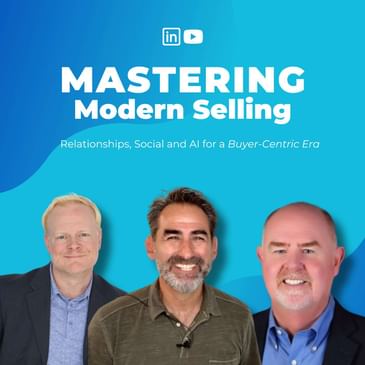
In our latest episode of Mastering Modern Selling, Brandon, Carson, and Tom welcome the brilliant Liz Heiman. With deep roots in sales, thanks to her father’s seminal book Strategic Selling, Liz brings invaluable insights on how to transform sales operations.
Here’s a breakdown of her expert advice on building robust sales systems that drive sustainable growth.
- Sales Strategy Over Process:
Liz emphasizes that most companies mistakenly start with sales processes without a clear strategy.
For an effective sales operating system, it’s crucial to first define your business strategy. Understand your goals, target audience, and market positioning.
Without a well-defined strategy, any process you put in place is just guesswork.
- Lead Generation & Pipeline Clarity:
A successful sales system combines marketing and sales efforts to generate quality leads.
Liz highlights that organizations need to understand where their leads are coming from (inbound, cold calls, trade shows, etc.) and have a clear plan for lead generation.
It’s not just about setting revenue targets but knowing how many leads, proposals, and conversations are required to hit those numbers.
- Sales Management as a Support Function:
Effective sales management isn't about controlling salespeople but rather supporting them.
Liz points out that management often falls into the trap of funnel reviews that lack substance.
Instead, managers should focus on providing clear meeting agendas, timelines, and coaching sessions tailored to individual needs. This creates a supportive environment that helps salespeople thrive.
- Sales Compensation and Alignment:
Misalignment between sales strategies and compensation structures can lead to salespeople prioritizing short-term wins over long-term goals.
Liz stresses the importance of incentivizing behaviors that align with company objectives.
If your salespeople are not following the strategy, it's often due to a lack of clear expectations and reinforcement.
- Leveraging Technology Wisely:
While technology can enhance efficiency, Liz warns against overwhelming sales teams with multiple tools that create chaos.
The goal is to streamline processes, making it easier for salespeople to focus on selling rather than managing tools.
Implement technology that truly supports the sales journey and integrates seamlessly into daily workflows.
Liz Heiman’s insights are a masterclass in designing sales systems that are strategic, scalable, and supportive. By focusing on strategy first, aligning compensation, and using technology judiciously, companies can build a sales ecosystem that drives consistent growth.
Don't miss out, your next big idea could be just one episode away!
This Show is sponsored by Fist Bump
Your prospecting partner to authentically fill your pipeline with ideal customers.
Check out our Live Show Events here: Mastering Modern Selling Live Show
Subscribe to our Newsletter: Mastering Modern Selling Newsletter
[00:00:01] Welcome to Mastering Modern Selling, Relationships, Social and AI in the buyer-centric age. Join host Brandon Lee, founder of Fistbump, alongside Microsoft's number one social seller Carson V Heady, and Tom Burton, author of The Revenue Zone and co-founder of LeadSmart, as we explore the strategies and stories behind successful executives and sales professionals.
[00:00:24] Dive into business growth, personal development and the pursuit of excellence with industry leaders. Whether you're a seasoned executive or an aspiring leader, this podcast is your backstage pass to today's business landscape. This is Mastering Modern Selling, brought to you by Fistbump.
[00:00:48] All right, welcome back. Episode number 112, Mastering Modern Selling. We're all here.
[00:00:55] No, well, we do have wind storms. Liz has a wind storm, so one of us is still battling weather problems, but anyway, so far so good. So, Liz, welcome to the show and join us today.
[00:01:08] Liz Schauffer, Thank you.
[00:01:09] Dive in Staff, Director of Fistbump. We'll do a little bit of your background in a minute, but before we start, Brandon, I think again we need to, uh, I can't talk today, we need to thank. We need to thank Fistbump for being our sponsor.
[00:01:23] and you have kind of an interesting promotion that you're doing with fist bump where
[00:01:30] you're going to produce a live show for somebody for free.
[00:01:35] Yeah, that's, uh, that's our, our, our Thanksgiving November offer is, uh, it's like, it's,
[00:01:43] it's our $2,500 a month service. It's managing, producing, and promoting a LinkedIn live show
[00:01:51] like this. We also push it to YouTube. We convert the audio and publish it to podcasts. And it's not
[00:01:57] just marketing. We have a very specific strategy around it that helps with outreach and creating
[00:02:04] pipeline. And so, uh, we've got the details. I mean, I can always throw a link in there. We've
[00:02:09] got details, but if you go to get fist bumps.com, you can learn about the details of that or ping me.
[00:02:16] I'll chat with you. Love to chat with you.
[00:02:19] And you're doing that for, and you're doing that for free.
[00:02:22] Yeah, there's, there's free with purchase. Um, they're joined. We have our, our LinkedIn group
[00:02:26] coaching program that says more of like, Hey, now that you've got this live show and all the stuff
[00:02:31] that we produce for it, what else do you do with it? How do you comment? How do you create commenting
[00:02:36] lists? All that type of stuff is what we teach in there. So our group coaching 795 a month. So the
[00:02:42] first 10 people that sign up for that, we're going to give them our $2,500 a month, um, live show.
[00:02:48] And podcast management promotion services free. Uh, it's good. You're a numbers guy. That sounds
[00:02:55] like a good deal to me. Don't you think? Carson?
[00:03:00] That's it. Yeah, no, I was going to say, uh, tell them it's only the first nine. I'm going to sign
[00:03:04] up for one of those spots.
[00:03:08] Bring it on.
[00:03:09] Come on, Carson.
[00:03:09] I love it.
[00:03:10] We'll get it done for you.
[00:03:11] All right.
[00:03:12] Thanks. Thanks for all that. And just the, the shout out to the fist bump team that does everything on
[00:03:16] the back end for us, Alec and Moore and the rest of the team, they do all of our editing and all
[00:03:21] that make us look good. And, Hey, we had like 600 downloads on the podcast this past week, which was
[00:03:29] pretty crazy.
[00:03:30] We've been, it's, it's, it's great to see is, you know, we're hitting 112 and this, this flywheel
[00:03:35] start to move. I mean, I think last, last week I look at the data and sometimes I forget, but we have
[00:03:41] like, um, 130 people log into the live. And then as I looked over the next like five days, it was up to
[00:03:49] over like about 300 people had logged in and watched the video on LinkedIn only. And then there was like 50
[00:03:56] ish people on YouTube. And then we have the podcast. So I share all that for everybody is
[00:04:02] like, this is the power of doing these LinkedIn and YouTube lives with the podcast. As you get
[00:04:07] all this content going out in different places and it lives there forever. And it's got this long shelf
[00:04:13] life and that doesn't even count the social shorts that we create from it, uh, taking the transcripts
[00:04:19] and turning those into newsletters and publishing a newsletter. It's, it's just, you know, I've learned
[00:04:24] and realized over the time of doing mastery, modern selling, how powerful this is, especially
[00:04:30] knowing that like 65% of our fist bump leads come through mastery, modern selling and all the,
[00:04:37] the activities that we do along with my personal LinkedIn. Um, that's why it's just such a easy
[00:04:44] and powerful tool. Well, another great X factor let's, let's not, we'd be remiss not to point
[00:04:50] out as great guests case in point like today. Yeah. Yeah. Well, Liz falls into our big dog strategy,
[00:04:59] right? This is our big dog strategy. If you want your audience and your network to think you're a big
[00:05:04] dog, well, you got to hang out with big dogs. So we go and invite them to come be guests on our show.
[00:05:10] And then we get to hang out with the big dogs and learn from them. That's right.
[00:05:16] Well, Liz, welcome. Welcome to the show. I've been excited to have you. Liz and I have had several
[00:05:22] chats over the last couple of months. So this would just be a continuation of our nerd fest when we
[00:05:28] talk about sales. Yes. So yeah, Liz, welcome. And if you don't mind, take a minute, tell everybody a
[00:05:36] little bit, if they don't know you already, your background, what you do and, and all of that. And then
[00:05:41] I know we have some really cool conversation. We're going to, we're going to dive into today.
[00:05:46] Thanks. Yeah. So, you know, you guys know, but other people wouldn't know, I literally grew up in
[00:05:53] the world of sales, right? So my dad wrote a book called strategic selling. I grew up in the office.
[00:05:58] I grew up, you know, doing everything from answering the phone to proofing the books. I grew up in the
[00:06:07] language. I grew up in the thinking. I grew up in the philosophy, right? So I didn't know that there
[00:06:14] was another way to sell. I didn't understand that something else was happening out there that was not
[00:06:20] win-win taking care of people kind of selling. And I, and I was never going to be in sales. I went to
[00:06:29] school, got my degrees in international political economy, the role of public opinion in U.S.
[00:06:33] Japanese trade negotiation. And I studied messaging and decision-making and politics. And I was going
[00:06:40] to save the world and be a trade negotiator and, you know, make all of the world even. So nobody was in
[00:06:47] poverty. So there was no reason to fight. That was my, my mission in life. And when I was in graduate
[00:06:53] school and tired of write 300 pages into my dissertation and tired of the whole thing, my dad said,
[00:06:59] hey, come run Asia Pacific for us. We need somebody who understands. I didn't mention, I lived in Japan
[00:07:04] for many years and we need somebody who understands Asia and we need somebody who understands the
[00:07:09] business and we're losing money hand over fist and we need help. And so I went in and ran the Asia
[00:07:16] Pacific division, worked with companies like Coca-Cola and Hewlett Packard and Johnson Controls and
[00:07:22] Kodak. Kodak, one of my favorite moments in my career was helping the Kodak microfiche team.
[00:07:29] When CDs came into reality, which many people are listening, don't know what either of those
[00:07:36] things are. But I, so I started my career working with very big companies and learned later in life
[00:07:42] that my passion was smaller or more mid-sized companies where I could really impact lives,
[00:07:48] you know, make founders dreams come true, you know, truly impact the way people work and live.
[00:07:56] And so that's what I do now. I build sales operating systems for growing companies so they can scale.
[00:08:03] And Liz, will you, that little company that you grew up in, you want to go and say the name of it?
[00:08:09] I find when, whenever I tell people the name of that, they go, oh, when I was telling people that
[00:08:16] you were going to be a guest on our show. Yeah. So the company is Miller Hyman. It's now owned by
[00:08:21] Korn Ferry and the book people are most familiar with the strategic selling. There were two other books,
[00:08:26] conceptual selling and large account management. And actually of the three, believe it or not,
[00:08:31] strategic selling is my least favorite, although it's still an amazing book. I love conceptual
[00:08:35] selling because it talks about really understanding your customer. And I love large account management
[00:08:42] because when I work with companies, that basis that I got in key accounts, large account management,
[00:08:47] you take a $45 million company, I can usually find $5 million in their key accounts that's sitting on
[00:08:53] the table, not being addressed. Wow. So hugely powerful stuff.
[00:09:00] So Liz, take us through what you consider to be a sales operating system. Like what, what is the,
[00:09:06] the anatomy of the sales operating system? And, and what are things that are commonly, I guess,
[00:09:12] missed or not included when somebody thinks about sales processes versus a true operator?
[00:09:18] Well, that's perfect because most people start with process. We need a sales process, but
[00:09:24] a sales operating system starts with strategy. So first you have to understand what you're doing and why
[00:09:31] you're doing it and how you're going to do it. So we need, we need a business strategy, which a lot of
[00:09:36] companies that I work with that are 30 year old companies haven't looked at their sales, their business
[00:09:40] strategy in 10 years. So having a really solid business strategy, having a plan, once you identify
[00:09:47] what the number is, that magic number, that 10% growth or magic number that you're going to hit,
[00:09:52] coming up with the strategy to get there, who are you selling to, what are you selling and who's going
[00:10:00] to sell it and really understanding how does that break down which markets, which verticals, because you
[00:10:05] can't implement something that isn't defined. You can only implement a strategy that's
[00:10:10] defined. Otherwise you're just throwing out numbers and arbitrarily selling.
[00:10:16] Having a communication strategy where people truly understand who they're talking to and what they need
[00:10:21] to be talking to them about rather than product pitching. And then there's the process. That's the
[00:10:26] second part. What are those processes and systems that need to be in place in order for the sales
[00:10:31] people to do their job? What is the buyer journey? What is the seller journey? How do those two interact?
[00:10:36] What tools and things need to be in place to do that? And the third piece is the management component.
[00:10:44] And you guys have seen this, I know over and over. We think that managing a sales team means getting
[00:10:50] everybody in the room together and throwing and going through funnel reviews in a mass environment,
[00:10:56] which we all know is not effective. But has anybody ever sat down with sales leadership and said,
[00:11:01] these are the kinds of meetings, these are the agendas, this is the timeline, these are the setups,
[00:11:06] this is the expectation rate. So building all of those things out so you have the foundation so that you can
[00:11:11] make the changes you need to and scale as you need to. There's something to support what you're
[00:11:17] trying to accomplish. That's to me what a sales operating system is.
[00:11:21] It's good. We've come a long way from my first sales job where I was handed the phone book,
[00:11:26] a shitty little desk and a phone and said, go get them tiger.
[00:11:31] And Brandon, what's a phone book?
[00:11:35] I got one right here.
[00:11:38] Right.
[00:11:41] So Liz, on the operating system part, I have a lot of questions. So
[00:11:47] Brandon and Carson just shut me up because I just, there's a lot of interesting
[00:11:51] points there.
[00:11:51] This is, this is your type of show.
[00:11:54] I know this is my kind of thing.
[00:11:55] You're being a nerd out on all of the operating details.
[00:11:58] But when you look at the strategy, are you looking at a broader
[00:12:02] go to market strategy that looks at how you're actually building pipeline,
[00:12:07] the marketing actions, how that pipeline is converting?
[00:12:11] Or, you know, what are the boundaries, quote unquote, of that, of that sales strategy?
[00:12:16] So I, I, I look at a couple of things again, first is we have to have a business
[00:12:21] strategy. We have to have an overall, why do we exist? What are we trying to
[00:12:24] accomplish? Where are we going? Right. That has to be the first thing.
[00:12:29] And then the second thing, once you understand the business strategy and you
[00:12:33] say, okay, this is what we need sales to do, then there's two parts of that.
[00:12:37] Right. One is lead generation. There are no sales if there's no lead generation.
[00:12:41] I, you know, I always joke about the companies that believe that every phone
[00:12:45] call that they have is going to close, right? Which is not what happens.
[00:12:51] So, so we need to generate lots of leads across many different medium or platforms
[00:12:58] or events. And, um, we need to have a plan, a strategy that combines sales and
[00:13:04] marketing in an effort to achieve that. So I need to have both a sales strategy.
[00:13:09] What is it we're accomplishing? Who are we selling to? What are we selling?
[00:13:12] And then we need to have, um, then we need to have a, where are those leads coming
[00:13:17] from? Are they coming from marketing? Is it going to be inbound? Is it going to be
[00:13:21] advertising? Is it going to be trade shows? Is it going to be cold calling?
[00:13:25] Is it going to be referral selling? What is it going to be through a channel?
[00:13:30] Like, how are we going to get the leads that we're going to get? Um, the very, very,
[00:13:35] very many leads we need to get and interactions in order to close each of the deals. And,
[00:13:39] and part of it is understanding from the very beginning, if I am going to hit this magic
[00:13:45] number that someone pulled out of thin air, most of the time, um, what is that number?
[00:13:50] How do you get to that number? How many sales at what value of what things get you to that
[00:13:56] number? Once I understand that, I can say, okay, that's what we need to close.
[00:14:01] So then how many proposals do we need to do and how many, um, conversations, qualifying
[00:14:06] conversations do we need to have? And how many outbound, outbound calls need to happen and how
[00:14:11] many people need to download things and how many, um, you know, marketing qualified leads and sales
[00:14:16] qualified leads, all of those numbers, how many people do we need to have conversations with real
[00:14:20] conversations with out an event, all of that gets tied together into this, um, the sales and
[00:14:28] lead generation strategy. And what is it going to cost? What is the actual investment and what is
[00:14:33] the return on investment need to be in order for us to decide that we're going to do that? And not
[00:14:39] just what is the return on investment this year, but what is the lifetime return? Um, and all of
[00:14:45] those things are the things that I build into. I love it. I, it's something you said that resonated
[00:14:51] the most with me there is the almost, and it's not ha ha funny, but the hilarity of the fact that
[00:14:57] so often it feels like those numbers are just plucked out of thin air. Um, I find that it's
[00:15:03] easiest for me as a leader to plug in and snap into a number. If there's transparency around the number,
[00:15:09] how did we arrive at this? And what I love is how you're building so much of, uh, the, you know,
[00:15:14] the, the, the common sense almost into the process as possible. I love how as part of your brand,
[00:15:20] you call out taking the chaos out of the sales process, right? Building systems for sustainable
[00:15:25] growth. I wanted to ask you from your experience working with CEOs and founders, what do you think
[00:15:30] are the biggest things that are often overlooked as they're trying to scale sales operations?
[00:15:34] Cause I believe that there's rarely is there malice intended that creates this chaos,
[00:15:40] but it almost happens out of a, a lack of consistency or execution. What do you think
[00:15:45] are the biggest things that these CEOs and founders are, are missing or are overlooking
[00:15:50] as they're trying to create process? There's a handful of things. One is understanding what
[00:15:55] it really takes to get from first contact to close, right? What is the, what is the real investment
[00:16:03] in time and resources to get there? And most companies don't start measuring until somebody has,
[00:16:08] has asked for a proposal. You're two thirds of the way down the sales, the buying process and the
[00:16:13] sales process. So you really don't know the resources that went into getting you to that point.
[00:16:20] So there's no way to measure it. So how do you really know how much one sales person can do?
[00:16:25] So that's the first thing. The second thing is if you don't have a strategy,
[00:16:31] salespeople, and I don't even have to answer this for you. What will salespeople do if you give them
[00:16:36] the number? Whatever is easiest, that may have absolutely nothing to do with your strategy.
[00:16:43] So if you, if it's easiest of a client and a client many years ago, who they were trying to
[00:16:49] build this whole ecosystem and they actually had time and money to do it, but they wanted to get some
[00:16:56] immediate sales. So their salespeople figured out they could sell to dentists, but they were trying
[00:17:01] to sell to people like manufacturers of tires and manufacturers, like big manufacturers and the
[00:17:07] companies that sell their products. But they're out here selling to dentists and building the
[00:17:12] product, building product to support dentists because that was, they could close those really
[00:17:17] easily, but it had nothing to do with the business strategy. So if you want your salespeople to help
[00:17:24] you build your business, they need to understand what your strategy is.
[00:17:28] Which brings us to the third piece is if you want salespeople to do anything, you need to incent them
[00:17:34] either through compensation or something else. You need to re, you need to set expectations and you need
[00:17:40] to reinforce. So if you're wondering why your salespeople are doing whatever's easiest, whenever
[00:17:45] they feel like saying whatever they want, it's because nobody ever challenges them on it. So they're
[00:17:49] going to do what's easiest. And, and logically. So if I get paid based on what I close, I really don't
[00:17:56] care what your long-term business strategy is. I care what I'm going to, how I'm going to feed my
[00:18:00] family this week. And we forget too, that other than the CEO, nobody else in the company is based
[00:18:08] paid on performance. Everybody else gets paid whether they perform or not. Now they may get fired
[00:18:14] if they don't perform, but they still eat while they have a job. Salespeople, that is not true. So if
[00:18:18] we want to understand why salespeople behave the way they do, we need to understand how we compensate
[00:18:23] them and why there's logic in what they say, in what they do. Poetry.
[00:18:32] Yeah. I wanted to hit a couple of comments here and get your take on,
[00:18:37] Bob had a handful of comments here that I think are relevant. He was talking about core competencies,
[00:18:43] right? Many companies don't even know what their core companies, I would assume that's got to be a,
[00:18:49] a key part of defining that strategy, right? That's there. But he also said chaos can't be
[00:18:57] removed from sales. It can only be mitigated. And he's right. He's right. He's right. But what can
[00:19:04] we do to mitigate it, right? There's a lot that we can do. Part of it isn't who we hire. Part of it is
[00:19:10] how we manage. Part of it is how we lead, right? So there's a certain amount of uncertainty and chaos
[00:19:17] chaos that is innate. But what we do know is you cannot scale chaos. So if you have a cowboy running
[00:19:23] around who can rope and ride, but then also does whatever they feel like doing and saying whatever
[00:19:28] they feel like saying, you can't replicate that and be successful. So the larger your sales organization
[00:19:34] is, the more structure is required to manage the chaos. And you need to hire the people that fit into
[00:19:40] the structure, will successfully fit into the structure that you're building. And you need to build a
[00:19:46] structure that supports the salespeople. So yeah, no, there's always a certain amount of chaos. And
[00:19:51] there's a certain amount of chaos in who we are as salespeople, right? That there's a reason that we
[00:19:59] choose to become salespeople. And let me first make a confession. I am like not a salesperson. I'm a
[00:20:04] researcher and process person, but I also sell. But people are salespeople because it gives them the
[00:20:10] freedom to be who they want to be. They're salespeople because they don't like the structure and
[00:20:14] structure. They're salespeople because they're dyslexic or they're ADD. And this is an environment
[00:20:21] where they're able to have a little bit of freedom and do the things that make them more comfortable.
[00:20:28] But we can still build a process that supports them to be successful.
[00:20:31] I think a lot of times leaders, they can become accustomed to this comfortable way of
[00:20:38] mediocrity or failing. And I would imagine when you're working with these CEOs and founders,
[00:20:43] sometimes there can be a resistance to change because you're asking for new muscle.
[00:20:47] There's a certain mindset that's required to adopt and adapt to the change.
[00:20:52] What do you think are some of the, if you were talking to CEOs and founders today,
[00:20:57] what would you say is kind of the core advice that you would give them on things that they need to be
[00:21:01] looking for or the mindset that they need to have to adapt to a better process?
[00:21:08] I think the first thing is understanding if you have a business-to-business complex sale with a long
[00:21:12] sales cycle, that the payout, the return on investment in this kind of change takes time.
[00:21:20] And I've seen it more than once where they've insisted, we have the time, we have the money,
[00:21:25] we're investing in this. And then before the payout comes, they quit. They fire all the salespeople,
[00:21:31] they eliminate that program. I just experienced, and I experienced a huge one a few years back where
[00:21:38] they literally spent millions on a large account plan and then decided they couldn't lose the
[00:21:44] short-term income to have that long-term gain. So if you are going to do this, you really have to
[00:21:50] stop and think about how much time do I have? How much can I invest? And how much time do I have to
[00:21:56] have the return on investment? If you have a six-month, nine-month, 18-month, five-year sales
[00:22:02] cycle, you're not getting payout from hiring an all-new sales team in a year. It just isn't happening.
[00:22:08] So that's the very first thing. The second thing is to remember that you're part, as a leader,
[00:22:14] you're part of the sales organization. And if you think that your sales organization sits on an
[00:22:19] island out in the middle of the Pacific by itself, you're wrong. It doesn't. It pumps the lifeblood
[00:22:25] through your organization and it has to be at the heart of your business. And if it sits there
[00:22:31] at the heart of your business, then you can see how it works and support it so that it works.
[00:22:38] I think that's the kind of mindset that I think you have to have to do this successfully.
[00:22:44] I love your unique perspective and voice in this, Liz, because first off, I love the call
[00:22:50] out that you said. I'm not a salesperson. I don't love to sell, but I do sell and I'm a
[00:22:54] researcher and I'm kind of embedded in the data. And that's what I love about your unique vantage
[00:22:59] point of this. I want to really dive in as well to just the nuances and changes that you've seen
[00:23:05] over time. On this show, we talk about a lot of how technology, how AI, how different things are
[00:23:11] changing the ecosystem. But the more and more things change, the more the fundamentals become
[00:23:16] so core and critical. What have you seen maybe change? And what would you say has definitely
[00:23:21] stayed the same in your observation of the sales ecosystem?
[00:23:25] So let me start with what stays the same. Good sales is good sales is good sales.
[00:23:30] Right? So if you have good selling skills and you're a good communicator and you ask good
[00:23:36] questions and you look for common ground and you're seeking to support your customer in
[00:23:41] making a good decision, those are all things that it doesn't matter what the rest of the,
[00:23:47] what's happening around you. Those things are core. And even more so when people started saying,
[00:23:55] you know, I don't know how to sell virtually. I don't understand how to have these meetings.
[00:24:01] And I'm thinking, well, one, I've been doing this for a really long time already.
[00:24:06] So I'm not really sure what the question is. And then I realized the question is that they're not
[00:24:11] used to really being face to face in it in this way with somebody and being able to acknowledge,
[00:24:22] be compassionate, ask really good questions. They have been selling an environment. So we go pre-COVID.
[00:24:30] We were selling an environment where people were buying in spite of the salespeople. Right?
[00:24:37] And even during COVID in a lot of industries, people were buying in spite of the salespeople.
[00:24:42] And so good skills are good skills. That's the first thing. Now, what has changed,
[00:24:49] one, is we talk about virtual technology, has become so pervasive. It's so much a part of our
[00:24:58] lives. You cannot get away from it. But then I look at some companies, I go in and look at their
[00:25:03] sales process. And I'm like, your sales team has to open eight different programs to do their job.
[00:25:10] And you're wondering why they're not working in the CRM. If you want them to work in the CRM,
[00:25:14] put everything in the CRM where they can use it. And they don't have to be in their email,
[00:25:19] in this, in that, in this drawing program, in that adding program, whatever it is. How many places can
[00:25:26] one person be and be successful? So we think that adding more technology is going to make the world a
[00:25:33] better place and or make our sellers more effective. Okay, great. We have AI. So now I can have one
[00:25:39] salesperson instead of 10. No, no, no, no. That's not how it works. How does the technology you're
[00:25:45] implementing support your sales team to be successful? How do I make them more efficient?
[00:25:51] And not how do I bog them down in technology? I think, you know, and I think that the hands off,
[00:25:57] well, they're in another place. They're in another town. They've got their technology. I don't need to
[00:26:04] be in their face. I don't need to be in their way. Just let them go do what they're doing. They know
[00:26:09] what to do. We don't know what to do. I mean, we kind of do, but we all need support. And we all need
[00:26:14] coaching and we all need engagement. We all need to be celebrated. And so those things don't,
[00:26:20] they don't change just because somebody is not in the room with you. I think those are the big
[00:26:24] changes I see. Well said. You know, Liz, we talk a lot on the show too about the challenges with
[00:26:31] outreach. Like I built two of my companies with call centers, man. I loved cold calling.
[00:26:37] When it worked, I loved cold calling. It was great. And it worked well because I think buyers
[00:26:45] didn't have such easy access to the information they needed. And they saw sellers as a channel to
[00:26:52] get information and it created sales opportunities. But that need for information by buyers has
[00:26:59] changed. They can get information anytime they want, whenever they want, and they don't need sellers.
[00:27:05] So what are, what are some of the ways that you are finding, like we, Tom likes to say the,
[00:27:11] the pedal faster strategy. Oh, you used to make a hundred calls a day. We'll make 150. Oh,
[00:27:16] that's not working. Make 250. It's pedal faster instead of being more efficient. What are you doing
[00:27:23] to address that with, with customers that you work with? So, so the first thing is that if you,
[00:27:30] if you read the data and you talk to buyers, the reason they don't want to talk to salespeople and they
[00:27:34] would rather do their research by themselves is they don't trust their salespeople. They have been
[00:27:40] cheated. They've been manipulated. They have been coerced. They've been lied to, and they,
[00:27:46] they're, they don't trust. So I am much better off to go do my research by myself without being
[00:27:52] bothered. So that's the first thing. Um, if you want to sell successfully, you have got to build trust.
[00:27:58] And there are lots of ways to do that. I'm not the expert on that. There are lots of ways,
[00:28:04] Brandon, you're better at this than I am, that you can use LinkedIn and other social media to build
[00:28:09] brand integrity of brand trust so that people will, will reach out, you know, be willing to trust you.
[00:28:15] So first thing is we have to be trustworthy. So this, and you guys will forgive me because I'm sitting
[00:28:22] in here in a room full of men who are good sellers, but this, this, um, old fashioned male, uh, uh, used car
[00:28:33] sales guy, snake oil sales guy, kind of historical sales person, um, is not trustworthy. And, um, as we
[00:28:42] try to force people into this way, this model, everyone is uncomfortable, the sellers and the buyers
[00:28:49] included. So that's the first thing. Um, the second thing is, so Brandon, you and I've talked
[00:28:56] about this idea that I have a, this idea of selling like a girl, right. And, and if you guys, some of you
[00:29:03] will remember there was a commercial a long time ago, um, where they did, you know, what is, what does
[00:29:07] a girl run? Like, what does a girl throw? Like, what is, right. How does a girl hit? And they were like,
[00:29:13] you know, and then when you ask little girls, eight-year-olds, and you said, what does a girl run? Like,
[00:29:19] they're like, they run. What does a girl throw? Like they throw, how do they hit? They punch, right.
[00:29:24] And, and this idea of selling running like a girl became a positive thing. I want to think about
[00:29:30] selling like a girl for a second here. Good sellers do things that women tend to do
[00:29:39] intuitively and that men have to work a little harder at. So good male sellers do these things,
[00:29:44] but we are curious. We are compassionate. We are creative and we are really good communicators.
[00:29:52] We don't talk about our product. We talk about linking our product with solution, with problems,
[00:29:58] solutions with problems. We are really creative about how we outreach, how we communicate, what
[00:30:04] channels we use. We get to know our customers so we can figure out what's the thing I need to do to
[00:30:09] get their attention. So it's, it's that in this noisy world where I don't know about you, I got 4,000
[00:30:17] emails last month. I can't answer them. I can't even see them. So how are you going to get my
[00:30:23] attention? You're going to have to figure out where I am and what I need to hear in order to get my
[00:30:29] attention. The best salesperson I know is my wife and shout out to her tomorrow's her birthday. So yay.
[00:30:35] Yay. Brandon, did that answer your question? It does. And you know, Reem asked a question earlier
[00:30:44] and Reem is on my team. She's moving into sales. And she's, she did a little telesales before
[00:30:54] in a B2C environment, but she's going to be new to B2B. And she had asked that question,
[00:30:59] what's your top advice for someone. And I think you said right there is like embrace you're selling
[00:31:06] like a girl. And what I heard you say is you're more focused on the relationship. You're more focused
[00:31:12] on the curiosity side to really understand what the need is. And then you speak in terms of how to solve
[00:31:20] things, not about your product. Is that the summary I heard?
[00:31:24] Yeah. And then being really creative. So all of that enables you to be creative about what you say,
[00:31:30] how you say it, what, what channel you use to say it in, because you're not stuck in your own agenda and
[00:31:36] your own way of thinking. You're, you're now standing or, or looking at the world from their perspective
[00:31:42] instead of yours. Congratulations, Reem and welcome. Right? I'm excited. I'm excited. I am too.
[00:31:51] I pray one or more of my daughters goes into sales. So, you know, I, I always forget this,
[00:32:00] but I actually, I, my first job in sales was retail. My second job in sales was in a, I was cold calling.
[00:32:10] So I think that we need to include sell like a girl, hashtag sell like a girl. That needs to be a key
[00:32:18] mantra of mastering modern selling. I think that's one of our great things. I think it's really a great,
[00:32:25] it's like when in doubt, think about that. Think just about that concept that you were talking about.
[00:32:29] I think it's a real, and going back to Reem's question, just keep that in mind. And I think
[00:32:34] you'll do great. Right. From, from that perspective.
[00:32:38] So it's all about people and process, no matter where you are and realizing that the people you're
[00:32:43] talking to are just that they're people, they have unique needs. They have wants out of these,
[00:32:49] you know, these relationships. And if you focus on helping them achieve an outcome,
[00:32:54] you know, you're, you're halfway there. And I think that's where a lot of sales people fall down.
[00:32:59] And I think that's also why somebody like Liz, who isn't a traditional salesperson, somebody like
[00:33:04] me, I wasn't a traditional salesperson. You, by default, we don't come in with these predisposed
[00:33:10] thoughts about following a script or, you know, pitching our product relentlessly. It's more about
[00:33:15] how do I attune to where this person is in their journey and how I can add value for them. That's it.
[00:33:21] So, but Carson, I want to back you up for one second. Sorry.
[00:33:24] Randy. You're the guest.
[00:33:26] It's not just the sellers that are doing this. The sellers get pushed into this bad behavior by
[00:33:32] the leaders. Yes. And so if you want your sales team to practice good behavior, if you want them
[00:33:37] to treat your customers well, figure out how to support them in doing that. You know, when we set
[00:33:43] up the CRM so that they have to have the answer to every single one of these questions before they can
[00:33:47] move on, that puts the salesperson in a position where they're not able to communicate with the seller
[00:33:53] the way the seller wants to communicate going through the journey that the seller wants to go
[00:33:58] through. So really as, as sales leadership, how do we build the process to support the buyer's journey
[00:34:05] and the seller's journey? We never talked about the seller's journey, right? But the seller's taking a
[00:34:10] journey too. How do we support them so that everybody is finding common ground, looking for good solutions,
[00:34:18] not selling things that aren't a good fit, that are going to create chaos for the rest of the company?
[00:34:22] You've got to build that into it if you want that outcome.
[00:34:26] And that's like talking directly to the CEOs, to the founders, to the leadership.
[00:34:30] You've got to create a culture that is conducive to your team, knowing how to do it the right way.
[00:34:35] You've got to incentivize them the right way. You've got to understand their motivators,
[00:34:38] but you've also got to make sure you're teaching them the right thing. Don't come at them
[00:34:41] around do more of this, make more calls, sell more widgets. It's got to be transparency around what
[00:34:48] are we trying to achieve here as an organization? Let me give you the resources, the training,
[00:34:52] the tutelage to empower you to be your best self. You know, my first sales gig, I was leaving the
[00:34:57] office right out of the gates because I was a communicator. I was listening to my customers and
[00:35:03] I was incorporating that into the end result. I got written up like my first month on the job
[00:35:07] because I didn't follow this script to a T. And so the following day, I started following the script
[00:35:14] to a T. My sales results plummeted. My manager actually removed the performance plan and the
[00:35:20] rest is history. I went back to leading the team, but that's the thing. We can't be so rigid in our
[00:35:25] guidelines. You can't green light every seller to just go out and do carte blanche. You've got to
[00:35:29] have some parameters and guardrails, but you've got to let them flourish. You've got to let them bring
[00:35:34] their own unique superpowers and strengths and skills to the table in their quest to earn the
[00:35:38] right to be the trusted advisor. And Liz, that, what Carson said, we're all shaking our head,
[00:35:45] but that sounds hard for a lot of companies. I mean, it takes continual effort. It's not like you
[00:35:52] don't, you know, throw a little bit of holy water, baptize them and say, off you go and expect results,
[00:35:56] right? It's continual conversation, continual refining. And there's a trust factor in there.
[00:36:04] If we are going to be seller or buyer centric, which I would argue everything you said about sell
[00:36:11] like a girl is being buyer centric, be curious, ask questions, be solution oriented, not pushing your
[00:36:18] product or your service. But for us to be buyer centric, it takes a lot of effort and a lot of trust.
[00:36:25] And I would imagine that's the reason why a lot of companies move towards like, okay, here's the
[00:36:32] script. Just go do this and rinse and repeat as often as possible. Number one, is that accurate?
[00:36:37] And then number two, how does a company move out of that into a different culture?
[00:36:48] So this starts with the mindset at the very beginning. What is our vision? What are our values?
[00:36:52] What is our mission? Hire salespeople that share your values, hire salespeople that understand your
[00:36:59] vision and want to support it. That's the first thing. So we have all of this stuff written up and
[00:37:03] then we hire salespeople who are manipulative and pushy and sound really good on the phone,
[00:37:08] right? We know nothing about hiring what a salesperson really needs to do if it's successful.
[00:37:14] Then we get them in the office and they're doing whatever it takes, saying whatever they feel like
[00:37:18] saying, skipping steps, doing whatever. And then we're like, oh, you got to rein these guys in.
[00:37:22] They're wild men, right? So we start building all these rules that, that, that, you know,
[00:37:30] put a chokehold on them instead of saying, let's put the structures in place that support your effort,
[00:37:36] give you the information that you need so that you're not, you know, giving misinformation.
[00:37:40] Let's, let's build this out to support you instead of handcuffing you to your desk. So you can't
[00:37:45] misbehave. There's a huge difference between those two mindsets. The second is if, if you've ever been
[00:37:52] in a sales conversation with leadership, it sounds like this, what are you selling this week? What's
[00:37:57] closing this quarter? What's closing this month? What's closing this week, this month, this quarter,
[00:38:01] this week, this month, this quarter. It's all I care about. What's closing, what's closing,
[00:38:04] what's closing, what's closing. Oh, you don't think you can close that? Let me get in there
[00:38:08] and close it for you. Right. This is not, this is not how you build your pipeline so that you will
[00:38:16] continually hit your goals. What I'm selling this week, this month, this quarter started six, nine,
[00:38:21] 12, 18 months ago. And if nobody's looking at the top of the funnel, then all I can do is control
[00:38:28] what you say. Right. I can control, but, but support what's happening at the top of the funnel,
[00:38:35] bring more really good leads down into the funnel. More will close. Right. So communicate better,
[00:38:43] find better leads, have conversations that matter. Those are the things that get the results,
[00:38:48] but because we are not willing to look at that stuff, we focus on what we can control and gong.
[00:38:55] Don't be upset at me. I've said this before. Um, you know, the people who ran, who created gong
[00:39:01] have this great tool that helps us see what words get said that have the best result. Well,
[00:39:06] those are great in the right conversation at the right time with the right person, but don't tell
[00:39:09] me I have to say that every single time because that is not, that is not what good salespeople do.
[00:39:15] That's not selling like a girl. That is not selling. You mean pushing square peg round hole isn't going
[00:39:21] to work? I, I have never in my life planned a sales conversation and had it go the way I planned.
[00:39:29] And, and it can't go the way I planned because my whole purpose is understanding what's going on with
[00:39:35] them. And as they tell me things and I learn more and I ask more questions, the conversation goes the
[00:39:39] direction that the seller, the buyer needs it to go in order to make a good buying decision. So
[00:39:44] if you think you can structure what words I'm going to say, when there is no way I can have a good
[00:39:49] conversation. So it sounds like we need salespeople have a map, but not turn by turn directions.
[00:39:57] Right. You get to choose. Do you want to take the highway or do you want to take the outer road?
[00:40:03] Do you want to go with the one that has a toll or the one that has the most stoplights?
[00:40:07] Like those old choose your own adventure books that I read when I was a kid and you like,
[00:40:11] you know, you can choose your path and then, oh, dead end.
[00:40:14] That's why you're so good at sales, Carson.
[00:40:17] I don't know. I think the key element.
[00:40:20] That must be it. I think the key element, and this,
[00:40:22] this episode is so full of key value anecdotes. I, I, there's a lot of sales organizations that
[00:40:29] need to hire you immediately, Liz. Um, it's what I think is incredible about what you've just
[00:40:34] articulated is by default. And there's, I like to say this, there's no malice intended. I think
[00:40:42] there's a lot of leaders that go in and to your point, it's the control thing. They don't know how
[00:40:47] to seed control of things. So they default to things like, where's this deal? How do we close
[00:40:53] this deal? And focusing on that pipeline, you wouldn't be in that predicament. If you had a
[00:40:58] process that developed more high quality conversations, relationships, more pipeline.
[00:41:04] And that has always been my philosophy is how do we go out and create so much, so many relationships,
[00:41:10] conversations, opportunities, where if this deal goes awry, doesn't matter. I got 10 more that are
[00:41:15] lined up. It will by default close. And so many of these things though, they have their seeds that
[00:41:19] are planted six months ago that impacted and influenced these things. We can't be short-sighted
[00:41:24] as leaders. Yeah, it matters if there's a deal, you know, I got a couple weeks left in the month,
[00:41:29] or I've got a month left in the year. Don't get me wrong. Yes. We need to be laser focused on the
[00:41:34] processes and helping our sales team see around corners to be asking questions right now. Hey, what's
[00:41:39] your process look like? You know, who all needs to bless and see this deal before it comes to closure?
[00:41:44] Yes. Those are important questions. And so guiding our sellers right now in those types of things for
[00:41:49] Q4 deals is important, but we also need to be selling into next year. We need to be planting the
[00:41:54] seeds that six months from now are going to be the deals we close. And so I'm not suggesting that we
[00:41:59] shouldn't be doing funnel review, that we shouldn't be having conversations about specific deals.
[00:42:04] Look, I grew up in Miller-Hyman. The funnel is the core of how you manage your sales organization.
[00:42:10] Yes, you need to be having conversations about individual deals. Yes, you need to be making sure
[00:42:14] that they're talking to enough different buyers and that they've identified things that can get in the
[00:42:18] way of the sale. All that stuff should be happening. But it's not bullying. It's not nagging. It's not, right?
[00:42:25] It's supporting and coaching that gets the result. And planning. Somebody posted up here,
[00:42:33] plans are useless, but planning is invaluable. Yeah, we do need to plan. We need a plan. It's not always
[00:42:40] going to go the way we planned, but we got to create them.
[00:42:45] Bob, we love that you're chatty.
[00:42:47] Yeah, he's bringing, he's got the lyrics down to the...
[00:42:52] Yeah.
[00:42:54] So, yes.
[00:42:55] Don't they play that song in the movie, The Goods with Jeremy Piven, that sales movie? Don't
[00:42:59] they play some 38 special in there? So, anyway, you just took me off on a tangent, quoting 38.
[00:43:06] You got the movie references.
[00:43:08] I know, the old movie references.
[00:43:10] That's right.
[00:43:12] I've got a question, Liz. In the world I'm in, right, I'm in the tech space. And tech companies
[00:43:20] right now, not Microsoft, but, you know, mere mortal tech companies, the majority of them
[00:43:26] right now are having, it's an epidemic of what they're, a pipeline problem, right? And the
[00:43:32] reason is, is that tech companies, and I'm generalizing, I realize that, but a lot of venture
[00:43:37] funded tech companies got in the mode of spending $5 to get a dollar of pipeline. And those days
[00:43:44] have been kind of changed. And now it's been very, very difficult for a lot of tech companies
[00:43:49] to build pipeline that is profitable pipeline, right? That isn't $5 for a dollar of pipeline.
[00:43:57] What do you recommend for the type of companies? And I think, you know, granted, we see this,
[00:44:03] right? Pipeline is a constant problem for companies. And I'm sure even Carson in the Microsoft world,
[00:44:10] right? There is a constant demand to build pipeline, especially...
[00:44:14] I hear rumors. Yeah.
[00:44:15] Yeah, I hear rumors. Yeah. Not in your world, but I'm sure in other parts.
[00:44:19] Not for my team. We build a lot of pipelines.
[00:44:21] But Liz, what would you recommend for those types of companies that are struggling with this
[00:44:27] pipeline problem? And what would you kind of quickly have them do strategy-wise that might
[00:44:34] maybe even just illuminate why the pipeline problem is happening?
[00:44:39] So like an hour, I could spend an hour just on this. So...
[00:44:43] I'll say it, you will. I'm loving this.
[00:44:47] So we have to remember that pipeline is made up of multiple things, right? It has to do with
[00:44:53] conversations that salespeople are having with existing customers to get referrals, to grow
[00:44:58] existing customers. We tend to think of pipeline as all new business. Pipeline is not all new
[00:45:02] business. What's happening in your existing customers? That's one thing. Another is how are...
[00:45:08] You know, what is marketing doing? And does marketing truly understand the voice of the customer
[00:45:14] so that they can speak to the customer about what matters to them?
[00:45:20] We also don't need a huge pipeline if it's a focused pipeline. So we... Yes, if we're going to talk to
[00:45:28] one person, if we're going to close one deal, we may need to have a thousand interactions on the
[00:45:32] website. That may be true. But the better you are at finding your ideal customer and targeting them,
[00:45:39] the better the pipeline will be. So then it becomes more about the quality of the leads coming in,
[00:45:48] instead of just the volume of the leads coming in. We're going to have to adjust that a little bit.
[00:45:54] And the other thing is stop talking about our product. Stop talking about our product. Stop
[00:45:58] talking about our product. Start talking about problems. And understand, here's another thing
[00:46:04] that I see a lot of is marketing focuses on getting the right person to the website. The right person
[00:46:10] to the website is the person that got told to go research this. How much authority does the person who
[00:46:16] got told to go research this have? Virtually none, right? We used to call them the gatekeeper
[00:46:23] at Miller Hyman. They were given a checklist and they're going to go find the companies. And then they say,
[00:46:29] okay, I need a quote. They need a quote because nobody in their company has a clue what it's going
[00:46:33] to cost to do this. Way, way high up in the sales process early on. And so now everybody in the company
[00:46:41] goes, great. Download, call, demo, proposal, close. Where's the close? We're ready. We've set a proposal.
[00:46:54] Let's close this thing. Well, they're not. The person you talked to, the proposal you made had
[00:46:59] absolutely nothing to do with the people who are going to make the decision. And so if we want to
[00:47:05] have better pipeline, we need to talk to all of the people who are involved in buying decisions.
[00:47:11] Don't make your website so it talks to the person who was sent to go out and get the information.
[00:47:17] Make part of your website, talk to the CEO. And part of it, talk to the COO. And part of it,
[00:47:24] talk to the people who are touched by this problem so that when your salespeople get in there, 90% of
[00:47:30] what they're doing isn't just filling out paperwork for the flow level. So building a more robust pipeline
[00:47:40] instead of just a bigger pipeline. Don't get me wrong. It's still a funnel, not a pipeline.
[00:47:46] You're not going to close every deal you talk to, but what can we do to narrow it a little bit?
[00:47:51] Does that help? I don't know. That was a lot of thoughts.
[00:47:54] No, what I heard you say there is quality, right? Again, a lot of these companies that have
[00:48:02] struggled or spent $5 for a dollar of pipeline is all about volume, right? It's about quantity.
[00:48:08] And they're spending tons of money on Google ads and all kinds of things just to get names
[00:48:14] in that top of the funnel, whether or not those names had any real qualification at all.
[00:48:20] And that's very expensive and not very efficient, right? So what I hear you're saying is,
[00:48:26] is your first step is kind of reverse that funnel and maybe look bottom up and say,
[00:48:31] how do I attract more quality and less quantity? And then obviously work the quality a bit more
[00:48:38] efficiently as that around the way that we're targeting. I think that's a simple overview of
[00:48:43] what you said. Yeah, and the corollary to that is we went to a trade show and we got people to give
[00:48:49] us cards so they could get a prize. So now I want all my salespeople to call every single person who
[00:48:53] gave us a business card. No.
[00:48:56] Those are very expensive business cards too, usually.
[00:49:00] So, right. How many really good conversations were you able to have there? Let's focus on that
[00:49:06] and let's put the others in the marketing funnel and let them get nurtured along the way. Let's
[00:49:11] focus our salespeople on good quality leads. Yeah, I was with a sales team a few months back
[00:49:20] and we were going to talk about using LinkedIn to grow reputation, to get better responses to calls
[00:49:27] and emails and all that. Well, I logged in and they weren't ready for me. They're like,
[00:49:30] oh, just sit tight. We'll be ready in a second. So I sat there listening and one of the marketing
[00:49:35] people was on saying, okay, we got all these fresh leads from you. So-and-so went to this trade show
[00:49:40] and we got like 600 new leads from the show and all the salespeople just sat there and the marketing
[00:49:47] person's like, okay, go get them. And then she left. And then I'm just like a fly on the wall
[00:49:53] listening to all the sales team go, oh crap. And, and of course I was curious. I said, um,
[00:50:01] why so down? They just, you know, I knew the answer, but why so down? You guys just got 600
[00:50:06] leads amongst all of you. You're like, these trade show leads are crap and we have to make calls
[00:50:12] and we have to put them through our calling process. We have to make their eight calls to all
[00:50:17] 600 people. And we know that we're going to get no fruit out of it, but this is what we have to do.
[00:50:23] Glenn Gary, Glenn Ross, man. The leads are weak.
[00:50:27] This is why we don't just send marketing people to the trade show.
[00:50:32] Send salespeople to the trade show. Like, I don't understand that.
[00:50:37] It's fine. You need to touch these leads. Like I, I gotta say, like, I love marketing leads,
[00:50:42] but I know as a seller, if I reach out to one or two or five or 10 people, I'm either not going to
[00:50:47] get ahold of them. Nothing's going to happen. They're not interested in talking, but if I kind
[00:50:51] of put them on a nurture list, you know, there's many subtle levels. There's a line that I like to
[00:50:56] steal from ghostbusters where Pete Bankman talks about his many subtle levels of cleanliness of
[00:51:01] his laundry. Well, in my lead pipeline, there's many subtle levels of quality. If somebody has done
[00:51:07] something and interacted in some way, they're warmer than the ice cold lead that I'm calling
[00:51:12] out of the phone book, right? So it's something. Now I'm going to put them on a nurture list. I have
[00:51:18] a list of tens of thousands of leads that I've accumulated of people that have downloaded a
[00:51:23] white paper, gone to a webinar at some point in the last year, and they get my monthly newsletter.
[00:51:27] They get invited to our events and they show up, they engage, and they're going to interact on their
[00:51:32] schedule. You know, I like to call it passive education. It's light lift, low lift. It's
[00:51:37] free to me. And it keeps my sales team from having to call these folks because we all know that they're
[00:51:42] not going to answer. And I think that's a key for like our sales leaders that we're talking to again
[00:51:47] today. It's when you're wanting to reinforce the right behaviors, it's all about how you manage
[00:51:54] your pipeline as a sales leader and as a team as well. What questions are you asking your team
[00:51:58] about their deals? Hey, who are we engaged with? Because if we're talking to some lower level person
[00:52:03] who asked for a demo, they don't have the juice to get a deal done. And so we can't rely on that
[00:52:08] person to go back and sell the deal internally. We got to make sure we get to the right people.
[00:52:12] So who are we engaged with? You know, what's their timeline? What problem are they solving?
[00:52:16] And if we ask those questions as leaders and we start to condition our team to expect those types
[00:52:21] of questions, we're not filling a pipeline for pipeline's sake. I don't need a pipe. I don't need a
[00:52:26] deal in the pipeline that says that I'm going to close my gap if it ain't real. I want to know that
[00:52:31] we're engaged with the right people at the right time. We're solving the right problem. We understand
[00:52:35] their timeline, their priorities, and we're aligned with them. That's what matters.
[00:52:39] So, but Carson, what you're talking about is understanding the buyer journey. I know that's a
[00:52:45] hokey, you know, marketing word, but truly we go through a process when we purchase as a team or as
[00:52:53] an individual. And just because I, as the seller want to do things in a certain way, it has absolutely
[00:53:00] nothing to do with how our client wants to buy. And if we are not open to understanding how our
[00:53:05] client wants to buy and supporting that process, then we're failing. And when we, when leadership
[00:53:12] refuses to understand multiple buyers, lots of conversations, long period of time, six different
[00:53:19] demos, whatever, then we're missing, we're missing the boat and we're losing deals. We shouldn't be
[00:53:25] losing because we're not doing it the way they need us to do it. Hey, Carson, can I ask this? I'm going
[00:53:31] to ask this question. What I heard you say to you is you take those leads and then you're putting them
[00:53:38] into nurture campaign. You're inviting them to your webinar. You're putting them on Carson's newsletter,
[00:53:44] not the Microsoft newsletter, the webinars you do, you're leading, you invite them to this show or your
[00:53:51] other show. How important is it in that nurturing process? Because I believe what you've created
[00:53:58] is a Carson system that lets you sell Microsoft services and products. How important is that
[00:54:08] reputation that you've created over the years through LinkedIn and all this stuff you're doing
[00:54:14] that allows you to nurture them the right way? And Liz, my question is, Carson, once you answer it,
[00:54:21] Liz, my follow-up question for you is how likely is this to happen for a lot of these sales teams to
[00:54:26] have a system like that? It's not likely. I'll say that just because I know that I'm like a misfit
[00:54:33] toy, right? Like I've taken this money ball approach over the years and applied it. I had a manager
[00:54:40] upon years ago that didn't believe in it. And I fortunately got the results to back it up and it's
[00:54:47] propelled me to where I am. And now I implement it everywhere that I go. I even published my most
[00:54:53] recent book. I laid out the entire playbook. And so I think the key element is, Brandon,
[00:54:58] it's been critical of critical importance to me. I can say it from going to an event where earlier in
[00:55:06] the year I went to an event and there were a lot of executives there that were getting the newsletter
[00:55:10] and they were so grateful. Sometimes you get, I've actually had some that have said like,
[00:55:15] man, you email me too much or whatever. But by and large, that's the exception of the rule. Like
[00:55:21] these guys were so grateful. They were like, thank you so much. We've never had any level of
[00:55:26] information come from this part of the organization to this degree where, you know, you're giving us what
[00:55:31] we need. You're helping us make better informed decisions. We know where to look. We know what's
[00:55:35] available to us. We don't just look at you as a vendor. And so it was critically important there.
[00:55:41] It's also critically important where, I mean, I've had deals where I saw something hit the sales
[00:55:48] report, the landed revenue report. And I'm like, where did this come from? We don't even, we've never
[00:55:53] even talked to this customer. And we look back and they're like, oh, wow, they were on every single
[00:55:57] webinar we did. And then they just called their partner and purchased. And so it's, you don't know
[00:56:03] exactly where the buyer is on their journey at any given moment. You know, we do everything we can to
[00:56:08] listen to those signals. We do everything we can to attune and stay at the pulse of what matters to
[00:56:12] them. But you can't be on, you know, when you have hundreds of customers, especially, you can't know
[00:56:16] where every single one of them is in their buying journey, but you can absolutely passively educate,
[00:56:22] you can nurture, and they're going to do what they're going to do on their timetable. And I think that's
[00:56:26] the key element is be available, be proactive, seeking to serve and be responsive and communicative
[00:56:33] and transparent. And if you do those things, I've had so many customers tell me, Carson,
[00:56:36] you're more expensive than the competition, but I do business with you because I know you will respond.
[00:56:41] I can trust you, you're communicative, you'll refer me to the competition when it's the right thing to do.
[00:56:46] That's the key. That's the X factor.
[00:56:51] Liz, my follow-up question on that is, I know, I mean, I've said this before, like Carson's a machine,
[00:56:56] but it works. How difficult is that? I mean, I think number one, there's always culture issues
[00:57:02] that a lot of sales leaders or CEOs don't. Like Carson experienced, he got pushed back until they
[00:57:07] looked at his numbers. So they're not thinking it. And then even if they have someone internally who
[00:57:12] is thinking, reads Carson's book and goes, I want to implement this playbook, they don't have support.
[00:57:18] And yet, I think that a lot of the other tactics, you didn't use the word bro tactics,
[00:57:25] but you kind of implied the bro-ness of sales. We just know that's not working because buyers are
[00:57:30] tired of it. How challenging is it to get that type of Carson style of nurturing and selling
[00:57:38] implemented in these sales teams? So I think that one, most salespeople don't have the time,
[00:57:47] the skill, the wherewithal, the bandwidth to do what Carson's talking about.
[00:57:54] Carson is- Even though it works.
[00:57:55] Even though it works.
[00:57:59] But this is where the alignment between sales and marketing really matters.
[00:58:03] If as a salesperson, I can say, hey, marketing, this is what I think we need to do. Can we test
[00:58:11] this out? Can we try this? And marketing is in a position where they don't believe they are just
[00:58:16] top of the funnel, but they actually understand that their role is throughout the buying process
[00:58:22] and that sales and marketing can align around things. Then we can make things happen. So
[00:58:31] yes, any salesperson who can do it themselves, usually their bosses don't even know they're doing
[00:58:36] it. Frankly, they have not a clue what they're doing, but more often it would be valuable if
[00:58:42] sales and marketing could align. And we don't have this, I just got you 600 leads. I want you to follow
[00:58:48] up on them kind of nonsense, but instead, great. You just got me 600 leads. Let's sit down together
[00:58:55] and come up with a nurturing process that will help bubble some of these serious ones up to the top
[00:59:01] that I can then go after. I think again, marketing thinks they're top of the funnel. Sales thinks
[00:59:10] marketing should never touch anything that once it's been put into my funnel. And if we can bring
[00:59:15] these two teams together and have them actually work together on lead generation and lead development
[00:59:22] instead of top of the funnel and bottom of the funnel, you then can accomplish what Carson's talking
[00:59:29] about. Well, I'll vouch for that in that I've actually gone to marketing proactively and said,
[00:59:34] look, this is what I'm aiming to do. I want to make you guys heroes. What metrics do you care about?
[00:59:38] How can I evangelize this stuff? Marketing has used me as a conduit or a mouthpiece to basically say like
[00:59:44] to rally behind some of these leads to basically say like, I know that my salespeople have no faith
[00:59:49] in these leads. Here's how you can use them in a different way. Here's the results. It works.
[00:59:54] Marketing has given me so many opportunities because I proactively sought out ways to help
[00:59:58] them win. And I believe I agree with you. Sometimes somebody has got to reach across the aisle and
[01:00:03] create a valuable partnership internally. Sales and marketing can work magic together.
[01:00:08] Yeah. Liz, I don't know if you remember when we met and this was like 2015, 2016 at sales 2.0 conference.
[01:00:16] That was where I on stage talked about, we have to blow up the silos between sales and marketing
[01:00:22] because the new breed of buyers demand that salespeople do more marketing activities and
[01:00:29] marketers need to understand more of the sales activities. And if we keep them separated,
[01:00:34] it's just not going to work. And you probably don't remember this. I was on stage when this woman in the
[01:00:40] fourth row just could not shake her head and disagree with me enough. I've shared that story on our
[01:00:46] show before. And finally, it was so disruptive, I stopped and I said, you know, like, what's going on?
[01:00:52] She's like, you're wrong. They are completely different disciplines. They're completely different
[01:01:00] ways of communicating. And I said, they have been in the past. But with the way buyer behavior is
[01:01:07] changing, if we keep those separated, your sales will plummet. And I think, you know, now we're eight,
[01:01:13] nine years later than that was. And we're definitely seeing that.
[01:01:19] Yeah. And the way that we do it, though, is with a lot of automation now. And a lot of this automation
[01:01:27] is, it's not customized. It's not appropriate for the point where things really are happening,
[01:01:36] because it's just an automated sequence that happens without any thought. And I think that if we
[01:01:41] can bring marketing in to make things that are more appropriate, it's better than just having
[01:01:49] cold automation that goes out and says, and things that don't make sense.
[01:01:57] Yeah. And we're going to have to keep this conversation going another episode. I know
[01:02:01] Tom's got to leave today and I want to keep going.
[01:02:04] Well, you know, we could see if we could break our record. What was an hour and nine minutes
[01:02:08] or whatever? Donald Kelly. Yep. But I think, and I agree, Brandon, I think we could definitely go
[01:02:15] for another hour. But what I really am, I really liked about today's conversation. To me, this was
[01:02:21] the perfect example of what the show Mastering Modern Selling is about. I think we've talked about,
[01:02:28] and even this, like I said earlier, the sell like a girl and all of those sort of tactics are what
[01:02:35] is modern selling is all about. And I think Liz, that's what I hear you say is you're going into
[01:02:40] these companies and trying to take these legacy sort of old school mentality as much as anything
[01:02:48] and mindset and really switching that to the modern world. So I think it's been perfect for
[01:02:54] mastering modern selling. So thank you.
[01:02:56] Well, Liz, I realize as much as we've talked after today, how brave you are to do what you do.
[01:03:03] You've got to deal with a lot of resistance and a lot of challenge of people that don't want to do
[01:03:08] it. I mean, I, I hear people, you know, I hear sales leaders like when I was coming up and this is
[01:03:15] what we did and this is the way we made money. And it's like, yeah, but that was 20 years ago.
[01:03:21] The buyers changed, the technologies changed, like you've got to change. Nope.
[01:03:25] This is the way you do it. It's like, well, okay.
[01:03:28] One of my favorite, one of my favorite responses is, you know, okay, how are you going to have
[01:03:33] communication, you know, with your salespeople? How are you going to acknowledge them? How are you
[01:03:39] going to reward them for kind of being what you want? And they look at me and say, I pay them.
[01:03:43] Oh, great. I'm like, well, that's a really old fashioned way of thinking. Sure. You pay them,
[01:03:50] but people still need to be able to do it. I had a boss like that. I had a boss that was exactly
[01:03:55] like that. In fact, he was the antagonist of my first book. So. You know what I think we need to do
[01:04:00] one week is we need to have a show called Mastering Old School Selling. And we'll talk about all the
[01:04:06] things that were, Brandon, that were done. Wouldn't that be kind of fun? Hey, I still know,
[01:04:11] I still know my script from, from my, my call center in 2002. We'll bring a phone book.
[01:04:18] We'll hold up a phone book. We've said it that many times that I still remember it.
[01:04:22] I repressed way too many memories from that time. So I don't remember my script, but. Okay.
[01:04:27] Well, we'll bring a phone book and we'll hold it, hold it up. So everyone knows what that is.
[01:04:31] That one is. Yeah. Hey, I used to sell the yellow pages, so I get it.
[01:04:35] All right. Well, thank you again.
[01:04:36] Thank you. Tom Ream, I see you on there saying it was fantastic. And thank you, Liz. Ream,
[01:04:42] please follow Liz, connect with Liz and listen and learn with her.
[01:04:47] Bob's all in for our legacy. I think we need to do that. Maybe one of the holiday shows that we
[01:04:52] have. I'm going to wear a striped shirt, suspenders, big phone, Gordon Gekko. Yeah.
[01:04:58] There you go. All right. We got to plan that one. We got to plan that one. Liz, this was awesome.
[01:05:02] Thank you. Thank you, Liz. You're welcome.
[01:05:05] We just keep getting better, better shows. I think we've been getting better guests. And so
[01:05:08] our shows just got better. We've leveled up for sure. These are awesome.
[01:05:13] Yeah. All right. Well, thanks again to everybody. Thank you.
[01:05:17] Carson, do you want to wrap us up?
[01:05:18] Wait, Liz, wait, Liz, how do people find you? We didn't give Liz an opportunity to shout out.
[01:05:23] Sorry.
[01:05:24] Two things. One is just find me on LinkedIn and tell me where you met me. I'm Liz Hyman. I'm the only one,
[01:05:29] H-E-I-M-A-N, or go to my website, which is regarding sales.com. And you can schedule a meeting
[01:05:37] right there on the website if you want, or you can download or read whatever you want about sales
[01:05:42] operating systems. And I have lots of articles. So lots to read.
[01:05:49] Thank you, everyone, for being a part of the chat, listening today. Liz, awesome episode. Tom,
[01:05:55] Brandon, always good to see you guys. And until next time, happy modern selling.
[01:06:00] Thanks, everybody.
[01:06:01] Bye, everybody.
[01:06:09] Thank you for joining us today on Mastering Modern Selling. If you enjoyed this episode,
[01:06:14] don't forget to subscribe for more insights. Connect with us on social media and leave a
[01:06:18] review to help us improve. Stay tuned for our next episode where we will continue to uncover
[01:06:23] modern strategies shaping today's business landscape. Learn more about Fistbump and our
[01:06:28] concierge service at GetFistbumps.com. Mastering modern revenue creation with Fistbump,
[01:06:34] where relationships, social, and AI meet in the buyer-centric age.